
| Section Number | Topic |
|---|---|
| 1.6.1 | Thermal Treatment Update |
| 1.6.2 | Supercritical Water Oxidation |
| 1.6.3 | Investigation-derived Waste |
| 1.6.4 | Treatment of Sediment |
| 1.6.5 | Treatment of Biosolids |
| 1.6.6 | Updated and Recent and Relevant Technology Review Papers |
Information in these Priority Topics was prepared to supplement the information published in Section 12 and Table 12-1 Treatment Methods Table Excel file. The new Sorption-based Treatment Technologies Guidance is included in Section 18. ECOS (2025) compiled information from state environmental agencies about their policies and actions to address PFAS, including topics around remediation, destruction, and disposal. Information about Strategic Environmental Research and Development Program (SERDP) and Environmental Security Technology Certification Program (ESTCP) projects for Treatment Technologies can be found at https://serdp-estcp.mil/.
1.6.1 Thermal Treatment Update
Thermal methods have been used to treat a variety of contaminants in both solids and liquids for decades. The impacts of thermal methods on many hazardous compounds are well known, particularly when executed within hazardous incinerators, which have been regulated since the 1970s. The ability of individual methods to destroy or recover PFAS specifically is less well documented, though efforts to do so have increased in the last several years.
1.6.1.1 Thermal Methods
Three thermal technologies are considered and discussed below for PFAS treatment: incineration, pyrolysis/gasification, and thermal desorption. The general operating conditions and equipment for each thermal technology are also described below. The conditions under which each technology is applicable are discussed. Incineration, pyrolysis/gasification, and thermal desorption generally rely on thermal energy to drive their respective treatment mechanisms; however, there are some key differences. Incineration relies on combustion processes in the presence of excess oxygen; pyrolysis and gasification are thermal processes that operate in the absence of oxygen or at levels below what is required for complete combustion (sub-stoichiometric). Thermal desorption uses heat to volatilize PFAS from impacted media followed by subsequent gas phase destruction.
Other thermal technologies, such as supercritical water oxidation (SCWO) (see Section 12.6.3.12 and Section 1.6.2), hydrothermal alkaline treatment, carbon reactivation (see Section 12.6.5), and smoldering technology (see Section 12.7.2), are not included in this section. Incineration and pyrolysis/gasification may be applied to solids or liquids containing PFAS with mechanisms of PFAS desorption and destruction, whereas thermal desorption is applicable for the treatment of PFAS-impacted solids (case studies limited to soils). The destruction of PFAS through pyrolysis may also occur during thermal desorption, though the PFAS affected and their permanence will be less inclusive and complete.
Incineration
Information on incineration is included in Section 12.4. In the United States, hazardous waste incinerators (HWIs) are regulated primarily by the Resource Conservation and Recovery Act (1976) and the Clean Air Act of 1963 and its subsequent amendments (1977, 1979, and 1990). HWIs destroy contaminants in the presence of oxygen at temperatures ranging from 1,600°F to 2,500°F (870°C–1,370°C) (Winchell et al. 2024; USEPA 2025). Gases produced during the process are treated further in an afterburner heated to high temperatures prior to atmospheric discharge (Weitz et al. 2024). Solids are retained as ash and recovered as particles in several stages of air treatment equipment. These include virtually all solid capture methods available, including centrifugal and wet and dry methods, due to the importance of achieving success. Solid treatment residuals (ash) are characterized and disposed at a hazardous waste landfill, with or without solidification, as allowed in the facilities permits.
Pyrolysis and Gasification
Pyrolysis and gasification are similar processes to convert or destroy organic matter. They differ by the temperature of the process and the amount of oxygen present. Pyrolysis produces biochar and hydrocarbon gases in the absence of oxygen. Gasification produces chemical feedstocks for industry and either liquid or gaseous fuel by further refining the biochar in the presence of oxygen, air, or steam (Winchell et al. 2023). The fuel, or synthetic fuel (synfuel), is often used to power electrical generation plants. Pyrolysis and gasification are discussed individually below.
Pyrolysis—Organic waste is heated to 570°F–1,650°F (300°C –900°C) in the absence of oxygen. Organic materials are converted to smaller organic molecules in the form of solids, liquids, and gases. This process is primarily used to produce biofuels and char/biochar and has been evaluated for the treatment of PFAS-impacted materials as discussed further in Section 1.6.1.2. Due to the strong carbon-fluorine bonds in PFAS molecules, high temperatures are required for complete decomposition. These elevated temperatures may not be achievable through pyrolysis alone.
Gasification—This process is conducted at temperatures from 1,470°F to 2,190°F (800°C–1,200°C). Organic material is heated in an atmosphere with a specific oxygen concentration. The most common product is synthetic gas (syngas), which can be burned to produce heat or electricity. Syngas can be used to produce synfuels. Gasification for PFAS destruction is an area of active research (Kumar et al. 2023; Abu-Orf 2025; USEPA 2021).
Thermal Desorption
Thermal desorption is a low-temperature physical separation process in which heat is applied to waste material (for example, soil, sediment, sludge) for the purpose of volatilizing water and organic contaminants. As relevant for PFAS, thermal desorption has been demonstrated for ex situ application as discussed in Section 12.7.2. Ex situ soil treatment through thermal desorption can be considered using various technologies such as thermal conductive heating technology. Thermal desorption generally entails a temperature range from 350°C to 400°C (662°F to 752°F) (Crownover et al. 2019; Stallings et al. 2023; NAVFAC 2024).
1.6.1.2 Performance
The performance of thermal technologies with respect to PFAS and PFAS-impacted materials is not well documented in peer-reviewed literature. Incineration is a PFAS destruction technology included in the US Environmental Protection Agency (USEPA) interim guidance and 2024 updated interim guidance on the destruction and disposal of PFAS and materials containing PFAS (USEPA 2020 and 2024).
For the non-incineration technologies, most thermal treatment data are collected from pilot and small-scale projects conducted without clear guidance on performance criteria (such as generation of products of incomplete combustion or destruction [PICs/PIDs]). This challenge has been slowly addressed as more providers increase their testing and inform or involve regulators and as analytical and testing methods become available through research, testing, and technology demonstrations.
The crux of the comparison challenge is the PFAS concentration in the tested material. If the concentrations of one or more PFAS are not sufficiently high in the original material and the treated material concentrations are not sufficiently low, calculation of destruction and removal efficiency (DRE) of PFAS of at least six orders of magnitude (99.9999%; historic performance required for hazardous incinerators for chemicals such as dioxin, polychlorinated biphenyls) is not mathematically achievable due to the available detection limits. This situation can be addressed by adding a larger mass of one or more PFAS to the original material (spiking) to raise PFAS concentrations in both the raw and treated material above nondetection levels and enable calculation of DRE values.
Before selecting a non-incineration thermal treatment technology, it is important to know if the technology can meet a DRE of 99.9999% preferably, or if it can achieve ~100% PFAS reduction regardless of feedstock concentrations. In cases where PFAS concentration in the original material is too low to support calculation of a DRE of 99.9999, some providers of thermal destruction or separation technologies present nondetection treated sample analytical results as proof of performance equal to hazardous incinerators that can prove 99.9999 DRE. Note that uncertainties are associated with this approach. Nondetection results arise from the capabilities and limitations of the analytical method and equipment. A DRE of 99.9999 means 999,999 of 1,000,000 PFAS molecules have been destroyed. Detection or nondetection at 1 microgram per gram requires a starting PFAS concentration of 1,000,000 micrograms per gram to demonstrate comparable control. These concentrations are rarely present in waste materials treated via incineration except for some PFAS-containing water or soil or in concentrated volumes of unused liquids—for example, aqueous film-forming foam (AFFF). Therefore, generally it is impossible for any thermal destruction technology to demonstrate a 99.9999 DRE without using spiked materials.
Incineration
The performance of incineration in the destruction of PFAS wastes, PFAS-based materials, such as firefighting foams, and waste containing PFAS, such as textiles, is the subject of continued uncertainty and research. Uncertainties exist around the degree to which PFAS mineralization occurs (breaking of all C-F bonds in a PFAS molecule and conversion to CO2 and water). Additional uncertainties exist regarding the concentration and composition of PICs. Further uncertainties of the incineration process include factors such as, but not limited to, temperature and residence time. Research to resolve these uncertainties includes the development of emission sampling methods to detect and capture PFAS and analyze their thermal decomposition byproducts (Meegoda et al. 2022; USEPA 2020; Ryan and Gullett 2020).
Most HWIs operate from 980°C to 1200°C. The thermal destruction of most organics in the waste, including PFAS, will be achieved at HWIs, whose operating temperature range is roughly twice as high as the temperature required for thermal destruction of most organic compounds (Meegoda et al. 2022). Notably, in one full-scale study by Solo-Gabriele et al. (2020), increasing incinerator temperatures decreased total treated PFAS concentrations. Importantly, not all PFAS species decreased with increasing temperature. Shields et al. (2023) found that for a legacy AFFF (containing primarily PFOS and PFHxS) combusted at temperatures above 1090°C, destruction efficiencies were greater than 99.99% for ten PFAS, with relatively few volatile PFAS PIDs observed. However, while temperatures below 1000°C often resulted in destruction efficiencies greater than 99.99%, at these lower temperatures there were higher concentrations of volatile PFAS PIDs. Section 3.1 includes information about AFFF formulations.
USEPA (2024) noted that some uncertainties remain about the effectiveness of hazardous waste incinerators but also concluded that research suggests that the use of higher temperatures, well mixed combustion environments, and longer residence times may be more conducive to destroying PFAS and controlling related products of incomplete combustion.
As part of permit compliance, permitted HWIs are required to document strict adherence to discharge limitations. A study at the Aragonite facility in Utah on stack samples was done in conjunction with the DoD using USEPA OTM-45, OTM-50, and 0010 (which will become OTM-55) methods (USEPA 2025). The results showed the following:
- DRE values for all spiked PFAS, except hexafluoropropylene oxide dimer acid (HFPO-DA), were 99.999% to greater than 99.9999%. DRE values for HFPO-DA were 99.95% to 99.998%.
- OTM-45: 69% of stack gas emission results were nondetects.
- OTM-50: In USEPA’s analyses, six potential PIDs in the stack gas were identified above the method detection limit, but below the reporting limit; two compounds were detected in the blanks.
- 0010: No fluorinated compounds were identified.
- DRE values for hexafluoroethane (C2F6) were greater than 99.99% to greater than 99.9999%.
- Air emission modeling results were 2–8 orders of magnitude lower than identified regulatory standards or guidelines from five state regulatory agencies (Michigan, Minnesota, New Jersey, New York, and Texas), see Appendix M, Table M-1 in USEPA (2025).
USEPA (2025) presented information about the evaluation of the HWI stack emissions.
Pyrolysis/Gasification
One difference between pyrolysis and gasification is that gasification produces synthetic fuel. One potential concern with synthetic fuel is that it will be distributed to multiple outlets, industrial and residential, where it may be combusted at temperatures below those adequate to destroy PFAS in their very short residence in the combustion chamber then released to the atmosphere through a stack without an afterburner or emissions controls.
Facilities using pyrolysis or gasification are regulated under the Clean Air Act and must meet strict emissions monitoring and reporting requirements, as do HWIs. As for the performance of these processes for the destruction of PFAS-impacted material, the high temperatures and residence times coupled with thermal oxidation could potentially destroy PFAS by breaking carbon-fluorine bonds; however, generation of PIDs is also possible (USEPA 2021).
PFAS desorption and destruction mechanisms and completeness through pyrolysis/gasification have not been well studied (Wallace et al. 2023). In one study, pyrolysis bench testing was performed on PFAS-impacted biosolids (Williams et al. 2021). In this study biosolids were treated in the absence of oxygen at temperatures of 500°C and 700°C. Pyrolysis resulted in the formation of biochar, bio-oil, and pyrogas. The feedstock for testing included 500 grams of 95% dry biosolids in which 20.09 µg of total PFAS were identified with perfluorooctane sulfonic acid (PFOS) and N-ethyl perfluorooctane sulfonamido acetic acid (EtFOSAA) as the dominant PFAS. After pyrolysis at 500°C, PFAS were still detected in the biochar and pyrogas. PFHxS, perfluorooctanoic acid (PFOA), PFHxA, and perfluoropentanoic acid (PFPeA) were found to dominate. However, after pyrolysis at 700°C, PFAS was detected only in the pyrogas, with PFNA, PFHxA, PFPeA, and PFOA predominating the weight percentage. Results from this bench test (Williams et al. 2021) highlighted the potential for PFAS to concentrate or biotransform into the pyrogas after pyrolysis. Further, these results suggest that to achieve complete destruction of PFAS through pyrolysis, a temperature exceeding 700°C would be required. Additional factors such as residence time and the presence of catalyst, which could help lower the required temperature for PFAS destruction, can be additional factors in the performance of this technology. Additional testing is needed to evaluate the potential for short-chain PFAS byproducts in the resulting pyrogas.
Another project, conducted as a pilot study, by Thoma et al. (2022), used a commercial pyrolysis system to process biosolids to investigate the reduction of PFAS concentrations in the biochar that was produced. Samples from the biosolids were analyzed for 41 PFAS, resulting in 21 being detected (reported range of approximately 2 µg/kg–85 µg/kg). The samples from the biochar were below the detection limits. Air emissions were analyzed for some PFAS. Additional research is needed to understand the PICs and potential concentrations of PFAS that were not in the 41 analyzed.
In contrast to pyrolysis, gasification uses higher temperatures as discussed in Section 1.6.1.1 and requires that some oxygen be present, though less as compared with incineration. Given the inherent higher temperatures, gasification is a promising technology for treating PFAS-contaminated material (for example, biosolids, wastewater sludge). Potentially, gasification could break down PFAS in waste but publications are extremely limited. Similar to pyrolysis, byproducts (for example, biochar and syngas) would need to be evaluated for PFAS composition as compared with the original material. Gases could require further treatment in a thermal oxidizer potentially outfitted with a scrubber to address potential hydrofluoric acid (HF) production. A benefit of gasification is the reduction of overall waste volume as the waste is converted to gas, leaving smaller volume residuals that could require landfill disposal. More research is needed to fully understand the potential PIDs with gasification.
Thermal Desorption
Thermal desorption is the removal of compounds from solids via the addition of heat followed by treatment of the gases and vapors and the reuse of the resulting solid material for construction and other purposes. This can be done in two modes, either at a permanent facility or more recently, via mobile equipment to treat impacted soil on site, either in situ or ex situ. Both have been effective for removal of many common contaminants, with a history of documented success treating petroleum hydrocarbons and chlorinated solvents. SERDP and ESTCP are funding a number of thermal desorption projects (for example, ER20-5198, ER20-5250, ER23-8369, and ER23-8378).
Thermal desorption has been demonstrated to address excavated PFAS-impacted soils. Results from a laboratory treatability study show that at temperatures of 350°C and 400°C, PFAS soil concentrations were reduced by 99.91% and 99.998%, respectively (Crownover et al. 2019; Heron et al 2021; Stallings et al. 2023). In situ application is also possible. A study from Beale Air Force Base, California, focused on an in situ thermal desorption approach for removing PFAS from vadose zone soil (NAVFAC 2024). Impacted soils with high PFAS concentrations and located in remote areas distant from fixed facilities for incineration or landfills would make this treatment approach attractive. This technology will require PFAS off-gas management. It can be combined with a scrubber to transfer the desorbed PFAS in vapors to the liquid condensate, which is a concentrated, low-volume solution. GAC can also be used as an off-gas management technique. Desorption providers continue to improve their designs and equipment to improve performance and control costs. See also Section 12.7.2.
1.6.1.3 Applicability
Based on thermal technologies described above, three areas are considered critical when evaluating thermal technologies for PFAS treatment. Considerations of these areas during treatment system design would reduce risks and result in the preferred outcome.
- Critical temperature—Individual PFAS are stable until exposed to a critical temperature unique to each. Above that temperature the effects are unique to each compound or group of compounds. Effects include PFAS desorption into vapors, pyrolysis/gasification (incomplete combustion to one or more fragments of the original compound), and complete destruction of all carbon-fluorine bonds.
- Treatment duration—While temperature is the primary treatment metric the duration of suitable and maintained temperatures determines how long the PFAS-containing materials are exposed to the temperature. The duration is critical to the completeness of destruction. Incomplete destruction can form unwanted PFAS intermediates or byproducts (PIDs).
- Confirmation of the treatment process—Elevated temperatures have differing effects on PFAS-impacted solids and liquids. Such effects can include, but are not limited to, evaporation of water, combustion of organic matter in solids, desorption of PFAS, transformation and incomplete destruction of PFAS, and possibly complete destruction of all individual PFAS. All solid, liquid, and gas residuals and emissions must be carefully monitored, contained, destroyed, and managed to eliminate impacts to the environment.
1.6.2 Supercritical Water Oxidation
This section focuses on supercritical water oxidation, including a description of the process, state of development, effectiveness, and sustainability considerations. Information in this section was prepared to supplement the information published in Section 12 and Table 12-1 Treatment Methods Table.
1.6.2.1 Treatment Description
Supercritical water oxidation (SCWO) is a technology designed to destroy organic contaminants, including PFAS. SCWO operates above water’s critical point (374°C, 22.1 MPa). SCWO systems typically function at 400°C—650°C and 22–28 MPa, achieving high destruction efficiencies for organic compounds. SCWO operates by using the unique properties of water at conditions above water’s critical point, where phase boundaries are absent—neither fully liquid nor gas. This state exhibits enhanced solubility for organic compounds and oxygen, promoting rapid oxidation reactions and thus enhancing mass transfer. Water itself actively participates in hydrolysis reactions, further facilitating contaminant breakdown.
SCWO allows for the destruction of hazardous organic materials, including PFAS in both liquid and solid waste streams. SCWO is suitable for treating solids that can be effectively slurried or suspended in an aqueous solution. Solids such as soils, sediments, or other materials that are challenging to slurry or maintain in suspension are generally not appropriate feedstocks for SCWO systems. Oxygen, air, or hydrogen peroxide is introduced as the oxidizing agent, breaking down the carbon-fluorine bonds found in PFAS. SCWO enables the mineralization of PFAS into end products such as water, carbon dioxide, and salts. SCWO is not a new technology and has been evaluated and applied to various organic compounds in liquid streams for decades (Tester et al. 1993). With the appropriate reaction temperatures, pressures, and residence times, almost any organic pollutant can be destroyed by SCWO. More recently, with a focus on PFAS, bench- and pilot-scale systems have been evaluated (Jama et al. 2020; Hori et al. 2008; USEPA 2021; McDonough et al. 2022; Krause et al. 2022; Li et al. 2023).
When the supercritical point is reached, the rapid reaction time (2–10 seconds) allows for continuous processing and scalability while minimizing equipment footprint requirements (Krause et al. 2022). Typical residence times in SCWO reactors depend on reactor design, feed characteristics, and target contaminants. Monitoring of PFAS and non-PFAS parameters for reaction byproducts (for example, incompletely oxidized contaminants, HF, greenhouse gas or unreacted harmful oxidants) may be detected depending on the SCWO feedstock and operation processes.
1.6.2.2 Treatment Mechanism
Treatment of PFAS by SCWO is a destructive process that leverages the supercritical phase of water achieved by increasing temperature and pressure of a solution to a minimum of 374°C and 22 MPa, respectively, as shown in the conceptual diagram in Figure 1-27. In this phase, oxygen is fully soluble, resulting in rapid and complete oxidation of organics, transforming the feedstock into carbon dioxide (CO2), water, and inorganic salts (Krause et al. 2022). In terms of PFAS treatment, SCWO results in the mineralization of both long- and short-chain PFAS, producing CO2, water, and HF. HF production is typically mitigated using a neutralization dosing agent such as sodium hydroxide (NaOH) at the system effluent or elsewhere in the treatment system. Because this is an oxidative process, an oxidant source must be present in sufficient quantity to account for the total organic carbon content of the waste being processed. Typical oxidant sources for SCWO applications include air, pure oxygen, or hydrogen peroxide (H2O2). An advantage to PFAS treatment by SCWO is that any organic co-contaminants will also be destroyed during waste processing. Another distinguishing feature of the supercritical phase is that salts precipitate out of solution. Depending on the treatment technology, waste streams with high salt content may pose an issue for treatment by SCWO and require a salt separation pretreatment step.
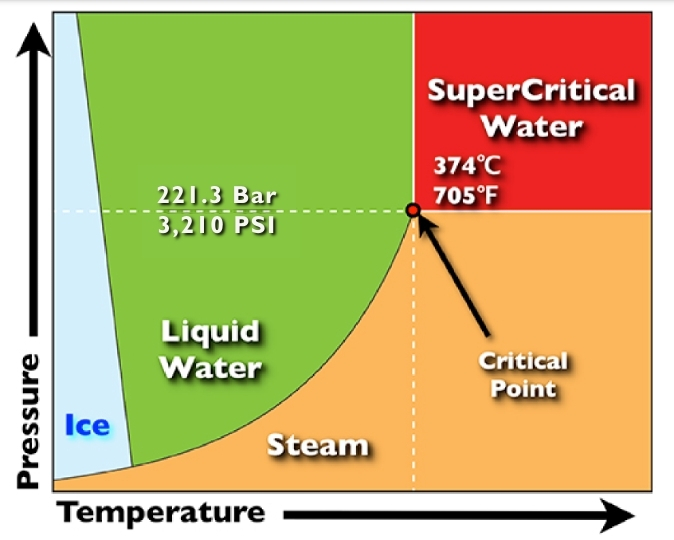
Figure 1-27. Conceptual water temperature-pressure phase diagram highlighting the supercritical region. Value for the pressure (bar) was corrected to 221.3.
Source: Jonathan Kamler, Attribution-Share Alike 4.0 International.
1.6.2.3 State of Development
SCWO technology has been developed and commercialized since the 1990s and thus has not been considered a new technology. However, its application for PFAS destruction is considered more recent and has shown promising results. For example, Sahle-Demessie et al. (2022) tested SCWO through partnership agreement with technical providers to verify PFAS destruction within AFFF. The same study showed that in all USEPA-Office of Research and Development tests, PFAS and total organic carbon destruction efficiencies were greater than 99.99%. PFAS target compounds were not detected above the background level in the gas analyses.
McDonough et al. (2022) adopted OTM 45 for stack sampling in a field trial to destroy PFAS in diluted AFFF. The study suggests greater than 99.999% destruction and removal efficiency of 12 perfluoroalkyl acids (PFAAs) after two ~120-min continuous flow trials with overall defluorination of ~62.6%. Various bench-scale SCWO studies for PFAS destruction in aqueous matrixes were also documented (Scheitlin et al. 2023) with 5-log (99.999%) reduction in concentrations.
Chiang et al. (2023) tested the PFAS destruction in one spent granular activated carbon (GAC) sample and two spent anion exchange resin (AER) samples. AERs are a specific type of resins used for ion exchange (IX). See Section 12.2.1.1 for more information about GAC and Section 12.2.1.2 for more information about IX. The study revealed effective PFAS destruction and the decomposition of GAC and AER in a field-scale SCWO treatment system, leaving no solid wastes requiring further management. This study suggests the potential of SCWO to treat solid wastes, although more studies on feedstock characterizations and PFAS mass balance are needed. The readiness of SCWO systems for full-scale PFAS destruction can vary by technology provider but are generally more mature for destruction of liquid concentrates, particularly diluted AFFF. The scale-up SCWO system has been chosen by state agencies as part of their AFFF take-back programs to destroy AFFF. Several states are actively addressing AFFF, and specifically the transition of AFFF to F3. Many more states have initiated take-back programs or intend to initiate take-back programs.
In 2023, ESTCP partnered with the Defense Innovation Unit to demonstrate SCWO technology, among other treatment methods, for destruction of PFAS in multiple media. Cost and performance results of these demonstrations are forthcoming (USDOD 2023). More information about analytical methods is included in Section 11.2 and Section 1.5.
1.6.2.4 Effectiveness
The broad effectiveness of variations of SCWO to destroy various groups of PFAS is well established in the literature (Hori et al. 2008; Hori et al. 2012; Hori et al. 2015; Jama et al. 2020; Pinkard et al. 2021; USEPA 2021; Krause et al. 2022; Li et al. 2022; McDonough et al. 2022; Sahle-Demessie et al. 2022; Austin et al. 2023; Chiang et al. 2023; Li et al. 2023; Scheitlin et al., 2023). The completeness of this defluorination (mineralization) has been verified to the extent practicable using commercially available analytical and sampling tools. The liquid effluent from SCWO demonstration studies in the literature and industry consistently achieves decreases to near or below relevant detection limits for those PFAAs typically reported (Li et al. 2022; McDonough et al. 2022; Sahle-Demessie et al. 2022; Austin et al., 2023; Chiang et al. 2023; Li et al. 2023; Scheitlin et al. 2023). Numerous gaseous sampling and analytical technologies have been used to verify the completeness of PFAS mineralization using SCWO, with satisfactory results (Hori et al. 2008; Li et al. 2022; McDonough et al. 2022; Sahle-Demessie et al. 2022; Chiang et al. 2023; Li et al. 2023; Scheitlin et al. 2023), however PFAS analysis in air samples continues to evolve. More data would be needed to confirm no breakthrough of PFAS in the air effluent stream. Extremely low detections of PFAAs reported based on gaseous sampling techniques are likely related to ambient PFAS within cooling/neutralization water (McDonough et al. 2022; Sahle-Demessie et al. 2022) or associated with the sampling apparatus itself. Four to six orders of magnitude reduction in less than 30 seconds for liquid, gaseous, or both effluent streams is a consistent result when using SCWO to destroy PFAS (Krause et al. 2022; Li et al. 2022; McDonough et al. 2022; Sahle-Demessie et al. 2022; Austin et al. 2023; Li et al. 2023; Scheitlin et al. 2023).
Many effectiveness demonstrations of SCWO include most of the typical list of PFAAs (that is, C4 to C14 PFCAs and C4 to C10 PFSAs). The application of SCWO to mineralize trifluoroacetate (TFA) has also been recently observed (Li et al. 2023), suggesting that SCWO (when operated ~650oC) is likely applicable to ultrashort PFAS (<C4) as well. More studies investigating the fate of ultrashorts in gaseous and liquid effluents from SCWO reactors are needed. In keeping with various PFAS destruction technology verification studies, fluorine mass balances have been attempted with confirmed defluorination ratios of ~36% to 100% (Hori et al. 2008; Hori et al. 2012; Hori et al. 2015; Pinkard et al. 2021; Krause et al. 2022; Li et al. 2022; McDonough et al. 2022; Sahle-Demessie et al. 2022; Austin et al. 2023; Li et al. 2023; Scheitlin et al. 2023). The range of defluorination percentages versus consistent complete fluorine mass balances has been hypothesized to include partially defluorinated volatile species (Hori et al. 2008; Austin et al. 2023; Li et al. 2023), variable operating conditions, and unquantified inorganic fluoride within the steam effluent (McDonough et al. 2022).
The complexity of a waste stream has less influence on the effectiveness of SCWO to destroy PFAS than some other PFAS-relevant destruction technologies. As SCWO has been historically validated for the destruction of organic constituents, optimized concentrations of organic constituents may enable autogenic operation where the influent organics can sustain the necessary reaction temperature. This can offset energy demands in achieving supercritical conditions (Tester et al. 1993; Hong and Spritzer 2002; Yesodharan 2002; General Atomics 2005; Marrone 2013; Adar et al. 2019; Wang et al. 2019; USEPA 2021; Wei et al. 2021; Krause et al. 2022). The presence of inorganic constituents in high concentrations may necessitate the management of precipitated solids, corrosion, and scaling, though innovations in the technology over time have found relevant management solutions (Tester et al. 1993; Kritzer and Dinjus 2001; Yesodharan 2002; Marrone et al. 2004; Marrone 2013; Adar et al. 2019). Because inorganic constituents are not applicable to SCWO and separate from the fluid prior to discharge, common deleterious air emissions (for example, nitrogen and sulfur oxides) are not concerns with SCWO (Tester et al. 1993; Pinkard et al. 2021).
Although the effectiveness of SCWO to achieve mineralization of a broad range of PFAS is established, its current applicability is best suited to smaller volumes of high PFAS concentrations. The comparatively rapid residence time for SCWO is attractive for a continuous flow application (Tester et al. 1993; Krause et al. 2022; Austin et al. 2023; Li et al. 2023); however, the capital cost and equipment footprint to construct SCWO reactors capable of achieving 10s of gallons per minute may be infeasible in many scenarios (Tester et al. 1993; Kritzer and Dinjus 2001; Marrone 2013; Adar et al. 2019). The SCWO technology is insensitive to the initial PFAS concentration; however, there is a considerable energy demand to initiate supercritical conditions and pretreatment strategies to concentrate PFAS will improve the energy per mass effectiveness (Jama et al. 2020; Li et al. 2022; McDonough et al. 2024). Importantly, pretreatment of a waste stream to increase the PFAS concentration factor will also concentrate inorganic constituents that may challenge the efficiency/effectiveness of SCWO and require corrosion and scaling management (Tester et al. 1993; Kritzer and Dinjus 2001; Marrone et al. 2004; Li et al. 2022; Chiang et al. 2023).
1.6.2.5 Design/Operating Considerations
SCWO presents a viable solution for treating many PFAS-contaminated waste streams. Operating above water’s critical point (374°C, 22.1 MPa), SCWO systems typically function at 400°C–650°C and 22–28 MPa, achieving high destruction efficiencies for organic compounds. Prior to treatment, a comprehensive waste stream assessment is crucial. Key parameters to evaluate typically include PFAS concentration, total organic carbon, chemical oxygen demand, TOF, organohalide content, pH, conductivity, total dissolved and suspended solids, and metals. PFAS speciation may be useful for regulatory or reporting purposes but is not typically necessary for SCWO system operation. Operational considerations include feed and oxidant flow rates, reactor temperature, system pressure, residence time, and post-SCWO effluent stream management (air, condensate, effluent and mineral residuals). Safety assessments should address corrosivity, material compatibility, and potential for fouling or hazardous gas formation. SCWO facilities require significant electrical power, water supply, and oxidant sources (typically pure oxygen, air, or hydrogen peroxide). Ambient temperature should be noted as a key operating consideration for SCWO, as systems installed outdoors in cold climates may require supplemental heating to maintain operational stability (similar to other systems installed outdoors); additionally, SCWO relies on highly specialized equipment and skilled personnel, which can impact site readiness and deployment planning. Permitting for SCWO operations involves navigating complex environmental, local, state, and federal regulations, including specific PFAS-related requirements, safety protocols, and waste management standards. SCWO may be viewed favorably in the permitting process, as verified analytical results from both liquid and vapor effluent streams provide greater transparency to regulatory permitting agencies. Early engagement with regulatory agencies is essential to ensure compliance with all applicable permits and operational guidelines.
1.6.2.6 Sustainability Considerations for Supercritical Water Oxidation
Considerations for SCWO technology sustainability metrics may be aligned with the fundamental principles of environmental, societal, and economic interrelated factors. As noted in Section 12.9, Sustainability of PFAS Treatment, best management practices for SCWO may incorporate life cycle analysis (LCA) for materials destruction. A key consideration is the need for a pre-SCWO volume reduction step, such as concentration (for example, foam fractionation, reverse osmosis, evaporation), because SCWO systems are best suited for treating lower volumes of high-concentration PFAS waste streams rather than large volumes of dilute PFAS waste. Few SCWO units are available on the commercial market at this time, and therefore, materials may need to be transported significant distances to be managed with SCWO.
Examples of SCWO LCA facets may include:
- whether SCWO is performed on-site or waste is transported off-site for treatment or concentration affects environmental impacts such as carbon and greenhouse gas emissions
- whether the number of required samples before, during, and after treatment, and carbon footprint for the sample analysis at a remote laboratory, affect environmental impacts such as carbon and greenhouse gas emissions
- whether the permitted SCWO facility is located in a disproportionately disadvantaged community and is treated as a societal impact
- whether the cost per unit volume in energy consumption, sample analysis, and the going market rates are project- and community-viable
SCWO unit permitting requirements may vary by state. Those located in states where complete or nearly complete destruction is required prior to any residuals disposal may be weighted preferentially over those SCWO units located in states with less rigorous permitting standards. This consideration may allow for greater confidence in ending the PFAS waste cycle.
Sustainability balancing factors may include how complete or full destruction is defined by the regulating authority for a given material type and composition. This may dictate the degree to which these sustainability factors, including environmental compliance with liquid and vapor effluent regulatory requirements, are valued and weighted by project stakeholders.
1.6.3 Investigation-derived Waste
This section describes some of the key factors affecting the management of PFAS-impacted investigation-derived waste (IDW), with an emphasis on portable and field-adaptable technologies suitable for handling heterogeneous waste streams generated during site investigations. It includes the current state of practice regarding this topic and recent research efforts. Information in this section was prepared to supplement the information published in Section 12 and Table 12-1 Treatment Methods Table. This section focuses on field-relevant strategies, that are modular, portable, or scalable that address the logistic constraints and episodic nature of PFAS-impacted IDW. Given the accelerating pace of PFAS site investigations and the associated accumulation of IDW, the development of sustainable on-site PFAS management strategies has become a priority.
Prior to any remediation activities, to identify PFAS-impacted source zones and optimize management strategies, comprehensive site investigations need to be conducted. These investigations, however, have introduced a secondary challenge: the management of IDW (Yanagida et al. 2022).
The majority of IDW generated during well development, installation, and sampling at PFAS-impacted sites comprises purged groundwater, equipment decontamination residues, soil, drill cuttings, and debris from the removal of asphalt and concrete (Vatankhah et al. 2023). This generated waste frequently contains varying concentrations of PFAS alongside other co-occurring organic and inorganic contaminants. Current IDW management practices primarily involve transportation to waste landfills or incineration facilities. However, these methods are both costly and too limited to fully address the long-term environmental liabilities posed by PFAS-contaminated waste (Singh et al. 2019).
Additionally, at many large PFAS-impacted sites, ex situ remediation of impacted water matrixes, through sequestration techniques such as sorption-based processes and high-pressure membrane systems, often begins concurrently with ongoing site investigations (Murray et al. 2023). This introduces an additional challenge, as the accumulation of exhausted media and membrane reject streams exacerbate the existing difficulties associated with IDW generation.
With respect to remediation efforts, numerous advanced sequestration technologies have been implemented for capture and removal of PFAS from IDW streams and impacted soil. Although soil washing is common in large-scale remediation, it is generally not practical for IDW due to the limited and variable waste volumes. For solid IDW, thermal desorption using roll-off boxes or covered soil piles may offer a more feasible alternative (Lei et al. 2023). Some of the most established sequestration technologies include GAC (Murray et al. 2021; Appleman et al. 2014; Yu et al. 2009; Carter et al. 2010), IX (Franke et al. 2019; Franke et al. 2021; Boyer et al. 2021; Tajdini et al. 2023), high-pressure membranes (that is, nanofiltration), (NF), and reverse osmosis (RO)) (Liu and Sun 2021; Liu, Strathmann, and Bellona 2021). See Section 12.2.2.1 for more information about NF and Section 12.2.2.2 for more information about RO. Despite the effectiveness of these technologies for separation and removal of PFAS, they serve only as interim treatment actions involving physical mass transfer. For aqueous IDW, integration into existing on-site PFAS treatment systems such as modular GAC or IX units can provide an efficient management route. Alternatively, discharge to municipal facilities with PFAS treatment capabilities may be appropriate where allowed.
To effectively mitigate the long-term risk of recontamination from IDW, PFAS-laden sorbents, and membrane reject streams, it is imperative to evaluate both on-site and off-site end-of-life disposal technologies that achieve complete mineralization of PFAS. Depending on the quantity of the IDW, while on-site approaches reduce transportation and handling, off-site options may be more cost-effective depending on local infrastructure and waste volume. Eliminating the long-term risks associated with impacted IDW requires technologies that ensure complete defluorination, as degradation or partial defluorination may result in formation of more recalcitrant byproducts, also known as PIDs (for example, volatile PFAS, unsaturated PFAS, PFCAs, -F/+X-substituted PFAS) with elevated risks of bioaccumulation (Evich et al. 2022).
In recent years, a series of focused research efforts has been initiated and led by SERDP to develop and investigate a series of innovative end-of-life disposal technologies capable of complete mineralization of all PFAS in IDW (Vatankhah et al. 2023). SERDP and ESTCP projects for field-scale evaluations of PFAS-impacted IDW include ESTCP project ER19-1403, which examined UV/TiO₂-activated alkaline treatment for concentrated liquid residuals, and ER21-7591, which tested hydrothermal alkaline treatment (HALT) technology in a field deployment.
To better understand the end-of-life technologies during the management of IDW, it is important to assess PFAS destruction by evaluating the extent of PFAS degradation and defluorination as represented in Equations 1 and 2, where [F–] corresponds to fluoride ions, NF is the quantity of fluorine atoms, [PFAS]0 is the initial concentration of PFAS, and [PFAS]degraded is the concentration of degraded PFAS (Banayan Esfahani et al. 2022).
| Defluorination efficiency (%) = F − ⁄ ([ PFAS ]0 × NF) × 100 | (1) |
| Degradation efficiency (%) [ PFAS ] degraded / [ PFAS ]0 × 100 | (2) |
These metrics apply specifically to destructive technologies designed to achieve mineralization of PFAS in concentrated IDW streams. Although such calculations can be valuable for benchmarking performance, they are not applicable to nondestructive technologies such as GAC, IX, or membrane processes. In those cases, PFAS are removed by separation or sequestration, not destruction, and mass balance calculations may be misleading.
Additionally, attempts to evaluate fluorine mass balance in complex treatment systems must consider the transformation of precursors between treatment stages. For example, PFAS precursors may convert to terminal PFAS during biological or chemical processes that precede final treatment. If sampling is limited to inlet and outlet points, this transformation can lead to under- or overestimation of PFAS removal. Given these complexities, mass balance should not be viewed as a stand-alone indicator of technology performance. To avoid misinterpretation, technology decision makers are encouraged to consider guidance from the USEPA’s PFAS Treatment Efficacy Framework (TEF) (USEPA 2024) and assess technology readiness using established technology readiness levels (TRL) criteria (USDOD 2025).
For performance evaluation, standardized parameters must be established for both sequestration (for example, membrane recovery rate, media usage rate, adsorption capacity at various breakthrough levels) and destructive technologies (for example, defluorination efficiency, fluorine mass balance to determine the extent of mineralization). Analytical and process-related interferences often pose challenges in establishing a reliable fluorine balance, particularly during early development stages. Nonetheless, achieving a conclusive fluorine balance is a key performance metric linked to a technology’s commercial readiness (Leeson et al. 2021).
Critical factors in economic assessments include the type of PFAS-impacted matrix (for example, groundwater, surface water, soil) and matrix characteristics (for example, total organic carbon, total dissolved solids, total suspended solids), as well as PFAS influent and target effluent concentrations. Additionally, standardized performance data, such as cost per cubic meter of treated effluent at normalized concentrations, chemical usage rates, and pH levels, must be quantified to accurately estimate capital and operational expenditures.
Integrating nondestructive and destructive treatment technologies is emerging as a promising approach for managing PFAS-impacted IDW, offering potential improvements in energy efficiency and cost-effectiveness. A crucial factor in this integration is the compatibility of certain destructive technologies (for example, sonication, oxidation-reduction methods) with the initial PFAS concentrations. Employing nondestructive technologies, such as high-pressure membranes, to concentrate the feed can enhance the performance of subsequent destruction techniques. However, accurate assessments are necessary to determine the optimal feed concentration for these destructive technologies. This aspect will ultimately dictate the operating conditions of sequestration technologies (for example, membrane recovery and concentration factors), directly impacting energy and cost efficiency (Vatankhah et al. 2023).
1.6.4 Treatment of Sediment
This section focuses on the treatment of PFAS-contaminated sediment. Information in this section was prepared to supplement the information published in Section 12.3 and Section 12.7.
Sediments are impacted by PFAS through both groundwater to surface water interaction (Section 5.1.3) and where impacted stormwater or surface water is in contact with sediments. PFAS impacts sediments through both hydrophobic partitioning to organic carbon and electrostatic interactions between charged surfaces. These processes can affect the transfer of PFAS between surface water and sediment. Varying degrees of retention on sediments can contribute to differential transport where certain PFAS (for example, short-chain, anionic) are more rapidly transported than others.
Little information is available regarding regulations or guidance for the treatment of PFAS in sediments, but it is known that PFAS in sediments can impact the benthic community and bioaccumulation can take place, thereby impacting uptake in higher trophic species such as fish (for example, Conder et al. 2008; Pulster et al. 2022).
Contamination in sediments can be addressed either in situ, meaning where they lay (without removal), or ex situ, which typically involves dredging or excavation of impacted sediments in some form. Typically, in situ methods are less invasive and have less impact on habitat or the benthic community. Ex situ methods are typically more expensive and remove the existing benthic community. Generally, contaminated sediment remediation is complex and requires unique permitting requirements, particularly if it is being carried out in navigational areas. With regard to in situ treatment technologies, existing sediment remediation techniques are available that have been demonstrated to successfully deliver adsorptive materials to the sediments (for example, powder-activated carbon). Many of these adsorptive materials are the same as those being applied for immobilization of PFAS in soil (see Table 12-1 Treatment Methods Table Excel File). Sediments can also be removed and treated ex situ using methods such as soil washing. Other conventional methods for ex situ management of contaminated sediment include transporting impacted sediment to a landfill. ITRC provides other guidance (ITRC 2014) on a range of methods for managing or remediating contaminated sediment.
1.6.5 Treatment of Biosolids
This section focuses on the treatment of PFAS-contaminated sewage sludge and biosolids. It includes incineration, landfill disposal, sorption and stabilization, pyrolysis/gasification, supercritical water oxidation, hydrothermal liquefaction, and biological treatment. Additional information about Biosolids is included in Section 1.7.
The terms “sewage sludge” and “biosolids” are often used interchangeably. However, the USEPA provides a technical distinction between the two. Typically, the USEPA uses the term “biosolids” to refer to sewage sludge that has undergone sufficient treatment (for example, pathogen and vector attraction reduction) to meet the requirements outlined in 40 CFR Part 503—Standards for the Use and Disposal of Sewage Sludge and is intended for land application as a soil conditioner or fertilizer. “Sewage sludge” is generally reserved for untreated municipal wastewater residual that has a high solids content and may have undergone dewatering to increase the relative solids content and reduce residual volume. In common conventional wastewater treatment, large objects and readily settleable solids (primarily inorganic) are removed during the initial screening and grit removal stages. The materials removed during screening and grit removal are typically managed separately and do not become part of the “sewage sludge” residual. In general, “sewage sludge” consists of solids removed during primary settling (primary sludge) and solids removed during biologically mediated treatment processes that may include higher proportions of cell mass (that is, secondary sludge). Sewage sludge that then undergoes treatment for land application, often with the intended beneficial use as a fertilizer, is referred to as “biosolids.”
Managing PFAS impacts to sewage sludge and biosolids is an active area of focus for state and federal regulatory agencies. Multiple states have proposed regulatory frameworks for managing the land application of biosolids, and on January 14, 2025, the USEPA released the Draft Sewage Sludge Risk Assessment for PFOA and PFOS (USEPA 2025). A more detailed discussion of the regulatory landscape and other factors related to PFAS-impacted biosolids is included in Section 1.7.
This section focuses on the treatment alternatives that may be considered to address PFAS impacts to sewage sludge, or biosolids, or both. Conventional sewage sludge or biosolids treatment methods are widely considered ineffective in removing PFAS (Rahman et al. 2025). Specifically, the treatment technologies presented below are considered in the context of the USEPA definition of “sewage sludge,” specifying the treatment of domestic wastewater (which may include contributions from industrial sources) at publicly or privately owned treatment works. This section is not intended to address sludges derived from privately owned industrial wastewater treatment works; however, some of the treatment technologies may be applicable. An effort was made to limit the discussion of treatment technologies to those that are already widely applied for sewage sludge or biosolids management or those identified by the authors as showing promise for PFAS treatment effectiveness. The list of treatment alternatives included in this section is not comprehensive (see the ITRC disclaimer).
Depending on the nature of the domestic wastewater treatment facility, there may be numerous sources of PFAS (for example, residential, commercial, industrial, groundwater intrusion) that contribute to PFAS loading. PFAS entering the wastewater treatment facility may be associated with solid-phase components or aqueous-phase components (dissolved) of the raw wastewater. PFAS can accumulate in biosolids via settling processes or the phase partitions processes described in Section 5.2.
Initially, sewage sludge and biosolids collected as a wastewater treatment residual contain a high relative water content and are often dewatered prior to final disposition. Some of the sewage sludge and biosolids treatment alternatives described below require the biosolids to be flowable, therefore a higher water content may be favorable, while others benefit from lower water content. This section does not separately address the treatment of the liquid-phase residual associated with sewage sludge and biosolids dewatering. See Section 12.2 and Section 12.6 for discussion of liquid-phase treatment alternatives.
This section focuses on describing sewage sludge and biosolids treatment alternatives for PFAS, serving as an extension of Section 12.1.4.3, and has been prepared to provide a treatment-focused discussion to supplement Section 1.7. Biosolids and sewage sludge treatment alternatives described below are categorized as either field-implemented or limited application and developing technologies in accordance with the framework defined in Section 12.
1.6.5.1 Field-implemented Biosolids Treatment Technologies
Incineration
Sewage sludge or biosolids incineration can take multiple forms in the context of PFAS treatment. Broadly, there are two applications of incineration that may be relevant to sewage sludge or biosolids PFAS treatment. First is the application of permitted sewage sludge incinerators (SSIs) historically designed and operated to serve as a terminal disposal alternative for sewage sludge or biosolids, without consideration for PFAS. Second is the application of high-temperature incineration at a permitted Resource Conservation and Recovery Act Subtitle C hazardous waste combustor, designed and operated as a terminal disposal option for hazardous wastes. In general, the application of incineration processes has demonstrated some degree of success in PFAS destruction. However, the degree to which PFAS are completely mineralized is highly dependent on the specific application (Weitz et al. 2024). Both SSI and high-temperature incineration are discussed separately below.
For additional information and resources regarding incineration, see Section 12.4 and Section 1.6.1.
Sewage Sludge Incinerators (SSIs)
Biosolids incineration via permitted SSIs is a common biosolids management approach. In 2023, USEPA estimated that approximately 14% of biosolids were disposed of through incineration (USEPA 2025) Operation and associated air emissions of SSIs are regulated by Section 129 of the Clean Air Act, titled “Solid Waste Combustion;” however, current emissions standards do not consider PFAS (USEPA 2024). Additionally, SSI air emissions are regulated under 40 CFR Part 503 Standards for the Use or Disposal of Sewage Sludge, Subpart E—Incineration, but current emissions standards do not consider PFAS.
Two common types of SSIs include multiple hearth furnaces and fluidized bed furnaces, with typical operating temperatures of approximately 300°C–500°C and 700°C–800°C, respectively (USEPA 2003; Winchell et al. 2021). Recent studies have evaluated the fate and transport of PFAS in SSIs and concluded that typical SSI implementations have variable PFAS destruction efficiencies (Seay et al. 2023; Winchell et al. 2024). Researchers have determined that additional work is necessary to better understand how the optimization of SSI processes or the implementation of additional treatment(s) (for example, thermal oxidizer) could increase SSI PFAS treatment efficiency. Thermal oxidizers are common air pollution control devices that are routinely added to thermal treatment processes to treat a wide range of organic contaminants that may be present in process air emissions. Thermal oxidizers rely on high temperature combustion processes and residence time to mineralize organic contaminants present in gas phase emissions. Through integration of energy recovery, operation of thermal oxidizers has become increasingly efficient (95-99% efficiency). Thermal oxidizers with integrated energy recovery as often referred to as regenerative thermal oxidizers (USEPA 2003).
High-temperature Incineration
High-temperature incineration at a permitted Resource Conservation and Recovery Act Subtitle C hazardous waste combustor is an established disposal alternative for a variety of PFAS-impacted wastes, spanning a wide range of physical properties (for example, liquids and solids). In addition to several other operating factors, high-temperature incineration is characterized by operating temperatures greater than 1,000°C. However, uncertainty remains regarding the ultimate fate of PFAS during permitted hazardous waste combustor high-temperature incineration processes. See Section 12.4 and Section 1.6.1.
Landfill Disposal
Landfills remain a common method for disposing of sewage sludge and biosolids. In 2023, approximately 24% of the biosolids generated by POTWs in the United States was disposed of in landfills (USEPA 2025). Tolaymat et al. (2023) estimated that landfilling of biosolids contributes approximately 850 kg of PFAS mass to municipal solid waste landfills annually, approximately 11% of the 7,480 kg of extractable PFAS mass estimated to have entered municipal solid waste landfills in 2018. Due to widespread concerns about PFAS levels in biosolids, some states have begun placing limitations or bans on the use of land application as a disposal option for biosolids. For example, the State of Maine banned land application of biosolids through a bill passed by the Maine legislature in 2022. This ban resulted in 90% of the biosolids generated in the state being received by a single landfill (Brown and Caldwell 2023). Other states, primarily through the regulatory rulemaking process, have developed thresholds for PFAS levels that may limit land application options and acknowledge that such thresholds may result in additional demand for landfill disposal of biosolids (MPCA 2025). If the use of landfills for biosolids disposal increases due to limitations on other disposal options, demand may outstrip capacity for biosolids disposal in landfills in many areas, thus increasing the need for other biosolids disposal or treatment options.
Sorption and Stabilization
Sorption and stabilization is a nondestructive PFAS immobilization approach that relies on the addition of amendments to reduce the mobility of PFAS and its ability to leach from the biosolids or biosolids-amended soil into other environmental compartments (for example, groundwater, surface water, biota). Sorption and stabilization may be applied in situ to address impacts associated with historical land application of PFAS-impacted biosolids. For additional information regarding sorption and stabilization applications for PFAS-impacted solids, see Section 12.3.1.
The ability of sorption and stabilization amendments to effectively immobilize PFAS and the resulting impact on agricultural productivity are active areas of research. Recent studies have focused on biochar as a promising carbon-based soil amendment at PFAS-impacted biosolids land application sites (Sanchez-Hernandez et al. 2024). Compared to activated carbon, the effects of biochar on agricultural soil conditions are relatively well studied. Studies have demonstrated the ability of biochar derived from various feedstocks to sorb PFAS; however, the impact of soil conditions and other environmental factors on sorption capacity and sorption longevity are a focus area for future research (Sanchez-Hernandez et al. 2024).
Holly et al. (2024) evaluated PFAS leaching from land-applied biosolids and the effects on leaching from amending biosolids with biochar. The soil samples were collected from various sites and included silt loam, silt clay loam, sandy loam, and sandy clay loam soil types. Column leaching tests were performed on soil only, soil that had received biosolids, and soils with biosolids and amended with biochar; columns were treated weekly with simulated precipitation over a six-month period. The authors found that leachate from all treatments contained measurable PFAS concentrations (23 of 28 analytes), and the PFAS replacements 6:2 FTS and HFPO-DA were found in leachate although not in initial/untreated samples of either soil or biosolids. The authors indicated that water-holding capacity and organic carbon content of soils influenced leaching potential, and that biochar amendments reduced leaching potential of PFAS; however, this impact was highest for long-chain PFAS, whereas it had only limited impact for the short-chain (<C7) PFAS, with exceptions including PFBS, PFHxA, and PFHxS.
1.6.5.2 Limited Application and Developing Biosolids Treatment Technologies
Pyrolysis/Gasification
Pyrolysis and gasification are thermal decomposition processes that are being evaluated for the ability to destroy PFAS in impacted sewage sludge and biosolids (Garg et al. 2023). Historically, pyrolysis and gasification have been applied on organic-rich waste products with the goal of resource recovery. In general, the pyrolysis and gasification processes running on biosolids feedstock can recover resources in the solid (for example, biochar), liquid (for example, bio-oil), and gas (for example, syngas) phases that may undergo additional refinement for beneficial use. The balance of the resource phases varies between the process and operating conditions. In general, pyrolysis tends to produce more abundant liquid- and solid-phase resources and gasification produces more abundant gas-phase resources (Thoma et al. 2022; Winchell et al. 2022). The fate and transport of PFAS under varying pyrolysis and gasification process operating conditions remain an active area of research (McNamara et al. 2023).
Pyrolysis and gasification units can operate under varying conditions—typically operating at temperature ranges between 300°C and 800°C and 800°C and 1,000°C, respectively (Winchell et al. 2022). Another key distinction between pyrolysis and gasification is the amount of oxygen introduced into the reaction chamber; pyrolysis occurs in the absence or near absence of oxygen, while gasification occurs with an oxygen content less than the stoichiometric minimum for complete combustion (Winchell et al. 2022). For additional information and resources regarding the treatment mechanisms and operation of pyrolysis and gasification systems, see Section 12.7.2 and Section 1.6.1.
Commercial-scale pyrolysis treatment systems for PFAS-impacted sewage sludge or biosolids are not widely implemented in the United States. Winchell et al. (2022) identified one full-scale pyrolysis and one full-scale gasification unit operating in the United States on biosolid feedstock with several additional facilities in design or under construction. Several bench-scale and pilot-scale studies have shown promise that pyrolysis can be used to reduce PFAS concentrations in biosolids, while retaining land application benefits of the biosolids as a biochar product.
Bamdad et al. (2022) completed a bench-scale pyrolysis study that documented the fate of 29 target PFAS. They observed a reduction of quantifiable PFAS in the solid biochar product stream by 97–100 wt% at a processing temperature of 500°C, and by 99.6–100 wt% at a processing temperature of 700°C. Thoma et al. (2022) completed a pyrolysis pilot study of PFAS-impacted biosolids. See Section 1.6.1.2 for more information.
Winchell et al. (2024) evaluated the fate of biosolids-bound PFAS through a bench-scale pyrolysis unit (operating temperature of 600°C) coupled with a thermal oxidizer (operating temperature of 1,000°C) for air emissions control. Winchell et al. (2024) documented between 91.5% and greater than 99.9% reduction of targeted PFAS through the coupled pyrolysis and thermal oxidizer bench-scale system. On a molar basis, the researchers calculated removal of 99.4% of the total quantified PFAS through the system. Additionally, the researchers sampled the thermal oxidizer exhaust gas and analyzed for targeted PFAS by USEPA OTM-45. Winchell et al. (2024) noted that short-chain PFAS predominated quantifiable PFAS in the thermal oxidizer exhaust gas, ranging between 54.4% and 79.5% of the PFAS moles measured in the exhaust gas. Winchell et al. (2024) identified the need for additional research regarding the fate of PFAS in thermal oxidizer systems.
Supercritical Water Oxidation
Supercritical water oxidation (SCWO) is a destructive technology that uses unique properties of water above its critical point at 374°C and 22 MPa and the addition of an oxidizing agent (for example, air, oxygen, hydrogen peroxide) to generate a highly reactive environment. Although the exact mechanisms of PFAS destruction under SCWO conditions are not well understood, well operated SCWO systems have exhibited high rates (greater than 99.9%) of PFAS mineralization across various PFAS-impacted media (Scheitlin et al. 2023; Chiang et al. 2023). For additional information and resources regarding the treatment mechanisms and operation of SCWO systems, see Section 12.6.3.12 and Section 1.6.3.
In the context of sewage sludge or biosolids treatment, SCWO is being evaluated as a destructive technology. The availability of published literature is limited regarding the application of SCWO to effectively manage PFAS-impacted sewage sludge or biosolids. However, technology developers and municipal wastewater treatment facilities (for example, Orange County California; Orlando, Florida) are actively partnering to conduct pilot testing (Orange County Sanitation District 2022; USEPA 2024). Several studies suggest the viability of SCWO as a destructive technology for PFAS-impacted biosolids based on the documented success of SCWO in mineralizing PFAS and other refractory organic contaminants in a wide range of PFAS-impacted matrixes (Chiang et al. 2023; Berg et al. 2022; Garg et al. 2023).
Effective treatment of PFAS-impacted sewage sludge or biosolids via SCWO relies on the flowability of the material. Additionally, SCWO treatment of sewage sludge biosolids is subject to similar considerations pertaining to more mature applications of SCWO, including effective pretreatment to limit scaling in the reactor and management of reactor materials against the highly reactive SCWO environment. The ultimate fate of PFAS in SCWO reactors is an active area of study, with increased focus on gaseous-phase emissions from SCWO reactors. Furthermore, the scalability of SCWO applications for full-scale biosolids management is uncertain and is the focus of additional research.
Hydrothermal Alkaline Treatment
Hydrothermal alkaline treatment (HALT) is a hydrothermal process that relies on a high-temperature, high-pressure, and high-pH (alkaline) environment to promote PFAS destruction. Diverging from SCWO, the HALT approach occurs below the critical point of water, typically around 350°C and 16.5 MPa in alkali-amended solutions (e.g., 1–5 M sodium hydroxide) (Wu et al. 2019; Hao et al. 2021). HALT reactors have demonstrated the ability to destroy a wide range of PFAS, achieving greater than 99% destruction in a continuous flow system treating AFFF-impacted fire training pit water (Pinkard et al. 2023). For additional information and resources regarding the treatment mechanisms and operation of HALT systems, see Section 12.6.5.
The availability of published literature is limited regarding the application of HALT to destroy PFAS in biosolids. A Water Research Foundation project is evaluating HALT technology in the context of treating PFAS-impacted biosolids (Gao 2025). Effective treatment of PFAS-impacted biosolids via HALT relies on the flowability of the biosolids material. Additionally, the scalability of HALT applications for full-scale biosolids management and potential high chemical demands (for example, alkali) is uncertain and is the focus of ongoing research.
Hydrothermal Liquefaction
Hydrothermal liquefaction (HTL) is a high-temperature, high-pressure process for converting biomass into biofuel. HTL relies on the water content of the biomass to enter a subcritical or supercritical state, depending on the reactor conditions. Water under these conditions creates a highly reactive environment, able to depolymerize macromolecules present in the biomass and convert them to smaller, hydrocarbon-like compounds that can be further refined into liquid fuel products (Toor, Rosendahl, and Rudolf 2011). Based on the elevated water content of biosolids, HTL has garnered interest for its potential to create biofuels from biosolids.
Recently, researchers have started to focus on evaluating the HTL process for its ability to mineralize PFAS present in biosolids and other sources of biomass. Based on preliminary findings, HTL has demonstrated the ability to mineralize PFAS, including refractory PFAAs; however, the extent of PFAS mineralization varies between compounds (Yu et al. 2020; Zhang et al. 2020). In a bench-scale study, Yu et al. (2020) concluded that HTL was able to achieve degradation rates of PFCAs greater than 99%, while degradation rates of PFSAs were limited, falling to 67% for 8:2 FTS and 34% for PFOS. Other researchers have focused on evaluating catalytic amendments to the biosolids or biomass to promote PFAS mineralization, with mixed results (Zhang et al. 2020; Zhang and Liang 2022).
In general, HTL has demonstrated limited effectiveness in completely mineralizing the complex mixtures of PFAS typically present in biosolids. However, additional research is ongoing regarding alternatives to optimize the HTL process for more robust PFAS mineralization efficiency.
Biological Treatment
Biological treatment processes are commonly applied to reduce pathogens and stabilize biosolids for land application scenarios. The USEPA identifies aerobic digestion, anaerobic digestion, and composting as biologically mediated treatment processes for biosolids stabilization (USEPA 1993). Several studies have investigated the ability of common biologically mediated biosolids stabilization approaches to destroy PFAS and have generally concluded that these biological processes are ineffective at mineralizing recalcitrant PFAAs (Garg et al. 2023; Kim Lazcano et al. 2019; Li et al. 2022; Kumar et al. 2023). However, these studies have documented the transformation of polyfluorinated PFAA precursors present in the biosolids material during these biologically mediated stabilization processes, which is generally consistent with the findings of other biodegradation studies of PFAS discussed in Section 12.6.4.
Looking more broadly at biologically mediated treatment processes for PFAS-impacted biosolids, alternative approaches, such as phytoremediation, are being evaluated (Zhang and Liang 2022; Zhang, Tran, and Liang 2022; Wen et al. 2016). Additional research is needed to better understand the potential applicability of biologically mediated processes for biosolids treatment.
1.6.6 Updated and Recent and Relevant Technology Review Papers
This section provides information about updated and recent technology review papers focusing on PFAS treatment technologies and supplements the information published in Section 12 and Table 12-1 Treatment Methods Table.
- Overview:
Meegoda et al. 2022. A review of PFAS destruction technologies. International Journal of Environmental Research and Public Health 19.
- Liquids:
DiGuiseppi et al. 2024. Available and emerging liquid treatment technologies for PFAS. Remediation 34(3).
- Thermal:
Longendyke et al. 2022. PFAS fate and destruction mechanisms during thermal treatment: A comprehensive review. Environmental Science: Processes & Impacts 24, 196-208.
- Biosolids:
Garg et al. 2023. Treatment technologies for removal of per- and polyfluoroalkyl substances (PFAS) in biosolids. Chemical Engineering Journal 453(2). Per- and polyfluoroalkyl substances thermal destruction at water resource recovery facilities: A state of the science review. Water Environment Federation, 93:826-843. https://doi.org/10.1002/wer.1483
- Soils:
Mahinroosta and Senevirathana 2020. A review of the emerging treatment technologies for PFAS contaminated soils. Journal of Environmental Management, 255.
- Wastes:
Berg et al. 2022. Developing innovative treatment technologies for PFAS-containing wastes. Journal of the Air & Waste Management Association, 72(6), 540-555.
- Wastewater treatment effluent:
Ling et al. 2024. Is removal and destruction of perfluoroalkyl and polyfluoroalkyl substances from wastewater effluent affordable? Water Environment Research, 96(1).
–
Updated January 2026.