
1.4.1 Potential Human Health Effects of PFAS Exposure Arising from AFFF in Drinking Water
Releases of AFFF (aqueous film-forming foam) to the environment have contaminated drinking water with PFAS worldwide, including in the United States and Scandinavia, with emerging threats to human health still being studied (Hu et al. 2016; Reinikainen et al. 2022; and additional references discussed in this section). Detailed information on AFFF is found in Section 3. Health effects studies of populations who ingest AFFF-contaminated drinking water are of interest because AFFF contains a mixture of PFAS, and these populations therefore typically receive higher exposures to multiple PFAS than the general population. The most extensive and complete investigations to date of the potential health effects of exposure to PFAS in AFFF-contaminated drinking water are from a population in Ronneby, Sweden. However, the design of the studies of the Ronneby population was ecologic (as opposed to, for example, cross-sectional or case control) in that PFAS exposure was based on groups categorized by timeframe for use of residential drinking water with high or low PFAS concentrations, not on individual serum levels of PFAS or other measures of individual exposure. The uncertainty associated with the results of this type of study may be addressed in the future as federal Agency for Toxic Substances and Disease Registry (ATSDR)-sponsored studies of the health effects based on individual serum PFAS levels in several US communities with AFFF-contaminated drinking water are published (ATSDR 2025; Pavuk et al. 2025). The potential human health effects of PFAS are discussed in detail in Section 7.1 and Section 17.2.
In the municipality of Ronneby, Sweden, approximately one-third of the households received drinking water described by the investigators as being “highly contaminated” with PFAS arising from AFFF during the mid-1980s to 2013 (Xu et al. 2021). The highly contaminated water supply (one of two water supplies that served Ronneby) was closed shortly after PFAS detection in 2013. The AFFF originated at a nearby military base; however, there are no detailed records of the composition of the AFFF that was used (Xu et al. 2021). A 2013 analysis of perfluoroalkyl carboxylic acids (PFCAs) and perfluoroalkane sulfonic acids (PFSAs) in drinking water from the most contaminated water supply showed that the PFAS present at the highest concentration were perfluorooctane sulfonic acid (PFOS) (8,000 ng/L) and perfluorohexane sulfonic acid (PFHxS) (1,700 ng/L), followed by perfluorohexanoic acid (PFHxA) (320 ng/L), perfluorobutane sulfonic acid (PFBS) (130 ng/L) and perfluorooctanoic acid (PFOA) (100 ng/L), among other lesser occurring PFAS (Xu et al. 2021). Although the proportions of specific PFAS found in AFFF-contaminated water differed among locations, the PFAS reported in Ronneby are also frequently prominent in AFFF-contaminated water elsewhere, including in the United States (see Section 3.1, Section 3.5.1, and Section 3.5.3). Biomonitoring of ~3,300 Ronneby residents in 2014 revealed geometric mean serum levels of PFHxS, PFOS, and PFOA of 114, 135, and 6.8 ng/mL, respectively. These serum levels were approximately 135, 35, and 5 times higher, respectively, than PFAS levels in a reference population in which concentrations of measured PFAS in drinking water were below detection limits (Xu et al. 2021).
Several studies have been reported from the population that lived in Ronneby at any time during the period of PFAS contamination (1985–2013). These studies examined associations between exposure to PFAS from the contaminated drinking water and health conditions, including cancer (Li et al. 2022); thyroid disease (Andersson et al. 2019); thyroid hormone levels (Li et al. 2021); birthweight (Engström et al. 2022); type 2 diabetes (Xu et al. 2023); breastfeeding (Nielsen et al. 2022); COVID (Nielsen and Joud 2021); inflammatory bowel disease (Xu et al. 2020); and bone fractures (Xu et al. 2023), and are further discussed below.
To characterize exposure, the study authors relied on residency records that linked individual residence addresses to drinking water delivered by the contaminated water supply and another nearby water supply that was minimally contaminated. Another unexposed municipality served as a reference population. Several categories were used by these authors (Li et al. 2020, 2022; Andersson et al. 2019; Li et al. 2021; Engström et al. 2022; Xu et al 2021; 2023; 2023; Hammarstrand et al. 2021; Nielsen et al. 2022; Nielsen and Joud 2021) to categorize PFAS exposure groups relevant for their analysis. Most authors categorized residents who had received the most highly contaminated water as “ever high,” while “never high” was defined as Ronneby residents supplied by the minimally contaminated water source (PFOS = 27 ng/L, all other measured PFAS individually <=10 ng/L) and who never received highly contaminated water during the entire study period of 1985–2013 (Li et al. 2020; Hammarstrand et al. 2021 ; Xu et al. 2021; Li et al. 2022; Xu et al. 2023; 2023). Additional exposure subcategories of “early high” (residential time: 1985–2004) and “late high” (residential time: 2005–2013 and may include 1985–2004) were used to evaluate the impact of the time period when residents had received highly contaminated water. Residents in the “late high” group had higher serum levels of PFOS (geometric mean: 239 ng/mL), PFHxS (geometric mean: 210 ng/mL), and PFOA (geometric mean: 13 ng/mL) when compared to the “early high” (geometric mean: PFOS: 48 ng/mL, PFHxS: 43 ng/mL, and PFOA 3.6 ng/mL) or the “never high” (geometric mean: PFOS: 40 ng/mL, PFHxS: 30 ng/mL, and PFOA 3.5 ng/mL) exposure groups. Geometric mean serum levels of the “never high” exposure group were similar to the “early high” exposure group (Li et al. 2022; Xu et al. 2023; 2023). The mean geometric serum associated with the “ever high” category was reported as PFOS: 199 ng/mL, PFHxS: 179 ng/mL, and PFOA: 11 ng/mL (Li et al. 2022).
Using these exposure groupings, Li et al. (2022) evaluated PFAS exposure and cancer in Ronneby residents across each exposure group and in comparison, to an external reference group consisting of residents from a neighboring municipality whose drinking water was not contaminated with PFAS during the exposure period. The overall risk of cancer was not elevated in the exposed populations, and there was no excess prostate or breast cancer risk. Statistically insignificant increases in hazard ratios (HRs) were observed for several cancers (such as kidney, bladder, brain, bone and cartilage, thyroid, and testicle) in the “ever high” group. The authors concluded that there was some evidence for an elevated risk of kidney cancer. This conclusion was based on an increased (non-statistically significant; HR: 1.27; 95% CI: 0.85, 1.91) standardized cancer incidence ratio for kidney cancer in the “ever high” versus “never high” groups, with a non-statistically significant increase in the HR of kidney cancer in the “late high” (HR: 1.85; 95%CI: 1.00, 3.40) versus “early high” (HR: 1.05; 95%CI: 0.64, 2.84) group.
Xu et al. (2023) used the same exposure categories to examine the risk of bone fractures and PFAS exposures in the Ronneby population. There were significantly increased HRs of major osteoporotic fractures (HR 1.11, 95% CI 1.03–1.19) and a non-statistically significant increase in hip fractures (HR: 1.12; 95% CI: 1.00–1.24) between the “ever high” and “never high” exposure groups. Significantly increased HRs for major osteoporotic fractures (HR 1.29, 95% CI 1.16–1.44) and for hip fractures (HR 1.22, 95% CI 1.01–1.47) were also documented in individuals in the “late high” group when compared to the “early high” group.
Andersson et al. (2019) found no increased risk of hyperthyroidism among those residents who received PFAS-contaminated drinking water; an increased risk in a surrogate measure of hypothyroidism was attributed to chance given that the response was not dose-related. Similarly, no consistent evidence was reported by Li et al. (2021) to link ingestion of PFAS-contaminated drinking water to alterations in the levels of hormones (free T3 and free T4 or thyroid-stimulating hormone) affecting thyroid function.
Hammarstrand et al. (2021) reported that exposure to higher levels of PFAS were associated with significantly higher HR for polycystic ovarian syndrome (HR: 2.18; CI: 1.43, 3.34) and non-statistically significant elevated HR for uterine leiomyoma (HR: 1.28; CI: 0.95, 1.74), but not for endometriosis in premenopausal women.
HRs for diagnosed inflammatory bowel disease (IBD), such as Crohn’s disease, ulcerative colitis, and “other IBD,” were not increased in “mid” (a group who received highly contaminated drinking water during 1995–2004) and “late” (2005–2013) period exposure groups, while individuals in the “early” period exposures (1985–1994) had increased HRs for Crohn’s disease and nonspecified IBD (Xu et al. 2020). Xu et al. (2020) concluded that there was no consistent evidence for PFAS increasing the occurrence of IBD given that individuals exposed in the “late” period had higher PFAS serum levels than those from the “early” period and that IBD cases in the “early” and “late” exposure groups had 2.5 versus 4.8 years of early exposure prior to diagnosis, respectively. Thus, the higher HRs in the “early” period were not explained by either higher PFAS exposure or a longer exposure time.
Consistent with the studies included in the recent reviews by the European Food Safety Authority (EFSA) (2018) and others (see Section 17.2.4), Li et al. (2020) reported statistically significant increases in mean total cholesterol and low-density lipoprotein in the “total exposed” population (recently exposed + nonrecent/uncertain exposure). Li et al. (2020) also found positive associations between serum levels of PFOS, PFHxS, and PFOA and serum levels of total cholesterol, LDL, and high-density lipoprotein (HDL) in the “recently exposed” group (that is, those who were provided contaminated drinking water in 2005–2013).
Long-term exposure to PFAS in drinking water was also associated with increased risk for type 2 diabetes in the Ronneby population (Xu et al. 2023). Xu et al. (2023) found elevated HRs for type 2 diabetes in the “ever high” (HR: 1.18, CI: 1.03–1.35) exposure group, including the subgroups of “early high” (HR: 1.12, CI: 0.98–1.50) and “late high” (HR: 1.17, CI: 1.00–1.37) when compared to the “never high” exposure group after adjustments for age and sex. A higher HR was associated with younger age group (18–45 years old) when compared to the older age group (>45 yrs old), indicating the potential for early onset diabetes. This HR estimate was attenuated when the study sample was adjusted for educational level as a socioeconomic factor but still indicated the direction of association toward higher HRs (Xu et al. 2023).
Standardized incidence ratios (SIR) for occurrence of COVID-19 were significantly higher in both the overall Ronneby population (SIR: 1.19; 95% CI: 1.12, 1.27) and in the contaminated area (SIR: 1.16; 95% CI: 1.01, 1.30) (Nielsen and Joud 2021). The total Ronneby population has greater concentrations of PFAS in the serum than the general population, and this may reflect an association between COVID-19 and PFAS exposure, but this needs to be explored further. This study was based on aggregate data collected over the first year of the pandemic and thus, the individual data that would have been preferable to explore effect relationships at the lower exposure levels are lacking.
Pregnant women in the Ronneby municipality were recruited between 2015 and 2020 to study PFAS in serum, breast milk, and colostrum of mothers exposed to PFAS in drinking water (Blomberg et al. 2023; Blomberg et al. 2023). Seven PFAS—PFOS, PFOA, PFHxS, perfluorononane sulfonic acid (PFNA), perfluorodecanoic acid (PFDA), perfluoroundecanoic acid (PFUnDA), and PFHpS—were found in samples of serum, colostrum, and breast milk, with higher concentrations strongly correlating to highly exposed mothers. On average, PFHxS and PFOS were the largest contributors to total PFAS in colostrum and breast milk (Blomberg et al., 2023; Blomberg et al. 2023). PFAS concentration also varied over the course of lactation, with PFOS increasing by 21% while PFOA and PFHxS decreased by 17% and 12%, respectively, from colostrum to mature breast milk (Blomberg et al. 2023). Over an 8-month lactation period, the general trend was a greater monthly decrease in PFOA concentrations, while PFHxS and PFOS exhibited small and nonsignificant decreases (Blomberg et al. 2023). The transfer efficiencies of PFAS from serum to colostrum and breast milk were similar across exposure groups (categorized by the PFHxS concentration) with greater transfer efficiencies for PFCAs (such as PFOA) than PFSAs (such as PFHxS and PFOS) (Blomberg et al. 2023). The higher transfer efficiency may contribute to the faster decline in PFOA observed over the course of lactation (Blomberg et al. 2023). The transplacental transfer efficiency reported in a similar study found that overall transfer efficiencies were higher for PFHxS, PFOA, and branched PFOS, and lowest for the n-PFOS isomer (Norѐn et al. 2025). These studies have indicated that high exposure to PFAS leading to high maternal serum concentrations may result in higher absolute prenatal exposure (Norѐn et al. 2025), as well as newborn exposure throughout the lactating period (Blomberg et al. 2023; Blomberg et al. 2023).
Additionally, Nielsen et al. (2022) studied breastfeeding initiation and duration in Ronneby mothers. A non-statistically significant increase in not initiating breastfeeding at birth (relative risk: 1.2; 95% CI: 0.9, 1.6) was observed in mothers who lived at an address served by the highly contaminated water supply for one year or longer. Regarding duration of breastfeeding, there was a statistically significant 1.6-fold increased risk (95% CI: 1.2, 2.1) of not breastfeeding at 6 months and a non-statistically significant 1.2-fold increased risk (95% CI: 0.9, 1.6) of not exclusively breastfeeding at 3 months in highly exposed (i.e., living at an address served by the highly contaminated water supply for one year or longer) mothers.
PFAS contamination was associated also with birth weight variations, which differed in direction in males versus females, in the Ronneby population. Engström et al. (2022) found statistically significant differences in birth weight for “high exposure” infants born after 2005 but not before. “High exposure” was defined as an infant whose mother was exposed to highly contaminated water for at least one year of the 5 years before the birth of the infant, whereas “low exposure” referred to infants whose mothers had lived in an area of Ronneby without highly contaminated drinking water. For male infants, these differences were exhibited as lower mean birthweights, whereas female infants had higher mean birthweights. These birthweight differences were approximately 50 g in both sexes, a change that the authors considered to be small and indicative of a “minor influence” on birth weight. The findings in this study add to the discussion in Section 17.2.4, where it was noted that long-chain PFAS, particularly PFOA and PFOS, were associated with changes in infant birthweight.
This review focused on the PFAS exposure from AFFF contamination in drinking water in the Ronneby population during the mid-1980s to 2013. These studies indicated high exposure to PFAS may be associated with an observed increased risk for several health outcomes, such as osteoporotic fractures, female reproductive diseases (polycystic ovarian syndrome and uterine leiomyoma), higher cholesterol levels, type 2 diabetes, and COVID-19 in the exposed Ronneby community. Prenatal exposure to PFAS was also of concern because high transplacental transfer efficiencies were demonstrated for several PFAS in pregnant women (Norén et a. 2025). Evidence was also presented for PFAS in the serum, colostrum, and breast milk of exposed mothers, indicating exposure to PFAS through breastfeeding (Blomberg et al. 2023; Blomberg et al. 2023). Furthermore, the presence of PFAS in mothers was associated with changes in breastfeeding patterns (Nielsen et al. 2022) and small variations in birthweight (Engström et al. 2022). However, these studies were not without limitations, as most of them were based on ecological study of exposure groups that were location- and time period–specific rather than on serum concentration or other more specific attributes of exposure (Nielsen and Jöud 2021; Hammarstrand et al. 2021; Nielsen et al. 2022; Xu et al. 2023; Xu et al. 2023). Most of the health effects data came from census and other health registers with limited individual information on relevant potential confounding variables (Hammarstrand et al. 2021; Li et al. 2020; Li et al. 2022; Nielsen et al. 2022; Xu et al. 2023; Xu et al., 2023). Nevertheless, similar associations were found in several epidemiological studies, as presented in Section 17.2.4, noting PFAS exposure, particularly to PFOA and PFOS and changes in serum cholesterol, birthweight, immunity, and carcinogenicity.
1.4.2 Potential PFAS Exposures from Consumer Products
Section 2.5 presents information about PFAS that may be found in products. In this section, potential direct exposures to PFAS from consumer products are discussed. Direct exposure refers to the human intake of PFAS that may occur during the intended use of a consumer product, such as dermal absorption from treated textiles, ingestion from food contact materials, or inhalation of volatilized substances, and excludes exposure due to environmental dispersion, legacy contamination, or degradation of PFAS-containing waste materials. This section summarizes information on major categories of consumer products that may contain PFAS and may contribute to human exposure, but this should not be viewed as a definitive and exhaustive review given the evolving understanding about the uses of PFAS in consumer products, the state of analytical methods (see Section 1.5.4), and regulatory definitions that may include or exclude certain PFAS from existing reporting requirements. The Regulatory Programs Table includes information about regulations related to the ban of PFAS in certain categories of consumer products.
Existing literature has sought to identify and categorize PFAS use across applications, including consumer products. One of the earliest comprehensive efforts was Glüge et al. (2020), who published an overview of PFAS uses in distinct product categories, including consumer and industrial applications using information from databases, patents, PFAS manufacturers, and primary literature. The overview further differentiated industrial categories (for example, building and construction materials) and other use categories, including certain consumer products (Glüge et al. 2020). More recent efforts have focused on similar categories of consumer products for comparing PFAS concentrations as reported by manufacturers or identified through independent analyses. Dewapriya et al. (2023) reviewed available data and publications for 1,040 consumer products from 15 countries to compare total PFAS concentrations that ranged from parts per thousand (ppt) to parts per million (ppm). Textile products (381 products) had the highest mean concentration of total PFAS (303 ppm), followed by household cleaning products such as fabric treatments and detergents (122 products) estimated to have a mean concentration of 208 ppm, and then lower mean concentrations in lubricants and oils (121 ppm across 5 products), building materials (79 ppm across 62 products), and cosmetics (58 ppm across 75 products) (Dewapriya et al. 2023). However, the maximum concentrations reported within each of these consumer product categories demonstrate significant variability of total PFAS concentrations that range by a factor of 2–10. As noted in the Dewapriya et al. (2023) review article, there are inherent uncertainties about the reported concentrations in various products due to a lack of standardized analytical methods, quality assurance/quality control (QA/QC) practices for different matrixes, and changes in target analytes. Such reviews highlight the likely occurrence of PFAS in consumer products with considerable variability in total concentrations and provide a framework of subcategories to further evaluate and prioritize for human exposure potential.
Outside of primary literature, the US Consumer Product Safety Commission (CPSC) commissioned a report to summarize available information on the potential for human exposures to PFAS in consumer products (RTI 2023), including releases to the environment from initial production to disposal. RTI (2023) reviewed 28,299 patents across consumer product categories including “childcare products; clothing, apparel, jewelry, and accessories; containers and packaging; electronics; food products; household products; infant formula; outdoor recreation, sports, and fitness.” The report identified PFAS based on available peer-reviewed literature, patent reporting, and multiple US Environmental Protection Agency (USEPA) databases, with limited examples of specific PFAS, but it is not an exhaustive listing of the amounts and types of each individual PFAS in consumer products. With respect to human exposure, the report concluded that several processes, including abrasion, transfer to indoor surfaces, transfer to skin, transfer to saliva, absorption into food, and the volatilization of PFAS in various consumer products, likely contribute to multiple exposure pathways (RTI 2023). However, quantifying the risk is complicated due to the diversity of products and limited quantitative information on these processes.
A significant challenge for characterizing the occurrence of PFAS in consumer products by the studies of Dewapriya et al. (2023) and RTI (2023) and other reports or studies has been the historical lack of PFAS labeling requirements in products. There have generally been no labeling requirements specific to PFAS based on the intentional use of PFAS in final consumer products or for the unintentional addition of PFAS through manufacturing processes, or the presence of PFAS in ingredients or components in the final product. Although not specific to PFAS, other consumer product labeling requirements such as ecolabels (for example, Cradle to Cradle Certified, Green Seal, Declare 2.0) include certain definitions of PFAS or reporting requirements for very specific groups of consumer products (USEPA 2023; 2025). Much of the available primary literature on the presence of PFAS in products is the result of product-specific testing rather than broader sampling of products across larger categories of consumer products. Section 8.2.3.1 and the PFAS Regulatory Programs Summary Excel File provide more specific information about state-level regulations that may require labeling for products containing PFAS; however, the adoption and implementation deadlines for these requirements are frequently changing and readers are advised to confirm current labeling requirements with state regulatory agencies.
The following sections provide summaries of available information on exposure to PFAS in subgroups of consumer products. These subcategories include the products and related products through common applications (for example, upholstery/carpets and carpet cleaning agents). Given the potential variety of consumer product categorization schemes, combined with the limited literature for each of these highly specified groupings, the following sections reflect groupings that are based on broader categories of related products or similar intended function of PFAS in consumer products. The groupings in the following sections also considered similarity of potential exposure pathways from products. The aforementioned reports (Dewapriya et al. 2023; RTI 2023) provide detailed information about specific consumer products. Other sections of this ITRC document provide more details about PFAS in product categories that apply to both personal consumer goods and commercial or industrial applications (Sections 2.5 and 2.6.1). This includes a summary in Table 2-6.
1.4.2.1 Textiles, Including Furniture, Furnishings, and Apparel
PFAS are applied to fabrics and textiles used in furniture, upholstery, carpets, and other products to impart water-, oil-, and stain-repellant properties. During production, treatment, use, or disposal of these materials, workers and consumers may potentially be exposed to PFAS (European Environment Agency 2024). Potential consumer exposure could occur through direct skin contact and absorption, hand-to-mouth transfer after handling these textiles, direct contact with the mouth (for example, mouthing behaviors of infants and small children) or the generation of dusts, volatiles, or other airborne forms of PFAS that might be inhaled.
Nationally, regulatory oversight of textiles and fabric products in apparel, furniture, carpeting, and similar materials generally falls to either the CPSC or Federal Trade Commission (RTI 2023). Regarding home application of fabric treatments, a case study found elevated levels of PFHxS in the blood of household members, when compared to contemporary community averages, that was traced to frequent application of stain-resistant carpet treatment and indoor upholstery (Beesoon et al. 2012). Beesoon et al. (2012) found PFHxS in dusts (2,780 ng/g) and sampled carpeting (2,880 ng/g) and inferred that these contributed to exposure via indirect ingestion or inhalation of dusts. Some recent studies also rely on estimates of exposure from survey data matched with serum PFAS concentrations (Zhu et al. 2021) or inferring carpet-related exposures from associated dusts (Wu et al. 2020). However, direct measurement of exposure from treated carpet and flooring is challenging due to varied behaviors that influence direct and indirect contact with these surfaces, their potential for absorption by compound, and PFAS exposure from other sources.
The historical phaseout of certain PFAS (for example, PFOS) as textile and fabric treatment is summarized in Section 2.4. Recent state-level bans on PFAS in textile products have set requirements for reporting and phasing out PFAS in certain textile products (see PFAS Regulatory Programs Summary for state-specific information). One example is California’s Assembly Bill (AB) 1817 (CA Assembly 2022), which prohibits PFAS in textiles beginning January 1, 2025, with exemptions for outerwear for extreme conditions that are not marketed to the public. New York’s Senate Bill 56291A prohibits PFAS in apparel beginning January 1, 2025, although “professional uniforms” and “outerwear intended for extreme conditions” are excluded (NY DEC 2025). Section 2.5.3 includes information about efforts to reduce or eliminate PFAS in products.
1.4.2.2 Children’s Products
The CPSC defines children’s products as consumer products designed for use by infants and children under 12 years old (CPSC 2025). Examples of such products include, but are not limited to, toys, bedding and mattresses, school uniforms, certain games, and crafts materials. Further guidance on the determinants of children’s products is available (CPSC 2020). A major determinant of whether a product is a children’s product is whether it is intended for use by or is marketed to children less than 12 years old (CPSC 2020; 2025), which is notably different from the USEPA’s definition of children (conception to ≤21 years of age) used for typical human health risk assessments of environmental media (USEPA 2021). Beyond such regulatory definitions, similar terminology is used throughout the primary literature to characterize consumer products for children, as well as adolescents less than 18 years old, which creates challenges for aligning regulatory reporting requirements with primary literature studies.
Children’s products have elevated concern for exposure due to the behaviors of infants and small children. Normal development behaviors such as teething or mouthing present an obvious exposure via the oral route, where toys, fabrics, food packaging, and crafting supplies, despite labeling, may end up in a child’s mouth. Skin contact with clothing, bedding, and other items for children has been routinely identified as a concern with any chemical exposure due to the relatively thin skin of infants and children in comparison to adults. As with other consumer products, the primary challenges are identifying products that likely have PFAS present (labeling), quantifying the total amount of PFAS present in these items, and then accurately estimating potential for exposure (for example, transfer efficiency) in a variety of exposure scenarios.
An example of the analytical challenges is Rodgers et al. (2022), who tested for the presence of PFAS in children and adolescent products that were labeled as “green” or with other terms used for advertising safer product chemistry. This study used a combination of a total fluorine assay, targeted analysis of solvent extractions (11 analytes), and the total oxidizable precursor (TOP) assay (see Section 11.2.2.2) to evaluate for PFAS in 93 products. This included apparel (for example, clothing, face masks, and underwear), bedding (sheets, mattress protectors, and pillow protectors), and furnishings such as area rugs and upholstered chairs. They found that “green” labeling for children’s products was not predictive of the presence/absence or concentration of total fluorine or specific PFAS in any tested materials, despite the presumption of green labeling being indicative that a children’s product is PFAS-free (see Section 2.5.3). Rodgers et al. (2022) observed a correlation between total fluorine and the presence of several PFAS analytes, which is consistent with PFAS results reported in children’s products from other studies (Liu et al. 2014; Lassen et al. 2015; Robel et al. 2017; Xia et al. 2022).
1.4.2.3 Cosmetics and Personal Care Products
Cosmetics and personal care products are consumer products regulated by the U.S. Food and Drug Administration (USFDA). Cosmetics are used internally or externally to alter any aspect of appearance (USFDA 2013). Personal care products do not possess a specific regulatory definition and are evaluated on a case-by-case basis as related to their usage and may include certain cosmetics, drugs, soaps, and devices. The report by RTI (2023) identified 15,409 patents for cosmetics and personal care products that potentially contain PFAS based on product information or functional characteristics.
PFAS may be intentionally added to cosmetics or personal care products to function as surfactants, emulsifiers, solvents, and conditioning and viscosity agents (Ragnarsdottir et al. 2022; Schultes et al. 2018; Whitehead et al. 2021; Namazkar et al. 2024). Additionally, some PFAS may be unintentionally added to cosmetic or personal care products due to impurities in the raw materials or due to breakdown of unidentified precursor PFAS that are intentionally added (USFDA 2024), as well as their presence in the production of certain plastic containers (Whitehead and Peaslee 2023). As related to direct exposures, dermal contact is the primary route of concern given the intended application of cosmetic and personal care products, although incidental ingestion also requires consideration, depending on the article. Section 1.4.3 provides a detailed discussion about the nuance of dermal absorption, factors that require consideration for exposure estimation and sources of uncertainty, especially as they pertain to differences in physicochemical characteristics of individual PFAS. Products that are designed to remain in the skin, form films or barriers, or otherwise produce prolonged contact (for example, lotions, creams, makeup) create exposure scenarios in which there is more time for potential absorption across the skin. Abraham and Monien (2022) highlighted the significance of dermal absorption with a study that monitored uptake of radiolabeled PFOA (110 µg) into a volunteer who applied the full dose via sunscreen application (30 g) across their entire body. Interpretation of the findings merit caution, as the study relied on only a single participant, but the worst-case scenario of PFOA bioavailability from the sunblock application was estimated to be approximately 1.6% using certain assumptions about toxicokinetics (for example, a volume of distribution of 0.17 L/kg). The contribution to the volunteer’s background PFOA serum concentration was estimated to be nearly 9.4% (Abraham and Monien 2022). More recently, Chen et al. (2024) used simulated sunblock mixtures with in vitro and in vivo (mouse) models to estimate dermal uptake rates and other kinetic parameters for several PFSAs and PFCAs. That study is further described in Section 1.4.3. Keawmanee et al. (2024) provided an example of a quantitative approach to estimating PFAS exposure doses from cosmetic products and found relatively low risk based on their assumptions about the rates of product use and existing toxicity factors for select PFAS (PFOA, PFOS, PFBS). When considering other cosmetic or personal care products, a diversity of applications and products creates vastly different exposure scenarios for evaluating potential risks (for example, makeup versus dental floss), which is furthermore complicated by potential off-label applications by consumers.
PFAS have been detected using total organic fluorine (TOF) analysis and some targeted analyses in several cosmetic and personal care products, including anti-aging cream, eyeliner, antiperspirants, body creams and lotions, shampoo, soaps, sunscreens, and period products (tampons and menstrual pads) (Rodgers et al. 2022; Zhou et al. 2023). As with other media, discussed in Section 11.2, methods for these products may be challenged by the sample matrix and other chemicals present in these products.
The FDA acknowledges the presence of certain PFAS in cosmetics products (USFDA 2024). Based on past reporting requirements and the Organisation for Economic Co-operation and Development (OECD) definition of PFAS (OECD 2021), the FDA identified 35 specific PFAS likely used across 578 cosmetic products. The FDA is tentatively expected to release a risk assessment of PFAS in cosmetics in late 2025 that would provide more updated information specific to the United States (USFDA 2024). Internationally, a risk assessment of PFAS in cosmetic products conducted by the Danish Ministry of Environment and Food determined that the presence of various PFAS in a sample of 18 cosmetic products from the Danish market presents risks to consumers based on several exposure and toxicity assumptions used at that time (Ministry of Environment and Food of Denmark EPA 2018). Products included blemish balms, body lotions, color-correcting creams, concealer, cream/lotion, eyeliner, eye shadow, facial scrubs, foundation, hair spray, highlighter, and powder.
1.4.2.4 Food Packaging and Cookware
PFAS are used in food packaging, cookware, and other products that may result in contamination of food. This is a concern for human exposure to PFAS by ingestion of food or liquids containing PFAS. Food contact materials (FCMs) are materials that come in contact with food and beverages during storage, packaging, or consumption (USFDA 2025), and PFAS may be added to these FCMs to impart grease- and water-resistant functionality. Cookware, such as nonstick frying pans, have been identified as consumer products that may contain PFAS (Glüge et al. 2020). Last, PFAS may be used as a processing aid in food preparation equipment that has the potential to contaminate food. In all these cases, the migration of PFAS from the product into food or beverages is the primary concern for direct exposure (Ramírez Carnero 2021; Begley et al. 2005; Choi et al. 2018; Curtzwiler et al. 2021). Populations with higher reliance on packaged foods, such as children, students, and individuals in institutional settings, may experience disproportionate dietary PFAS exposure due to higher consumption of processed foods and associated FCMs (Susmann et al. 2019; Susmann et al. 2023; Hampson et al. 2024; Hampson et al. 2025; Pacyga et al. 2025). Due to the varied migration rates of PFAS from food packaging into dietary items, consumer risk assessments are scarce, as there is inherently high uncertainty from the limited data on PFAS concentrations in these materials and variability in related food consumption patterns.
Several studies have examined the presence of PFAS in FCMs via TOF, extractable organic fluorine (EOF), and targeted analytical methods (for example, Vázquez Loureiro et al. 2024; Hu et al. 2025). Whitehead and Peaslee (2023) identified fluorinated plastic containers as a potential source of PFAS exposure because short-chain PFCA migrate into the food. Section 11.2 includes references and explanations of existing methods that have been used for food packaging, including targeted analysis and particle-induced gamma-ray emission (PIGE).
Similar to other categories of consumer products, multiple state-level bans have been either proposed or passed that target PFAS in food packaging and cookware. Nationally, the USFDA (2025) announced the market phaseout and revocation of use for PFAS in grease-proofing of food packaging sold in the United States.
1.4.3 Dermal Uptake of PFAS in the Environment
Since dermal uptake of PFAS was initially addressed in Section 17.2.3, information on dermal uptake of PFAS has continued to evolve. There is now recognition of the fact that perfluoroalkyl acids (PFAAs) are largely ionized in aqueous solution at environmental pH (~pH 6–8) and that dermal uptake of these charged forms of PFAS is limited due to their ionic character (ATSDR 2024; USEPA 2025; Mellard, 2024; Franko et al. 2012). The dermal uptake of other PFAS from both aqueous and nonaqueous media remains largely uncharacterized. This section provides information on our current understanding of dermal uptake of PFAS in aqueous solutions and briefly describes the results of one study of dermal uptake of neutral PFAS from the gas phase (Kissel et al. 2023, 2023). There are currently no data on the extent of dermal uptake of PFAS from soil or dust; however, the USEPA Regional Screening Levels (RSLs) for PFCAs and PFSAs incorporate an assumption that 10% of these PFAS are dermally absorbed from soil (USEPA 2025). Note that two of the studies discussed in this section were previously mentioned in Section 17.2.3 (Fasano et al. 2005; Franko et al. 2012) but are described in more detail here to provide a more complete picture of our current understanding of dermal uptake of PFAS.
How, and to what extent, dermal uptake of PFAAs or other PFAS occurs from cosmetics, sunscreen, or other consumer products is likely more variable than uptake from aqueous solutions and is also harder to predict given the complex mixtures that comprise many consumer products. Other than the studies of Abraham and Monien (2022) and Chen et al. (2024), who examined the dermal absorption of PFOA from sunscreen (see Section 17.2.3 and Section 1.4.2), no publications have quantified the dermal uptake of PFAS from consumer products.
1.4.3.1 The Process of Dermal Absorption
Human skin consists of three different layers (epidermis, dermis, hypodermis), with the outer layer of the epidermis—the stratum corneum—providing an important barrier function (National Center for Biotechnology Information [NCBI], 2024). The main pathway for chemicals to move through the stratum corneum is by passive diffusion; chemicals can also cross human skin via sweat glands and hair follicles. For a chemical to be available for absorption through the skin and to become “bioaccessible,” it must be in solution (in sweat or sebum) and be in contact with the skin. Some or all of the bioaccessible chemical can then be absorbed and is potentially able to reach the systemic circulation (Ragnarsdottir et al. 2022). Chemicals retained in the epidermis may or may not reach the circulatory system in that they may be removed by desquamation (the normal sloughing of dead epidermal cells) if they persist in human skin—without absorption—for extended periods (USEPA 2004).
A recent review by Yeh et al. (2024), as well as studies by Fasano et al. (2005); Franko et al. (2012), and Ragnarsdottir et al. (2024), have recognized several kinetic parameters used to characterize dermal absorption of PFAS:
- the fraction absorbed (expressed as a percentage of applied dose)
- steady-state flux Jss, µg/cm2-h—that is, the rate at which a chemical is absorbed through the skin once constant (steady state) absorption has been reached
- dermal permeability Kp, cm/h—that is, the rate at which a chemical is able to penetrate the stratum corneum
Two different types of experimental approach—finite and infinite dose protocols—are used in the assessment of dermal uptake (Yeh et al. 2024).
An “infinite dose” experimental protocol uses concentrations of a chemical selected to ensure a continuous excess of test compound in order to achieve maximal amounts of dermal absorption; depletion of the chemical does not occur (Frasch et al. 2014). Infinite dose protocols are considered appropriate to determine Jss and Kp, as they can approximate steady-state conditions. Although an infinite dose testing protocol is consistent with OECD guidance (OECD 2004), it is not directly relevant to real-life conditions where much lower and noncontinuous doses are expected. Instead, “finite” dose protocols are used to mimic environmentally realistic exposure amounts, with limited amounts of chemical applied. Finite dose protocols are considered appropriate to determine the fraction of chemical that is dermally absorbed (Frasch et al. 2014).
Several studies have reported the fraction (percentage) of one or more PFAS that was absorbed following dermal exposure (Fasano et al. 2005—ammonium perfluorooctanoate in water; Franko et al. 2012—PFOA in acetone [primary experiment]; Ragnarsdottir et al. 2024—17 individual PFAAs and PFSAs in methanol; Espartero et al. 2025—mixture of 30 PFAS in methanol, and perfluorobutanoic acid (PFBA), perfluorobutane sulfonamide (FBSA), perfluoropentanoic acid (PFPeA), and perfluoropropanesulfonic acid (PFPrS) individually in water). However, the fraction of PFAS (or other chemical) that is absorbed depends on the applied dose (Kissel 2011), as well as on the vehicle. Because organic solvents such as acetone and methanol likely increase the dermal absorption of PFAS by potentially increasing solubility or enhancing both diffusion and uptake (Chiang et al. 2012; ATSDR 2024; Ragnarsdottir et al. 2024), the absorption estimates of Franko et al. (2012) and Ragnarsdottir et al. (2024) and the mixtures experiments of Espartero et al. (2025) likely reflect greater dermal absorption than would occur in experiments that used water as the vehicle. Buist et al. (2009) and Kissell (2011) have also pointed out that an inverse relationship may exist between dermal loading and fractional absorption. Because of the dependence of absorption on dose, the USEPA (2004) recommended that dermally absorbed dose calculations use Kp, the skin permeability coefficient (cm/h) (see discussion below).
1.4.3.2 Relative Permeability of Animal and Human Skin
Studies in animals have demonstrated that dermal absorption of PFAS does occur, as evidenced by rodent toxicity studies that have shown systemic adverse effects after dermal dosing (for example, Kennedy 1985; Shane et al. 2020; Weatherly et al., 2023; Weatherly et al. 2024). In a study designed to evaluate the photocarcinogenic potential of PFAS, Donslund et al. (2025) detected PFOA in the serum (57–160 ng/mL) and liver (90–2,614 ng/g) of hairless mice treated topically with 10 µg/g (that is, 10 mg/kg) three times over the course of a week following exposure to ultraviolet radiation. PFOA was detected at substantially higher concentrations (40,059–316,309 ng/g) in the livers of hairless mice (not previously exposed to ultraviolet) measured 1, 4, or 24 hours after a single topical application of 10 mg/g PFOA. Rodent skin has been estimated to be several-fold to approximately 34 times more permeable than excised human skin (from surgeries or cadavers) (Fasano et al. 2005; Jung and Maibach 2015). These species-dependent differences in absorption mean that direct extrapolation from rodent dermal uptake data to humans will likely overestimate human dermal uptake.
Hall et al. (2023) showed that PFCAs were absorbed across freshly collected porcine skin in an in vitro flow-through model system at pH 7.3–7.5. Over the 8-hour exposure period, the relative rates of absorption were PFBA > PFHxA > PFOA for both artificial perspirant (that is, artificial sweat) and acetone vehicles. The PFOA Kp’s measured (8.28 x 10⁻⁵ cm/h and 5.73 x 10⁻⁵ cm/h for artificial perspirant and acetone, respectively) were comparable to those measured by Franko et al. (2012) with human skin at pH 5.5. These results indicated that porcine skin may be more appropriate than rodent skin for assessing dermal uptake in humans (Franko et al. 2012).
Human skin equivalent models, which were used in a recent study of PFAA dermal uptake (Ragnarsdottir et al. 2024), may also be more permeable than intact human skin used by Franko et al. (2012), Fasano et al. (2005), and Espartero et al. (2025). These human skin equivalents consist of reconstructed human skin that is grown from keratinocyte stem cells. Although they reportedly possess many characteristics of intact human skin, the extent of the difference between dermal absorption of PFAS in human skin equivalents and intact human skin has not been characterized; thus, results should be interpreted or extrapolated with caution (see discussion of Ragnarsdottir et al. (2024) in Section 1.4.3.5).
1.4.3.3 Toxicokinetics of Dermal Exposure
Several recent publications have reported on the use of rodent models to evaluate the toxicokinetics of dermal uptake of PFAS. As discussed in Section 1.4.3.2, there are differences in the permeability of rodent and human skin that preclude direct extrapolation between species. Nonetheless, these rodent studies provide information regarding the potential for extended uptake due to the potential retention of PFAS in skin postexposure. For example, Chen et al. (2022) used rats to estimate the dermal penetration efficiency of 15 PFAS applied as a mixture to shaved skin in “low” and “high” exposure groups (1.25 μg/cm2 and 6.25 μg/cm2, respectively). Exposure was maintained for 6 hours by occluding the area of application then removing any residue. At 144 hours after the end of exposure, between 4.1% and 18.0% and 5.3% and 15.1% of the applied PFAS in the low and high groups, respectively, were absorbed, with peak concentrations of PFAS in plasma attained at 8–72 h. This indicates that concentrations of PFAS in the blood continued to increase following the end of exposure and that PFAS retained in one or more skin layers likely served as a reservoir for the continued movement of PFAS into the circulation.
To support development of a physiologically based pharmacokinetic (PBPK) model of PFAS uptake, Zhu et al. (2023) studied differences in the toxicokinetics of PFAS in mice administered a mixture of PFHxS, PFOS, and PFOA by oral, nasal instillation, or dermal exposure. For the dermal portion of this study, equal amounts of the three PFAS in an aqueous solution of 0.5% TWEEN (1 mg/kg of each PFAS [low dose] or 5 mg/kg of each PFAS [high dose]) were administered in a single 50 µL intradermal injection—a procedure that introduces the chemicals directly into the dermis, bypassing the epidermis. The results of this study were described in terms of whether the PBPK model provided reasonable estimates of observed PFAS uptake—raw data on uptake were not included. Despite this limitation, the results of Zhu et al. (2023) appear to indicate that the time to reach peak plasma concentrations was estimated to be much longer (34.1–83.0 h) after dermal exposure than after nasal instillation (0.960 h) or oral exposure (time not specified). The data of Zhu et al. (2023) also indicate that the exposure route affects the rate and extent of PFAS uptake in mice, with dermal exposure resulting in the lowest uptake and bioavailability of the three exposure routes considered.
Using mixtures of 13 different PFAAs, PFCAs (10, with carbon chain lengths of 4 to 12 and 14) and PFSAs (3, with carbon chain lengths of 4, 6, and 8), Chen et al. (2024) investigated the dermal absorption and accumulation of PFAS in mice following exposure to PFAS in laboratory-formulated sunscreens and commercial sunscreens. Although these exposures are not truly environmental in character, this study is included here as it provides some insight on the relative dermal uptake of PFCAs and PFSAs following an ex vivo 36-h exposure or a 30-day exposure period in whole animals. In the ex vivo exposures, there was significantly higher bioaccessibility of all of the PFAS in the control water-in-oil (W/O) than in the control oil-in-water (O/W) formulations (31.7%–54.2% and 15.2%–39.6%, respectively), potentially due to enhancement of partitioning into the lipid-rich stratum corneum by the oil dispersion system in the W/O sunscreen. For animals exposed to PFAS for 30 days, the absorption fraction of PFAS was similar between sunscreens and varied from 10.9% to 45%, depending on the PFAS (not on the formulation). In general, shorter chain PFAS were more highly absorbed than longer chain PFAS, and PFSAs were more highly absorbed than PFCAs with the same number of fluorinated carbons. The results of the ex vivo study were used to select the O/W and W/O formulations most favorable to dermal penetration of PFAS (“worst-case” formulations) for the subsequent in vivo study.
In the in vivo study, dermal penetration and absorption of the 13 PFAS were evaluated in male mice at time points up to 30 days using the laboratory formulations identified as “worst case” in the ex vivo study (O/W with high concentrations of chemical sunscreen, TiO2, and moisturizer, and W/O with high concentrations of chemical sunscreen and moisturizer) and two commercial sunscreens, one O/W and one W/O. After 30 days of exposure, the absorption fraction of the 13 PFAS ranged from 15.8% to 45.0% in the “worst case” O/W laboratory formulation, 14.9% to 29.4% in the commercial O/W sunscreen, 10.9% to 42.6% in the “worst case” W/O laboratory formulation, and 10.8% to 33.4% in the commercial W/O sunscreen. In contrast to the ex vivo results, the absorption fraction of short-chain PFAS in the laboratory-formulated sunscreens was 1.4%–8.6% higher in the W/O formulations, while long-chain PFAS were 0.8%–7.3% higher in the O/W group. These findings notwithstanding, in both the mice exposed to the “worst case” O/W and W/O laboratory formulations, short-chain PFAS were absorbed to a greater extent than long-chain PFAS (0.6–31% higher), and there was greater absorption of PFSAs than PFCAs with the same number of fluorinated carbons. PFAS levels in the dermis continued to increase throughout the 30-day exposure period, with the dermis identified as the likely main reservoir of PFAS in skin. This finding is consistent with Chen et al. (2022), who concluded that one or more layers of the skin may store PFAS after dermal exposure, with potential for its release over time into the bloodstream.
1.4.3.4 Effect of Ionization on Dermal Uptake
Franko et al. (2012) provided the clearest example of the effect of ionization on the dermal absorption of PFAAs from aqueous solution. Using PFOA and an in vitro protocol with human skin, they showed an approximately 1,000-fold difference between dermal uptake of the acidic (protonated) form and the ionized form of PFOA. In 24-h exposures to aqueous solutions of PFOA, experiments at pH 2.25, where PFOA would have existed as the protonated acid, the Kp was 5.5 x 10⁻² cm/h. In solutions of aqueous buffer at pH 5.5, where PFOA would have existed as the anion, the Kp was 4.4 x 10⁻⁵ cm/h.
1.4.3.5 Estimates of Kp (cm/h)
The USEPA has recently identified or estimated certain chemical property parameters in support of calculating tap water Regional Screening Levels (RSLs) for select PFAS (USEPA 2025). RSLs are medium-specific and risk-based concentrations back-calculated from a target noncancer hazard quotient or a target cancer risk level, and they are intended to account for multiple routes of exposure specific to the medium. The tap water RSL includes exposure via the dermal pathway (for example, bathing). USEPA calculated Kp values for select PFAS using chemical-specific log octanol water partition coefficients (log Kow) and methodology presented in USEPA (2004) or USEPA (2017). Kp values are provided for a number of PFCAs and PFSAs and their salts, Gen X, and lithium bis [(trifluoromethyl)sulfonyl]azanide) (see Table 1-9). The USEPA (2025) also provided other parameters needed to estimate the dermally absorbed dose; these include the lag time per dermal exposure event (tevent) and the time to reach steady state (t*). The tap water dermal parameters were used in combination with cancer slope factors (PFOA and salts) or noncancer reference doses (all other PFAS evaluated) to derive tap water dermal RSLs.
Table 1-9. Kp values for select PFAS (USEPA 2025).1
| PFAS | Kp (cm/h) |
|---|---|
| Hexafluoropropylene oxide dimer acid (HFPO-DA—Gen X) | 8.7 E-02 |
| Lithium bis [(trifluoromethyl)sulfonyl]azanide | 4.1 E-06 |
| PFBS | 1.9 E-05 |
| PFBA | 4.1 E-03 |
| PFDA | 6.0 E-01 |
| PFDoDA | 3.2 E+00 |
| PFHxS | 2.6 E-04 |
| PFHxA | 2.7 E-04 |
| PFNA | 2.0 E-04 |
| PFODA | 4.7 E+02 |
| PFOS | 4.7 E-07 |
| PFOA | 2.2 E-05 |
| PFPrA | 1.8 E-03 |
| PFTetDA/PFTA | 1.7 E+01 |
| PFUDA | 1.4 E+00 |
1 All Kp values calculated by the USEPA (2025) were based on parameters in EPISuite (USEPA 2017) or on methods in “Risk Assessment Guidance for Superfund”( RAGs), Volume I, Human Health Evaluation Manual, Part E (USEPA 2004). Additional details of how the Kp values were derived are not provided in the RSL tables.
The ATSDR used their SHOWER model to estimate Kp values for 13 different PFAS (ATSDR 2024; Mellard 2024) (Table 1-10). For those PFAS evaluated by both the USEPA and the ATSDR, the majority of the USEPA’s Kp values are greater than those of ATSDR, with some greater by 1 to 4 orders of magnitude. For PFOA, the Kp values are similar between the two agencies (2.2 x 10⁻⁵ and 8.74 x 10⁻⁵ cm/h, for the USEPA and ATSDR, respectively).
Table 1-10. PFAS Kp values determined by ATSDR for use in its SHOWER model v2.1(Mellard 2024).
Source: Table adapted from ATSDR Table 9. PFAS Parameter Values. Provided by D. Mellard, ATSDR.
| PFAS | Kp (cm/h) | Source—See Notes |
|---|---|---|
| PFBA | 2.95E-05 | 1 |
| PFHxA | 4.63E-05 | 1 |
| PFHpA | 6.23E-05 | 1 |
| PFOA | 8.74E-05 | 1 |
| PFNA | 1.26E-04 | 1 |
| PFDA/PFDeA | 1.73E-04 | 1 |
| PFUA/PFUnA | 2.41E-04 | 1 |
| PFDoA | 3.53E-04 | 1 |
| PFBS/PFBuS | 1.11E-04 | 2 |
| PFHxS | 1.11E-04 | 2 |
| PFOS | 1.11E-04 | 1 |
| PFHxSA | NA | 3 |
| PFOSA | NA | 3 |
|
MeFOSAA/ Me-PFOSA-AcOH |
NA | 3 |
|
EtFOSAA/ Et-PFOSA-AcOH |
NA | 3 |
|
HFPO-DA Ammonium Salt (GenX) |
5.0E-05 | 4 |
| HFPO-DA (GenX) | 5.0E-05 | 5 |
1 Theoretical Kp calculated using experimental log Kow from Jing, Rodgers, and Amemiya (2009)
2 Theoretical Kp for PFOS
3 Compound does not have a Kp value in the SHOWER model v2.1
4 Experimental Kp from RIVM (2016)
5 Experimental Kp for HFPO-DA ammonium salt
These PFOA Kp values are also similar to the experimentally determined PFOA (ionic form) Kp’s of 5.8 x 10⁻⁵ and 4.4 x 10⁻⁵ cm/h determined by Franko et al. (2012). ATSDR’s Kp values for PFAAs other than PFOA and for Gen X compounds are also generally similar in magnitude to the Kp determined experimentally by Franko et al. (2012) for ionized PFOA and indicate that dermal absorption of these PFAAs from aqueous solutions is not expected to be extensive given the low Kp values. Fasano et al. (2005) determined a Kp for PFOA of 9.5 x 10⁻⁷ cm/h. It is not clear why this Kp is lower than the results of Franko et al. (2012), as both were measured at similar pH.
The recently published experimental results of Ragnarsdottir et al. (2024) are not consistent with the experimental results of Fasano et al. (2005) or Franko et al. (2012), or the estimates of the USEPA (2025) or ATSDR (2024). For example, Ragnarsdottir et al. (2024) determined a PFOA Kp (cm/h) of 3.83 x 10⁻³, which is approximately 100 times greater than these other sources. Kp values were also determined for seven other PFAAs; where Kp values were available for comparison, those determined by Ragnarsdottir et al. (2024) are also higher than those estimated by the USEPA or ATSDR. The reason(s) for the higher estimated dermal uptakes of Ragnarsdottir et al. (2024) is not known with certainty but may be attributable to the use of human skin equivalent as opposed to human skin; to the possibility that the PFAAs were protonated (the pH was not reported), or to the use of methanol as a solvent for the PFAS. Although the effects of using methanol as a solvent are not known with certainty, it is possible that it solubilized skin lipids and allowed greater dermal penetration of PFAAs (Ragnarsdottir et al. 2024).
1.4.3.6 Dermal Uptake of Neutral PFAS
As discussed, anionic PFAS molecules appear to have a low potential for dermal permeation. However, dermal uptake may be more extensive for neutral PFAS. Kissel et al. (2023, 2023) estimated the potential for dermal uptake of neutral PFAS based on partitioning from the gas phase to the skin. For 11 PFAS, this model-based exercise yielded dermal-to-inhalation ratios of sufficient magnitude to indicate that direct dermal absorption of neutral PFAS may contribute a greater proportion of exposure than for ionic PFAS. These PFAS include:
- N-Methylperfluorooctanesulfonamidoethanol (N-MeFOSE)
- N-Ethylperfluorohexanesulfonamidethanol (N-EtFOSE)
- N-Methylperfluorobutanesulfonamidoethanol (N-MeFBSE),
- N-Methylperfluorohexanesulfonamidoethanol (N-MeFHxSE)
- N-Ethylperfluorohexanesulfonamidoethanol (N-EtFHxSE)
- N-Ethylperfluorobutanesulfonamidoethanol (N-EtFBSE)
- PFAS with -diol and -amide functional groups
1.4.4 Health Effects of Ultra-short-chain PFAS
1.4.4.1 Introduction
Although definition(s) of ultra-short-chain (ultrashort) PFAS from government agencies or other authoritative organizations were not identified, ultrashort PFAS are generally considered to be PFAS with three or fewer carbon atoms (Ateia et al. 2019; CFPUA, undated; Neuwald et al. 2022; Liang, Steimling, and Chang 2023; Zheng et al. 2023). In general, shorter chain PFAS are equally persistent as their longer chain homologues, but they are more mobile in the environment and more difficult to remove from water (Ateia et al. 2019; Neuwald et al. 2022).
Examples of ultrashort PFAS include:
- perfluorocarboxylic acids (PFCAs): trifluoroacetic acid (TFA), and perfluoropropanoic acid (PFPrA), with two and three carbons, respectively
- perfluorosulfonic acids (PFSAs): trifluoromethanesulfonic acid (TFMS), perfluoroethane sulfonic acid (PFEtS), and perfluoropropane sulfonic acid (PFPrS), with one, two, and three carbons, respectively
- perfluoroether carboxylate: perfluoro-2-methoxyacetic acid (PFMOAA)
- 1,1,1-trifluoro-N-(trifluoromethyl)sulfonylmethanesulfonamide (TFSI) and its salt, lithium bis[(trifluoromethyl)sulfonyl]azanide (HQ-115), which have two carbons.
It should be noted that TFA is not considered to be a PFAS under some existing definitions of PFAS (for example, definitions that exclude compounds with only one fully fluorinated carbon) (see Section 2.2). For more examples and additional detail, see Section 1.1.3.1.
Of the ultrashort PFAS listed in Table 1-2, in Section 1.1.3.1, health effects information was identified for TFA (CASRN 76-05-1), PFPrA (CASRN 422-64-0), PFMOAA (CASRN 674-13-5), TFMS (CASRN 1493-13-6), and TFSI (CASRN 82113-65-3) and its lithium salt, HQ-115 (CASRN 90076-65-6), and this information is reviewed below. When information is available, a summary of the environmental occurrence of these PFAS is also provided; these occurrence summaries are not intended to be comprehensive.
Although ultrashort PFAS are highly persistent in the environment, as longer chain PFAS are, they are expected to be less bioaccumulative than longer chain PFAS, although this may not necessarily always be the case. Because the same dose of a less bioaccumulative PFAS results in a lower body burden (for example, blood serum level) than would a more bioaccumulative PFAS, doses that cause toxicity are expected to be higher for ultrashort PFAS than for longer chain PFAS, all other things being equal. Again, this cannot be assumed to be the case for all ultrashort PFAS. This is because the dose that causes toxicity depends on both a compound’s toxicity when it is present at a certain concentration within the body, which may vary among PFAS independent of their chain length, and the concentration within the body after a certain external dose, which is expected to be lower for ultrashort PFAS than longer chain PFAS.
1.4.4.2 Trifluoroacetic Acid (TFA)
This section discusses relevant studies that were identified in the scientific literature or in publicly available secondary sources (for example, European Chemicals Agency (ECHA) and EFSA documents) as of October 2024. Information on the toxicokinetics and toxicity of TFA was reviewed by EFSA (2014), Umweltbundesamt (UBA) (2020), ECHA (2022), the National Institute for Public Health and the Environment in The Netherlands (RIVM) (2023), and Dekant and Dekant (2023). More recent ECHA documents (ECHA 2025; ECHA 2025) review additional biomonitoring, toxicokinetic, and toxicology studies that are not discussed below.
Occurrence
TFA has been detected in numerous environmental media, including surface water, groundwater, drinking water, wastewater, precipitation, the ocean, the atmosphere, sediments, vegetation, and aquatic biota, and concentrations in the environment appear to be increasing (reviewed by Garavagno et al. 2024; Arp et al. 2024; Albers and Sültenfuss 2024). In some studies, TFA was present in surface water or drinking water at higher concentrations than other PFAS. For example, in a study of Indiana residences, TFA was found in house dust in 84% of residences at > 73 ng/g (median—220 ng/g; maximum—1,400 ng/g) and in tap water in 95% of residences at > 27 ng/L (median—79 ng/L; maximum—210 ng/L) (Zheng et al. 2023). In this study, median TFA concentrations in drinking water were >1 to several orders of magnitude higher than any of the other ultra-short-, short-, and long-chain PFAS analyzed.
Biomonitoring
Kim et al. (2022) first reported detection of TFA in human urine samples. In a study of Indiana residents, TFA was found in the blood serum of 74% of the participants at > 4.4 ng/L (median—6.0 ng/L; maximum—77 ng/mL) and in the urine of 31% of the participants at > 3.5 ng/L (maximum—290 ng/mL) (Zheng et al. 2023). It was detected in the blood serum of 97% of subjects, at a median concentration of 8.46 ng/L, in a study of adults from a highly industrialized Chinese city (Duan et al. 2020).
Toxicokinetics
Information on the toxicokinetics of TFA is summarized in ECHA (2022). TFA is rapidly absorbed orally. It is also absorbed via inhalation, and it is predicted to be absorbed through the skin at noncorrosive/irritant concentrations based on its physical/chemical properties. It is not metabolized, and it is distributed throughout the body in the anionic form. Laboratory animal studies summarized by ECHA (2022) indicate that TFA crosses the placenta and is found in amniotic fluid. It is released into the small intestine in bile, after which it can be reabsorbed from the gastrointestinal tract and undergo enterohepatic circulation, and it is also excreted in urine. The half-life in rabbits after intravenous administration was 34.4 hours and was reduced to 15.6 hours when enterohepatic circulation was eliminated via a bile fistula (EFSA 2014).
Zheng et al. (2023) estimated the human half-life of TFA as 12 days based on urinary clearance determined from paired urine-serum measurements and the assumptions that urine is the only route of excretion and that the volume of distribution of TFA is the same as for PFBA. TFA is a metabolite of the anesthetic halothane, and the half-life of TFA in children after administration of halothane was estimated as 42 hours (approximately 2 days; Wark et al. 1990) from the change in daily urinary TFA excretion over time after halothane was administered. It is not known whether the difference in these two half-life estimates is age-related or due to differences in the way each half-life was determined.
Human Epidemiology Studies
No human epidemiology studies specific to TFA were identified by ECHA (2022) or in a PubMed literature review.
Laboratory Animal Toxicology Studies
The toxicological information for TFA and its salt, sodium trifluoroacetate, reviewed below, includes acute oral and inhalation studies in rats, a subchronic dietary (oral) study in rats, a subchronic inhalation study in rats and guinea pigs, a chronic (one year) drinking water study (oral) in rats, a one-generation dietary (oral) reproductive/developmental study in rats, oral (gavage) developmental toxicity studies in rats and rabbits, and several in vitro genotoxicity assays. Additional studies are reviewed in ECHA (2025a,b). No studies of the potential carcinogenic effects of TFA are available. TFA dissociates to its anionic form in the body, and the salt form, sodium trifluoroacetate, was tested instead of TFA in some studies in order to avoid potential irritating/corrosive effects resulting from the very low pH of TFA.
Oral Toxicity
ECHA (2022) reported that the oral acute median lethal dose (LD50) of TFA in rats is between 500 and 1,000 mg/kg and that acute effects of oral exposure included hemorrhage and necrosis of the mucous membranes of the stomach. In contrast, oral administration of a dose of 7,000 mg/kg of the neutralized acid (the salt form) did not cause mortality or tissue damage, indicating that the toxicity of the acid form results from its corrosive properties.
In a subchronic (90-day) rat study described by ECHA (2022), identified as Bayer CropScience (2007) in ECHA (2025), sodium trifluoroacetate was administered in the diet at 0, 160, 1,600 and 16,000 ppm (0, 8.4, 82.3, 876 mg/kg/day in males; 10.1, 103.3, 1,021 mg/kg/day in females). Absolute and relative liver weight were increased in both sexes at the mid- and high doses. Histopathological changes in the liver at the mid-dose, or high-dose group, or both groups, included hepatocellular hypertrophy and loss of periportal hepatocellular vacuolation in both sexes, and an increased incidence of hepatocellular necrotic foci in high-dose males. Other effects included decreased body weight at the highest dose in both sexes, hematologic changes (decreased hemoglobin, mean corpuscular volume, and hematocrit) in mid-dose or high-dose females, or both groups of females, increased serum levels of liver enzymes in mid- and high-dose males, and decreased serum levels of total bilirubin and glucose and increased urinary ketones in both sexes at the mid- and high doses. The low dose (160 ppm, corresponding to 8.4 mg/kg/day in males and 10.1 mg/kg/day in females) was identified as the no observed adverse effect level (NOAEL). Based on results of this study and other toxicological data, RIVM (2023) concluded that TFA is 2,000-fold less potent than PFOA in male rats in regard to increased relative liver weight after subchronic exposure.
UBA (2020]) and RIVM (2023) provided information on a study, identified as WuXi AppTech (2019) in ECHA (2025), in which TFA was administered to rats in drinking water at concentrations of 0, 30, 120, and 600 ppm (corresponding to 0, 1.8, 7.6, and 37.8 mg/kg/day) for up to one year; the full study report does not appear to be available online. The histopathological changes in the liver (hepatocellular hypertrophy and necrotic foci) reported at doses of approximately 100 and 1,000 mg/kg/day in the 90-day dietary rat study described above were not observed at the lower doses (up to 37.8 mg/kg/day) administered in the one-year drinking water study. In the one-year study, serum alanine aminotransferase (ALT), an enzyme that is an indicator of liver damage, was not increased at an interim timepoint of 90 days of exposure to TFA, but it was significantly increased by severalfold after one year of exposure to drinking water containing 120 and 600 ppm (7.6 and 37.8 mg/kg/day), with a greater increase at 120 ppm than 600 ppm. ALT returned to control levels 6 weeks after the one-year exposure period ended, indicating that liver damage caused by TFA in this study may be reversible (UBA 2020). UBA (2020) also presented data from other shorter duration studies of TFA in drinking water in which ALT levels were elevated after exposure to concentrations greater than 600 ppm. UBA (2020) reported that Solvay Hannover, the sponsor of the one-year drinking water study, concluded that the NOAEL in this study was 600 ppm (corresponding to 37.8 mg/kg body weight in males), which was the highest dose in the study. However, UBA (2020) concluded that the NOAEL in this study was 30 ppm in drinking water, corresponding to 1.8 mg/kg/day, based on increased ALT at the higher doses.
ECHA (2022) reported on a one-generation reproductive/developmental study in rats, identified as Labcorp Laboratories (2021) in ECHA (2025), in which sodium trifluoroacetate was administered in the diet at concentrations of 0, 120, 600 or 3,000 ppm, corresponding to 0, 10, 50, and 250 mg/kg/day, for 10 weeks during premating (males and females), gestation, and lactation. Because food consumption is higher during lactation, dietary concentrations were decreased to 0, 60, 300 and 1,500 ppm in lactating females. These lower concentrations were also administered to offspring from weaning at postnatal day 21 until postnatal day 35, and offspring were then dosed with the original concentrations (0, 120, 600, and 3,000 ppm) until sacrifice at age 13 or 14 weeks.
In addition to reproductive and developmental parameters, systemic effects (for example, organ weights, histopathology, clinical chemistry, urinalysis) were evaluated in the parental (F0) and offspring (F1) generations, and several statistically significant effects, primarily at the higher dose levels, that are not directly related to reproduction or development, were reported in the F0, F1, or both F0 and F1 animals. Increased relative liver weight, an effect common to many PFAS (see Section 17.2), occurred at the two highest doses in both sexes of the parental (F0) and offspring (F1) generations but was not considered adverse because no histopathological changes in the liver were observed. Kidney weights were increased in both sexes in the parental generation, and plasma sodium and potassium levels were increased in males and females, respectively, in both the parental generation and the offspring. These renal effects were considered “non-adverse within the context of this [developmental] study,” because there were no effects on kidney weight in the offspring, urinary parameters in the parental generation, or renal histopathological changes in either generation. Testes weight was decreased in male offspring, but changes in sperm parameters were not consistently observed. TFA also caused histopathological changes, described as minimal to slight, in the glandular stomachs of parental (F0) and offspring (F1) females, but the study authors did not consider these effects adverse because food consumption and body weight were unaffected. Clinical chemistry changes, primarily at the two higher doses, in one or both sexes in the F0 and F1 generations included decreased levels of glucose, free fatty acids, triglycerides, and bilirubin in the plasma. Hematologic changes, although not noted in the study summary, were reported in both the parental and offspring generations. Decreased levels of serum thyroxine (T4) occurred in both sexes in both the parental generation and offspring, but this change was not considered adverse because it was not associated with effects on reproductive and developmental parameters that depend on normal thyroid function.
The study authors stated that no adverse effects were observed on “general condition, body weight or food consumption, reproductive performance, fertility or offspring development/sexual maturation.” It was concluded that the NOAEL for reproductive, developmental, and general systemic toxicity in this study was 3,000/1,500 ppm (dose decreased during lactation), corresponding to approximately 203–222 mg/kg/day, which was the highest dose used.
ECHA (2022) also reported on a developmental toxicology study, identified as Huntingdon Life Sciences (2010) in ECHA (2025), in which pregnant rats were dosed by oral gavage with 0, 37.5, 75, or 150 mg/kg/day on gestation days 6–19 and sacrificed on gestation day 20. Soft tissue abnormalities were evaluated in half of the fetuses, and skeletal abnormalities and ossification state were evaluated in the other half. There were no effects at any dose on maternal mortality, body weight/body weight gain, food consumption, reproductive parameters (pregnancy rate, number of aborted fetuses, pre- and postimplantation loss, number of resorptions, number of dead fetuses, pregnancy duration, number of live offspring, fetal weight, sex ratio, litter size or weight, weight of the placenta and uterus) or fetal abnormalities, variations, or ossification parameters. TFA caused increased maternal liver and kidney weight, but the study authors did not consider these effects adverse. The NOAEL was identified as 150 mg/kg/day, the highest dose used.
An additional rat study, Saillenfait et al. (1997), evaluated hepatic and renal effects of TFA in dams and offspring after maternal exposure to 75 or 150 mg/kg/day via oral gavage on gestation days 10–20. There were no effects on duration of gestation, litter size, or offspring survival to postnatal day 3. Maternal absolute and relative liver weights were increased at both doses at the end of gestation, while there were no effects on liver weight in the offspring at age 7 weeks. Serum levels of glutamate dehydrogenase (GDH) and aspartate aminotransferase (AST), enzymes indicative of liver damage, and urea were elevated at postnatal day 3, but not at postnatal days 12 or 49 (age 7 weeks). Kidney weight was not affected in dams or offspring, but urinary levels of beta-2-microglobulin, an indicator of damage to the renal tubules, were elevated in offspring at 150 mg/kg/day on postnatal day 3 and 75 mg/kg/day at age 7 weeks.
In addition to the rat studies discussed above, ECHA (2022) reported on a developmental toxicity study, identified as Covance Laboratories (2021) in ECHA (2025), in which pregnant rabbits were dosed by oral gavage with 0, 180, 375, or 750 mg/kg/day sodium trifluoroacetate from gestation days 6–28 and sacrificed on gestation day 29. Maternal effects included decreased body weight gain, adjusted for the weight of the gravid uterus, by 20, 48 and 56% compared to control at 180, 375, and 750 mg/kg/day, respectively; the decreases at the two higher doses were statistically significant. Food consumption was decreased until the middle of the study (gestation days 14, 15, or 16) and increased at the end of the study (gestation days 26–28) in the dosed groups. Hepatic effects (increased relative liver weight, hepatocellular hypertrophy, and bile duct hyperplasia/fibrosis) occurred in a dose-related manner in all treated groups.
Mean weights of the fetus and total litters were significantly reduced at 375 and 750 mg/kg/day in a dose-related manner. In contrast to the developmental studies in rats described above, there was an increased incidence of major abnormalities in the fetuses, predominantly in the eyes, including multiple folded retinas and absent aqueous/vitreous humor, at the two higher doses compared to both concurrent and historical controls. At the low dose, microphthalmia with multiple folded retinas and absent aqueous/vitreous humor occurred in one fetus. ECHA (2022) stated that although this occurrence was within the historical control range, “a relationship to treatment could not be completely ruled out.” Based on these data, the NOAEL for maternal toxicity was identified as 180 mg/kg/day, and the NOAEL for developmental toxicity was identified as <180 mg/kg/day (that is, below the lowest dose tested), indicating that developmental toxicity occurs at doses below those that cause maternal toxicity.
Inhalation Toxicity
Studies of acute inhalation toxicity of TFA in rats are reviewed in ECHA (2022). In a preliminary study in which rats were exposed to TFA concentrations of 0, 30, or 300 mg/m3 for 4 hours, indicators of inflammation (alkaline phosphatase levels and the number of neutrophils) were increased in bronchioalveolar lavage fluid at 300 mg/m3, and males were more sensitive than females. In the main study, male rats were exposed to 0, 30, 100, and 300 mg/m3 for 4 hours. The only effect observed was very slight focal degeneration of the epithelium of the dorsal part of the nasal septum, indicative of local irritation, in high-dose rats sacrificed one day after exposure ended. This effect did not occur in animals sacrificed 14 days after exposure ended, indicating that it was reversible. There were no effects on body weight, bronchioalveolar lavage parameters, or histopathology of other parts of the respiratory tract or other organs in the main study.
ECHA (2022) described a subchronic inhalation study in which rats and guinea pigs “were exposed to a mixture of vapors and aerosols” of TFA at concentrations “between 0.025 and 0.05 mg/L or 0.4 and 0.7 mg/L.” The animals were exposed for 4 hours per day, 6 days per week for four (guinea pigs) or five (rats) months. ECHA (2022) stated that detailed information on the study design was not available, and that TFA caused severe respiratory and ocular irritation, effects in the liver and kidney, and decreased body weight; a NOAEL was not identified. While ECHA (2022) did not provide a citation for the study, it was later described and identified as Institute of Work Health and Safety of the USSR (1964) in ECHA (2025).
In Vitro Genotoxicity
In vitro genotoxicity assays of sodium trifluoroacetate were negative, and no in vivo genotoxicity data are available (ECHA 2022). Specifically, sodium trifluoroacetate was negative in the bacterial reverse mutation assay in five strains of Salmonella typhimurium both with and without metabolic activation; the chromosome aberration assay in human primary lymphocyte cultures; and the mammalian cell gene mutation assay in mouse lymphoma L5178Y cells.
1.4.4.3 Perfluoropropanoic Acid (PFPrA)
Occurrence
PFPrA has been detected in surface water and groundwater. For example, it was detected in surface and ground water used as drinking water sources in Germany (median—12.6 ng/L, maximum 180 ng/L; Neuwald et al. 2022), and is stated to have been found in surface and groundwater in the vicinity of manufacturing facilities by USEPA (2023). It has been reported in drinking water in several studies. For example, it was the most frequently detected PFAS among the 70 PFAS analyzed in a study by Pelch, McKnoght, and Reade (2023) of 44 tap water samples from locations known or suspected to be contaminated with PFAS in 16 U.S. states. In this study, PFPrA was detected at concentrations of 2.5–140 ng/L in 24 of the 30 samples in which any PFAS was detected (Pelch, McKnoght, and Reade (2023)). PFPrA was also found in house dust (median—26 ng/g; maximum—200 ng/g) and tap water (median—6.9 ng/L; maximum—19 ng/L) in Indiana residences (Zheng et al. 2023).
Biomonitoring
PFPrA has been detected in blood serum, urine, and semen in individuals from the general population. It was found in the blood serum (median—1.0 ng/mL; maximum—2.9 ng/mL) and urine (median—0.051 ng/mL, maximum—6.8 ng/mL) in a study of residents of Indiana (Zheng et al. 2023), as well as in blood serum in three studies of Chinese populations (median values: 0.48 ng/mL, Duan et al. 2020; 0.16 ng/mL, Li et al. 2017; 0.62 ng/mL, Song et al. 2018). Song et al. (2018) also detected it in semen (median value—0.95 ng/mL).
Toxicokinetics
The human half-life of PFPrA was estimated as 88 days, based on urinary clearance determined from paired urine-serum measurements. These estimates were based on the assumptions that urine is the only route of excretion and that the volume of distribution of PFPrA is the same as for PFBA (Zheng et al. 2023). No other toxicokinetic data were identified.
Human Epidemiology Studies
USEPA (2023) identified three studies (Duan et al., 2020; Song et al. 2018; Li et al. 2017) that examined associations of health effects with PFPrA blood concentrations in humans. Each of these was a cross-sectional study from the general population in China. As reviewed by USEPA (2023), these studies did not demonstrate statistically significant associations with the health endpoints evaluated (glycemic indicators, thyroid hormones, semen parameters) after adjustment for potential confounding factors and or had limitations in their design or reporting.
Laboratory Animal Toxicology Studies
USEPA (2023) summarized information on laboratory animal toxicology studies of PFPrA. USEPA (2023) discussed two oral studies of PFPrA in rats—a 14-day range-finding study and a 28-day study.
No acute, chronic, or reproductive/developmental studies by any exposure route or repeated dose inhalation studies were discussed by USEPA (2023) or identified in a PubMed literature search.
In the oral 14-day range-finding study, rats were dosed with 0, 50, 250, or 1,000 mg/kg-day PFPrA. USEPA (2023) stated that information provided about this study is limited (for example, no information on number and sex of the animals, methods of endpoint evaluation, or quantitative dose-response data). USEPA (2023) reported that effects included changes in hematologic parameters and organ weights in all dose groups. Clinical chemistry abnormalities and necropsy findings were in the mid- and high-dose groups, and clinical signs of toxicity, changes in body weights, and histopathology were observed in the high-dose group.
In the 28-day study, male and female rats (6 per dose level per sex) were dosed by oral gavage with 0, 5, 20, 80, or 320 mg/kg-day PFPrA. The study included control and high-dose animals recovery groups that were sacrificed 14 days after dosing ended. Body weight and food intake were not affected by exposure to PFPrA. Like other PFAS (Section 17.2), PFPrA caused hepatic toxicity. Male rats were more sensitive to these effects than females. However, because no toxicokinetic data are available, it is unknown whether this sex difference is due to more rapid excretion in male rats than female rats such as occurs for several other perfluoroalkyl acids (Section 17.2). Absolute and relative liver weight were increased in a dose-related manner at 20, 80, and 320 mg/kg/day in males, with statistically significant increases in relative liver weight at the two highest doses; this effect persisted in high-dose animals throughout the recovery period. Smaller increases in relative liver weight that were not statistically significant occurred in females. Histopathological changes in the livers of males included a dose-related increase in the incidence of hepatocellular hypertrophy, as well as slight focal necrosis in 1 of 6 animals in each of the two highest dose groups (80 and 320 mg/kg/day). These effects were not observed in the high-dose group after the recovery period. Serum levels of alanine aminotransferase (ALT) and alkaline phosphatase (ALP), markers of liver damage, were increased in a dose-related manner in males, with statistically significant increases in the higher dose groups (80 ng/kg/day and 320 ng/kg/day). Other effects, some of which did not occur in a dose-related manner, included decreased total bilirubin in males at all doses and in females at the two highest doses, increased relative kidney weight in both sexes, and decreased total cholesterol in males.
Genotoxicity Studies
In vitro genotoxicity assays of PFPrA were negative, and no in vivo genotoxicity studies were reported (USEPA 2023). Specifically, PFPrA was negative for mutagenicity in the bacterial reverse mutation assay (Ames test) in four strains of Salmonella typhimurium and in E. coli, both with and without metabolic activation. It was also negative in the chromosomal aberration assay in Chinese hamster lung fibroblasts, both with and without metabolic activation.
1.4.4.4 Perfluoro-2-methoxyacetic Acid (PFMOAA)
Occurrence
PFMOAA has been detected at high concentrations (~10,000 ng/L) in the United States in finished drinking water whose source is a river impacted by discharge from an industrial facility (McCord et al. 2018) and in private wells near this industrial facility at up to >200 ng/L (Kotlarz et al. 2024). It has also been found in coastal waters and aquatic species downstream of a Chinese industrial source (Li et al. 2023).
Biomonitoring
In a study of individuals living near a Chinese fluorochemical plant, PFMOAA was detected in the blood serum of all 977 subjects with a median concentration of 12.9 ng/mL and a maximum concentration of 158.2 ng/mL (Yao et al. 2023). PFMOAA was also detected in the blood serum of all subjects in a study of 294 children, age 7–10, from Yiwu, China. The median concentration was 0.29 ng/mL and the range was 0.01–53.6 ng/mL (Xu et al. 2025),
PFMOAA was also detected in the breast milk in 95.5% of 1,099 women from locations throughout China at a median concentration of 3.4 ng/L and a maximum of 1,086 ng/L (Yao et al. 2023). PFMOAA was measured in cord blood and neonatal (first postnatal week) urine in a subset of 80 mother-child pairs in this study. It was detected in 98.8% of cord blood samples with a median of 122.5 ng/L (0.12 ng/mL) and a maximum of 4,628 ng/L (4.6 ng/mL) and in 100% of neonatal urine samples with a median of 35.3 ng/L and a maximum of 2,784 ng/L.
Toxicokinetics
Yao et al. (2023) estimated the half-life of PFMOAA in infants to be 0.221 years (80.7 days) based on urinary clearance determined from the paired urine-cord blood measurements mentioned above. This half-life estimate assumed that urine is the only route of excretion and that the volume of distribution of PFMOAA in human infants is the same as for perfluoro(3,5,7-trioxaoctanoic) acid PFO3OA in mice, based on its structural similarity to PFMOAA.
In a developmental toxicity study in rats in which PFMOAA (10–450 mg/kg/day) was administered to dams from gestation day 8 to postnatal day 2, PFMOAA concentrations in serum and liver increased linearly with dose, with concentrations in serum approximately 3 times higher than in liver (Conley et al. 2024).
Human Epidemiology Studies
In a study of 977 individuals residing near a Chinese fluorochemical facility, all of whom had measurable concentrations of serum PFMOAA, serum PFMOAA was significantly associated with decreased serum glucose but not with other biochemical parameters, including serum lipids and liver enzymes (Yao et al. 2020).
In a study (Xu et al. 2025) of 294 Chinese children 7–10 years of age, all with measurable concentrations of serum PFMOAA, serum PFMOAA was significantly associated with serum levels of high-density lipoprotein but not with serum levels of other lipid parameters, including total cholesterol, triglycerides, low-density lipoprotein, and apolipoproteins A1 and B. In statistical analysis of the association of exposure to mixtures of serum PFAS and serum lipid parameters using Weighted Quantile Sum regression, PFMOAA had the most influence on serum levels of high-density lipoprotein of the 14 PFAS evaluated in the study (Xu et al. 2025).
Laboratory Animal Toxicology Studies
No acute, subchronic, or chronic oral or inhalation studies of PFMOAA in laboratory animals were identified.
Developmental effects of PFMOAA in rats were evaluated in a study in which dams were administered 0, 10, 30, 62.5, 125, or 450 mg/kg/day by oral gavage from gestational day 8 to postnatal day 2. Birth weight was decreased at doses >30 mg/kg/day (Conley et al. 2024). In pups sacrificed at birth, liver glycogen was depleted at all doses, hypoglycemia occurred at the two highest doses, and there were changes in expression of genes involved with fatty acid and glucose metabolism. On postnatal day 2, pup survival was decreased at the two highest doses. At this timepoint, effects observed at all doses in both dams and pups included increased liver weight, increased serum levels of the liver enzyme AST, and decreased levels of thyroid hormones. Additionally, serum cholesterol was markedly elevated in the pups.
The potential for PFMOAA (0, 0.00025, 0.025, and 2.5 mg/kg/day) to cause toxicity to the immune system was evaluated in a 30-day oral gavage study in male and female mice (Woodlief et al. 2021); these doses are much lower than those in the rat developmental toxicity study (Conley et al. 2024) discussed above. In this study, PFMOAA did not affect body weight; absolute liver, spleen, or thymus weight; thymus or splenic cellularity; subpopulations of thymus T cells or spleen cells; or hepatic activity of a marker for peroxisome proliferation. Relative liver weight was increased by 7% in high-dose females, but this change was not statistically significant.
PFMOAA, at concentrations up to 80 micromolar (approximately 16 mg/L) did not cause developmental toxicity or suppress the respiratory burst (a component of immune function in which neutrophils and macrophages rapidly produce reactive oxygen species) in larval zebrafish (Phelps et al. 2023).
Other Studies
PFMOAA, at concentrations up to 80 micromolar, did not suppress the respiratory burst in cultured human nHL-60 neutrophil-like cells (Phelps et al. 2023).
1.4.4.5 1,1,1-Trifluoro-N- (trifluoromethanesulfonyl)methanesulfonamide (TFSI) and Lithium bis[(trifluoromethyl)sulfonyl]azanide (HQ-115)
The information below comes from the USEPA (2023) Office of Research and Development (ORD) Human Health Toxicity Value for lithium bis[(trifluoromethyl)sulfonyl]azanide (HQ-115) and the ECHA (2020) Registration Dossier for Lithium bis(trifluoromethylsulfonyl)imide (90076-65-6) (Note: The latter is another synonym for HQ-115). Health effects information on HQ-115 (the lithium salt of TFSI) is also applicable to TFSI, since HQ-115 completely dissociates to TFSI in the human body (USEPA 2023).
Occurrence
USEPA (2023) stated that TFSI or HQ-115 has been detected in surface water and wastewater near manufacturing facilities.
Biomonitoring
No information on biomonitoring is reported in USEPA (2023) or ECHA (2020).
Toxicokinetics
No information on toxicokinetics (absorption, distribution, metabolism, excretion) is reported in USEPA (2023) or ECHA (2020).
Human Epidemiology Studies
No information on human epidemiology studies is reported in USEPA (2023) or ECHA (2020).
Laboratory Animal Toxicology Studies
No inhalation toxicology studies of TFSI or HQ-115 were identified. Dermal and oral toxicity studies are reviewed below.
Dermal Toxicity
In a study using male and female rabbits and doses of 200, 350, 500, or 2,000 mg/kg and an observation period of 2 weeks, the dermal LD50 of HQ-115 in rabbits was estimated as 371 mg/kg in males and 418 mg/kg in females, suggesting that dermal absorption occurred. In contrast, in a rat study using a dose of 2,000 mg/kg and an observation period of 2 weeks, the dermal LD50 of HQ-115 was estimated as >2,000 mg/kg (USEPA 2023; ECHA 2020).
Oral Toxicity
Three acute oral rat studies of HQ-115 are summarized in USEPA (2023). In a study using doses of 50, 500, or 5,000 mg/kg and an observation period of 2 weeks, the LD50 was estimated as 160 mg/kg in males and 210 mg/kg in females. In a study of male and female rats using doses of 25 or 200 mg/kg HQ-115 and an observation period of 2 weeks, mortality occurred at 200 mg/kg and the oral LD50 was estimated at >200 mg/kg. In a third study of female rats using a dose of 200 mg/kg of HQ-115, the LD50 was estimated as >200 mg/kg (USEPA, 2023; ECHA 2020).
A 7-day oral gavage study of HQ-115 in male and female rats (Huntingdon Research Center, 1992; summarized by USEPA 2023) used doses of 0, 10, 20, 50, or 100 mg/kg/day. Rats dosed with 100 mg/kg/day were sacrificed after the second dose due to severe clinical signs of toxicity, including piloerection, hunched posture, abnormal gait, pallor in the extremities, tremors, lethargy, and loose feces. Less severe clinical signs were also reported at 50 mg/kg/day. Other reported effects included reduced food consumption in females at ≥ 50 and males at 100 mg/kg/day, reduced body weight gain in both sexes at 100 mg/kg/day, and increased absolute liver weight (14%–16% in males; 8%–19% in females) at ≥ 30 mg/kg/day.
Two studies in which HQ-115 was administered to male and female rats by oral gavage for 4 weeks (28 or 29 days) are discussed by USEPA (2023) and summarized below.
In a study conducted by Huntingdon Research Center (1993), male and female rats were dosed with 0, 1.67, 10, or 60 mg/kg/day HQ-115 by oral gavage for 28 days, and with additional control and high-dose (60 mg/kg/day) recovery groups maintained for 14 days after the dosing period ended. Reported effects included decreased body weight gain in females dosed with 60 mg/kg/day and clinical signs of toxicity at 10 and 60 mg/kg/day in both sexes. Increased relative liver weight and hepatocellular hypertrophy occurred in both sexes at the high dose (60 mg/kg/day), and the liver was enlarged in one high-dose male at the end of the recovery period. Hepatic extramedullary hematopoiesis, which may indicate hepatic toxicity, occurred at lower doses in both sexes and in high-dose females at the end of the recovery period. Serum alkaline phosphatase (ALP), stated by USEPA (2023) to be a marker of hepatobiliary damage, was significantly elevated at the high dose (60 mg/kg/day) in males and at all doses, although not significantly, in females. Additionally, a dose-dependent increase in the serum albumin/globulin ratio, which may result from liver or kidney toxicity, occurred at all doses in both sexes. Serum cholesterol was decreased at the highest dose in males and at all doses in females, and serum triglycerides were also decreased in high-dose males. Absolute or relative kidney weight, or both were increased at the high dose in both sexes; other effects related to renal function included increased blood urea nitrogen and increased urine volume in high-dose males and decreased urinary pH at mid- and high doses in both sexes. Several other effects in dosed groups, not detailed herein, were considered sporadic or of unclear biological significance (USEPA 2023).
In a study conducted by a chemical registrant and reported in ECHA (2020), male and female rats were dosed with 0, 15, 45, or 90 mg/kg/day HQ-115 by oral gavage for 29 days. The study included control and high-dose recovery groups maintained for 14 days after dosing ended. In this study, body weight gain was decreased in mid-dose males and females and high-dose males, while body weight gain and food consumption were increased in high-dose females. Clinical signs of toxicity were reported in both sexes at the mid- and high doses. Increased absolute and relative liver weight, as well as hepatocellular hypertrophy, occurred in mid- and high-dose males and high-dose females. Increased liver weight did not persist in the high-dose recovery groups, and hepatocellular hypertrophy data were not reported. In the high-dose groups, serum alanine aminotransferase, albumin, and albumin/globulin ratio were increased in both sexes, and alkaline phosphatase was increased in males. There was a dose-related decrease in serum cholesterol and triglycerides at all doses in both sexes. Other effects included increased white blood cells at the mid- and high doses and relatively small decreases in red blood cell parameters in both sexes at all doses, changes in the thyroid in high-dose females, and the presence of foamy alveolar macrophages at the high dose in both sexes (USEPA 2023).
Finally, ECHA (2020) described a one-generation rat reproduction/developmental toxicity study of HQ-115 conducted by a chemical registrant. Males were dosed with 0, 15, 30, or 60 mg/kg/day for 2 weeks prior to mating and up to 2 weeks during mating; females were dosed at the same levels for 2 weeks prior to mating, during mating, and during and after gestation through lactational day 4. Mortality occurred in parental males and females at both 30 and 60 mg/kg/day, and no females in the high (60 mg/kg/day) dose survived until the end of the study. Body weight or body weight gain was decreased in parental males at some time points at 60 mg/kg/day and at 15 and 30 mg/kg/day during lactation in parental females. Clinical signs of toxicity occurred at 60 mg/kg/day in both sexes and in one male at 30 mg/kg/day. Reproductive effects were reported in females at doses at which systemic toxicity occurred, including a lower number of pregnancies at 30 and 60 mg/kg/day and increased postimplantation loss and, changes in indicators of estrus cyclicity at 60 mg/kg/day. Only a few females in the high-dose (60 mg/kg/day) group delivered. There was a dose-dependent increase in the percent of offspring that died by postnatal day 4 in all dose groups, with no pups in the 60 mg/kg/day group surviving. There were also dose-dependent decreases in offspring body weight/body weight gain on postnatal days 1 and 5 and increases in the number of litters with pups with no milk in the stomach in all dose groups.
In Vitro Genotoxicity Studies
Eight reports on genotoxicity studies of HQ-115 are reviewed in USEPA (2023). Four reports included results of mutagenicity assays in Salmonella typhimurium and E. coli with and without metabolic activation, all of which were negative. A mutagenicity study in mouse lymphoma L5178Y cells and two chromosomal aberration studies in human lymphocytes, with and without metabolic activation, were also negative. In a chromosomal aberration study in Chinese hamster lung fibroblasts, the proportion of cells with chromosome aberrations was increased both with and without metabolic activation, with the doses causing this effect varying with the time period of exposure. Additionally, in cells exposed for 48 hours (the longest exposure duration in the study) without metabolic activation, the proportion of polyploidy cells was increased at the highest concentration tested.
1.4.4.6 Trifluoromethanesulfonic Acid (TFMS)
Unless otherwise noted, the information below comes from ECHA (2021).
Occurrence
In aqueous samples from several European nations, TFMS was detected in urban effluent at approximately 10–100 ng/L, surface water at approximately 1 to > 1,000 ng/L, groundwater at approximately 1–100 ng/L, and drinking water at <1 to approximately 1,000 ng/L (Zahn et al. 2016).
Biomonitoring
No biomonitoring data for TFMS were identified.
Toxicokinetics
No studies of the toxicokinetics of TFMS were identified. Systemic toxicological effects (for example, in the liver, kidney, and spleen) after oral exposure to TFMS indicate that oral absorption occurs (ECHA 2021). Based on its perfluorinated chemical structure, it is not expected to be metabolized (ECHA 2021). ECHA 2021 also concludes that TFMS is expected to be excreted in the urine and that it has no bioaccumulation potential.
Human Epidemiology Studies
No epidemiology studies of TFMS were identified.
Laboratory Animal Toxicology Studies
Dermal and oral toxicity studies are reviewed below.
Dermal Toxicity
In an acute dermal toxicity study in rats, application of 50 mg/kg TFMS to shaved skin did not cause mortality, but 2,000 mg/kg caused severe local effects (for example, ulceration) necessitating humane sacrifice of the test animals. The dermal LD50 was not determined (ECHA 2021).
In a dermal irritation study, TFMS (0.5 ml undiluted compound) was applied to the shaved skin of a rabbit at three sites with exposure times of 3 minutes, 1 hour, or 4 hours, and skin irritation was assessed at time points up to 7 days after exposure ended. TFMS caused irritation (erythema and edema), and necrosis was present 7 days after exposure ended for all three exposure periods (ECHA 2021).
TFMS was negative for skin sensitization in a study performed in guinea pigs (ECHA 2021).
Oral Toxicity
As noted above, the information in this section comes from ECHA (2021), unless otherwise noted. The acute toxicity of TFMS was evaluated in male rats (10 per dose group) dosed with 0, 539, 700, 910, 1,183, 1,538, and 2,000 mg/kg via oral gavage and observed for 14 days; these doses were selected based on a preliminary study in which mortality occurred at 2,000 mg/kg but not at 500 mg/kg. There was no mortality at < 910 mg/kg, and mortality occurred in 1/10, 6/10, and 7/10 animals at 1,183, 1,538, and 2,000 mg/kg, respectively. The LD50 was determined to be 1,605 mg/kg. Clinical signs such as decreased spontaneous movement and sedation were observed, with more effects at higher doses, and weight gain was decreased at > 1,183 mg/kg. Gross and microscopic pathology examination revealed damage to the stomach and small intestine, as well as other organs, including liver, spleen, and thymus.
The repeated dose toxicity of TFMS was evaluated in male and female rats (6 per dose group) dosed via oral gavage with 0, 8, 40, 200, and 1,000 mg/kg/day for 28 days, and additional control (0 mg/kg/day) and high dose (1,000 mg/kg/day) were evaluated at the end of a 14-day recovery period. TFMS did not cause mortality or affect body weight or food consumption. TFMS at 1,000 mg/kg/day caused slight, non-statistically significant decreases in hematologic parameters related to red blood cells (decreased hemoglobin, hematocrit, mean corpuscular volume, and mean corpuscular hemoglobin) in males; only the decrease in mean corpuscular hemoglobin persisted through the recovery period. In females dosed with 1,000 mg/kg/day, platelet count was increased, and this effect did not persist through the recovery period. In females dosed with 1,000 mg/kg/day, serum levels of protein were reduced and urea nitrogen and creatinine were increased, and these changes did not persist through recovery. In males dosed with 200 mg/kg/day, serum cholinesterase was increased, and there were several clinical chemistry changes, including increased total cholesterol and triglycerides in the high-dose (1,000 mg/kg/day) group at the end of the recovery period. In females dosed with 1,000 mg/kg/day, urinary ketone bodies and glucose levels were increased, and these effects did not persist through recovery. No effects on organ weight were observed in males or females.
Effects in the forestomach (boundary ridge protrusion) and glandular stomach mucosa (reddening in males; roughening and blackening in females) were observed at necropsy at 1,000 mg/kg/day. Histopathological changes included squamous epithelium hyperplasia in the forestomach in males at 200 mg/kg/day and both sexes at 1,000 mg/kg/day. Reduction in glandular stomach parietal cells, surface epithelial cell hyperplasia, submucosal bleeding, and loss of villi in the duodenum were observed in both sexes at 1,000 mg/kg/day; and necrosis of the duodenal mucosa, renal tubular necrosis, and urinary casts were observed in females at 1,000 mg/kg/day. Some of these effects were observed in males dosed with 1,000 mg/kg/day at the end of the 14-day recovery period.
Reproductive and developmental effects of TFMS were evaluated in a study in which 0, 100, 300, or 1,000 mg/kg/day were administered via oral gavage to male and female rats (10 per sex per dose level) starting 2 weeks prior to mating and during the mating period, and, in females, throughout gestation until postnatal day 4. In parental males and females, there was no mortality, and body weight and food consumption were not affected. There were no effects on pairing, mating, or fertility, and effects on mean delivery date were not considered to be toxicologically significant. At sacrifice, no effects on reproductive organ weight or macroscopic or microscopic pathological changes of the reproductive organs were noted. Offspring were sacrificed on postnatal day 5. There were no effects on pup viability, no changes in body weight that were considered toxicologically significant, or and no effects on the percentage of males versus females at birth. Organ weight and gross and microscopic pathological changes were not evaluated in the offspring. ECHA (2021) concluded that the NOAELs for parental toxicity, parental reproductive performance, and toxicity to offspring were 1,000 mg/kg/day, the highest dose used in the study.
Zhou et al. (2020) evaluated effects on the liver and intestine in male mice dosed with 0, 0.001, 0.01, or 0.1 mg/kg/day TFMS via oral gavage for 12 weeks. This study used lower doses and a longer exposure duration than the studies reported in ECHA (2021). Body weight and liver:body weight ratios were not significantly affected by TFMS, while epididymal fat and the ratio of epididymal fat:body weight were decreased in a dose-related manner. Changes in levels of serum lipids and glucose occurred at one or more doses, but they did not exhibit a consistent dose-response relationship. Hepatic triglyceride levels were significantly reduced at all doses, while hepatic total cholesterol was not significantly changed at any dose. Histopathological examination revealed inflammatory cell infiltration in the liver at the two higher dose levels. Changes in intestinal microbiota were also observed in mice treated with TFMS.
In Vitro Genotoxicity Studies
In vitro genotoxicity studies of TFMS include two bacterial reverse mutation studies, a mammalian chromosome aberration study, and a mammalian cell gene mutation test (ECHA 2021).
TFMS was negative in bacterial reverse mutation assays, with and without metabolic activation. One study included four strains of S. typhimurium and one strain of E. coli, while another included two of the four S. typhimurium strains used in the first study.
TFMS was also negative in mammalian gene mutation assays using L5178Y mouse lymphoma cells, with and without metabolic activation, and in a mammalian chromosome aberration test using Chinese hamster lung fibroblasts, both with and without metabolic activation.
Based on results of these studies, ECHA (2021) concluded that TFMS is not genotoxic.
1.4.5 New Information on Considerations for Addressing PFAS as a Class
Considerations for regulation of PFAS as an entire class were previously reviewed in Section 7.1.7. As reviewed in Section 7.1.7, toxicity has been evaluated for only a small number of the thousands of PFAS used commercially. Of those PFAS that have been studied (all of which are nonpolymeric PFAS), all were capable of causing adverse effects in animals and or humans (see Section 7.1 and Section 17.2). Because substantial time and resources are required to characterize the chemical and physical properties and potential health effects of each individual chemical (for example, NTP 2022), the conclusion that it is not feasible and is not necessarily health-protective to follow the “chemical-by-chemical” regulatory paradigm for PFAS has gained increasing attention. For example, ECHA proposed to restrict all PFAS with a single regulation (ECHA 2023) based on concerns about their common property of persistence, since virtually all PFAS persist indefinitely or can transform to terminal PFAS that persist indefinitely. It is important to note the distinction between approaches for addressing the entire class of PFAS, which are generally not based on risk assessment considerations, and approaches for human health risk assessment of PFAS mixtures (discussed in Section 7.1.5 and Section 17.2.7), which require health effects information for each of the specific PFAS that are included in such an approach. Although efforts to address PFAS as a class do not assume that all PFAS are equally toxic and are generally not based on risk assessment considerations, the underlying rationale for addressing PFAS as a class is, as stated by Cousins et al. (2020), “The continuous release of persistent chemicals will lead to widespread, long-lasting, and increasing contamination, which will inevitably result in increasing probabilities of known and unknown adverse effects on human health and the environment.”
Section 7.1.7 reviewed proposed strategies for grouping PFAS as of 2023. This section reviews more recent considerations related to addressing PFAS as a class, including examples of actions taken by regulatory agencies to address PFAS as a broad class and analytical techniques used to estimate total PFAS. As discussed below, such considerations are different for PFAS intentionally added to products than for PFAS present in environmental media (for example, drinking water). As discussed in Section 2.2, the suite of compounds defined as PFAS varies among authoritative organizations, notably differing as to whether compounds with one fully fluorinated carbon (for example, trifluoroacetic acid) are included.
Until recently, most actions to address PFAS as an entire class focused on products that contain PFAS rather than PFAS that are present in environmental media (for example, drinking water). Approaches that address PFAS as a class in products based on intentional use, including use in processing aids in manufacturing, are typically based on knowledge of the components used to make the products and do not require that the products be analyzed to determine whether any PFAS are present. In addition to the ECHA and California Department of Toxic Substances Control (DTSC) efforts to regulate PFAS as a class in certain consumer products (reviewed in Section 7.1.7), several state agencies, including Maine DEP (2025), Minnesota Pollution Control Agency (undated), and Washington state described by Smith et al. (2024), have enacted legislation to address PFAS as a class in products or certain categories of products. An additional example of a regulation that addresses PFAS as a class is the USEPA Toxic Substances Control Act (TSCA) rule scheduled to go into effect in 2026 (USEPA 2025). This rule requires that “any person that manufactures (including import) or has manufactured (including imported) PFAS [as defined by TSCA] or PFAS-containing articles in any year since January 1, 2011, to electronically report information regarding PFAS uses, production volumes, disposal, exposures, and hazards (USEPA 2024).”
Considerations for addressing PFAS as an entire class in drinking water or other environmental media differ from those for addressing PFAS that are intentionally present in products because the identities of all PFAS that are present are not known. Specifically, current targeted analytical techniques detect only a subset of the individual PFAS that may be present, and current methods that estimate the concentration of aggregate (“total”) PFAS (reviewed below) may not be inclusive of all PFAS that may be present. Additionally, such methods may not be approved for regulatory use for the medium of concern. Additionally, because all PFAS that are present may not be effectively removed by the same treatment removal technologies (for example, granular activated carbon), multiple treatment removal approaches may be required to remove PFAS as a class from environmental media, such as drinking water or wastewater (see Section 12).
As reviewed below, several states have evaluated addressing PFAS as the entire class in environmental media, most commonly drinking water, or plan to do so. In response to a legislative requirement, the Vermont Agency for Natural Resources (VT ANR 2020) evaluated regulation of PFAS in drinking water as a class or subclass. VT ANR (2020) concluded that it was “technically infeasible” to establish a maximum contaminant level (MCL) for PFAS as a class because the necessary toxicological information and analytical methods were not available. They also concluded that a treatment technique–based standard was not appropriate.
The Hawaii Department of Health Interim PFAS Guidance (HI DOH 2024) and supporting files (HI DOH 2024), include a screening approach for estimation of the potential human health risk of total PFAS in soil and water samples. This approach is based on assumed additive toxicity for mixtures of PFAS, specifically the sum of the hazard quotients for 1) PFAS included in target analysis for which toxicity factors are available; 2) PFAS precursors that are converted in the total oxidizable precursor (TOP) assay to terminal PFAS that are target analytes with available toxicity factors; and 3) additional PFAS whose concentration is estimated with a total organic fluorine (TOF) method. The toxicity of these additional unidentified PFAS, which is stated to be typically composed of ultrashort PFAS, is assumed to be the same as the ultrashort PFAS perfluoropropionic acid (PFPrA). HI DOH explained that this approach is intended for use as an initial screening tool to guide further evaluation.
California Assembly Bill 178 (CA Assembly 2022) included requirements to “develop standard operating procedures for and validate a broad-spectrum test for the class of PFAS” in drinking water and “develop a treatment-based regulation for the entire class of PFAS” in drinking water.
In response to these requirements, the CA Water Board conducted a method comparison study to determine the “most appropriate broad-spectrum analytical method for characterizing the occurrence of ‘total PFAS’ in drinking water” (CA Water Board 2024). The study tested samples from nine public water system wells and evaluated the recovery of several categories of PFAS over a wide concentration range in the analytical methods that were evaluated. Methods evaluated (reviewed below) included an adsorbable organic fluorine-combustion ion chromatography (AOF-CIC) method using an extraction procedure modeled after USEPA Method 1621; an extractable organic fluorine-combustion ion chromatography (EOF-CIC) method using an extraction procedure modeled after USEPA Method 533; and non-targeted and target analysis using several different sample preparation approaches.
AOF-CIC with Method 1621 extraction procedures was identified as the “the most appropriate and commercially available broad-spectrum analytical method available” (CA Water Board 2024). Compared to EOF-CIC with Method 533 extraction, it was concluded that the AOF-CIC method with Method 1621 extraction was superior in both capturing organic fluorine and minimizing interference from inorganic fluorine compounds. Results presented in CA Water Board (2024) appear to indicate that a considerable portion of organic fluorine captured by the AOF-CIC method was not captured by a targeted analytical method. Currently, a larger study of almost 4,000 public wells serving disadvantaged communities in rural and urban areas throughout California is ongoing and is expected to be completed in 2026. In this study, samples are being analyzed with both AOF-CIC (broad-spectrum PFAS) and ion chromatography-mass spectrometry-mass spectrometry (IC-MS/MS, for ultrashort PFAS, which are missed by AOF-CIC), and with the targeted USEPA Method 533 for comparison. About 700 of the 4,000 samples will also undergo “full non-target analysis” with the assistance of USEPA. Results of this study will inform California’s regulatory process for a treatment-based approach for PFAS as a class (CA Water Board 2024).
The New Jersey legislature (2024) enacted S3176/A4760, a law that requires the New Jersey Department of Environmental Protection to conduct “an assessment of the feasibility of establishing an MCL or other standard for the entire class, or for certain subclasses or mixtures, of PFAS in drinking water, rather than for each individual substance.”
The USEPA Drinking Water Contaminant Candidate List 5 (CCL5) (USEPA 2022) includes PFAS as a group. However, USEPA (2022) explained that listing PFAS as a group instead of as individual contaminants “does not necessarily mean that EPA will make subsequent regulatory decisions for the entire group.” USEPA (2022) stated that the intent of listing PFAS as a group is to “limit duplication of … efforts, such as data gathering, analyses and evaluations” and that USEPA “will evaluate scientific data on the listed groups, subgroups, and individual contaminants included in the group to inform any regulatory determinations.” USEPA (2024) requested public input on drinking water analytical methods for contaminants listed in CCL5, including PFAS as a group, and asked for “comments to support development and consideration of aggregate PFAS measurement.”
USEPA (2025) and Idowu et al. (2025) reviewed methods that can be used to estimate total PFAS concentrations in environmental samples, and they are illustrated in Figure 1-22. Methods that measure organic fluorine include TOF, extractable organic fluorine (EOF), and adsorbable organic fluorine (AOF).
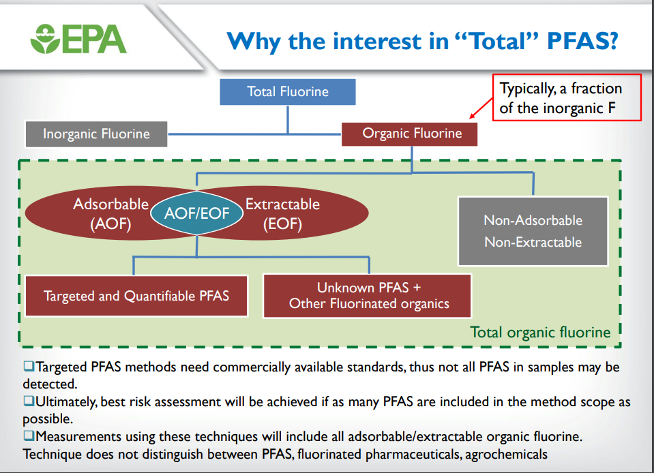
Figure 1-22. Why the interest in “Total” PFAS?
Source: Slide from Small Drinking Water Systems Webinar, PFAS Drinking Water Methods: Past, Present, and Future, USEPA (2023)
USEPA 2025 includes information about PFAS analytical techniques that can potentially be used for analyzing wastewater discharge samples for NPDES monitoring. The analytical techniques discussed include TOF, AOF, EOF, TOP Assay, PIGE, and 19F-NMR. Each technique results in concentration measurements that may include PFAS, organofluorine compounds that are not PFAS, and inorganic fluorine. TOF, AOF, and EOF use CIC to completely decompose fluorinated organic compounds present in the sample, and the concentration of organic fluorine is estimated from concentration of inorganic fluoride produced during CIC. Inorganic fluoride present in the sample is also measured and must either be accounted for or removed from the sample. Available data indicate that targeted analytical methods may not account for a considerable portion of the organic fluorine present in drinking water. However, fluorinated organic compounds that are not PFAS (for example, some fluorinated pharmaceuticals and pesticides) contribute to the organic fluorine measured in drinking water with AOF and EOF (Spaan et al. 2023). Additionally, the adsorption or extraction steps in these methods may not capture all the organic fluorine that is present.
Factors affecting the differences in the results of the methods include the sample preparation steps and detection limits that can be achieved. Strengths and weaknesses of each technique and the expected results are summarized in USEPA (2025). Additional information about TOP assay, USEPA Method 1621, including AOF and EOF, and PIGE are included in Section 11.2.2.
USEPA Method 1621 is detailed in (USEPA 2024). Additional information is given in USEPA (2024) about the use of Method 1621. The detection limit for Method 1621, is much higher than the detection limits for individual PFAS in USEPA Method 533 (USEPA 2019), Method 537.1 (USEPA 2020, and Method 1633A (USEPA 2024). Additional information about quantitative techniques is in Section 11.2.1. Ultrashort PFAS such as trifluoroacetic acid (TFA) and perfluoropropionic acid (PFPrA), which may contribute a considerable percentage of the total PFAS in a water sample, are not accurately measured by AOF (Neuwald et al. 2022).
USEPA 2024 is a federal register notice that includes information about a draft USEPA method EOF (extractable organic fluorine) for screening of drinking water samples.
These methods provide estimates of total PFAS concentration without identification of the specific PFAS present, see Section 11.2.2 and Section 1.5.4. Therefore, the data obtained with these methods cannot be used in estimating the health risks of the PFAS mixture using the mixtures risk assessment approaches discussed in Section 7.1.5 and Section 17.2.7.
Because specific treatment removal technologies remove different PFAS from environmental media (for example, drinking water) with higher or lower efficiencies, multiple technologies used sequentially would likely be necessary to effectively remove the entire class of PFAS from drinking water or wastewater (see Section 12). Additionally, a treatment-based standard for the entire class of PFAS would require the use of analytical methods that can determine whether all PFAS have been removed.
1.4.6 Potential PFAS Exposures in Occupational Settings
Section 2.3.1 indicates that workers in some occupations may be more highly exposed, and more at risk, than other populations. The text in this section provides more detailed information about specific occupations where workers may have elevated PFAS exposures based on the existing literature.
As indicated in Section 2.1 and Figure 2-2, human exposure to PFAS may occur as a result of (1) direct interaction with PFAS in the workplace during manufacturing, (2) professional use of PFAS-containing materials, (3) use of or contact with commercial and consumer products containing PFAS, or (4) exposure to environmental media impacted by PFAS. Occupational exposures include both workplace exposure and professional use/application of PFAS-containing materials. This is an important category of exposure to discuss because there is the potential for much higher exposures than those in the general population. In addition, occupational exposures can be regulated by different laws and rules than environmental exposures, which may be incurred by the general population. The Regulatory Programs Table and Section 2.5 include information about regulations related to the ban of PFAS in certain categories of consumer products.
Christensen and Calkins (2023) conducted an extensive literature search on PFAS exposure in occupational settings using four literature databases and searching for peer-reviewed articles published between 1980 and 2021. They found that most early research focused on fluorochemical workers, but additional workers in other occupations were studied after 2010. These additional occupations include firefighters and ski wax technicians, with fewer studies on other occupational settings including (but not limited to) textile mill workers, metal plating workers, clothing retail workers, office workers, fishermen, and barbers. It should be noted that PFAS exposures of fishermen/fishery workers were driven by consumption of fish from contaminated water bodies rather than by other exposure pathways and media. Therefore, worker exposure comparisons to fishermen/fishery workers were not included in the discussions in the following sections. Christensen and Calkins (2023) provided figures presenting a comparison of the levels of PFOA and PFOS in serum, plasma, or whole blood in workers of various occupations based on results of their literature search, which are reproduced as Figure 1-23 and Figure 1-24, respectively, here. Additional information for the studies included in the literature review is available in the Christensen and Calkins (2023) paper.
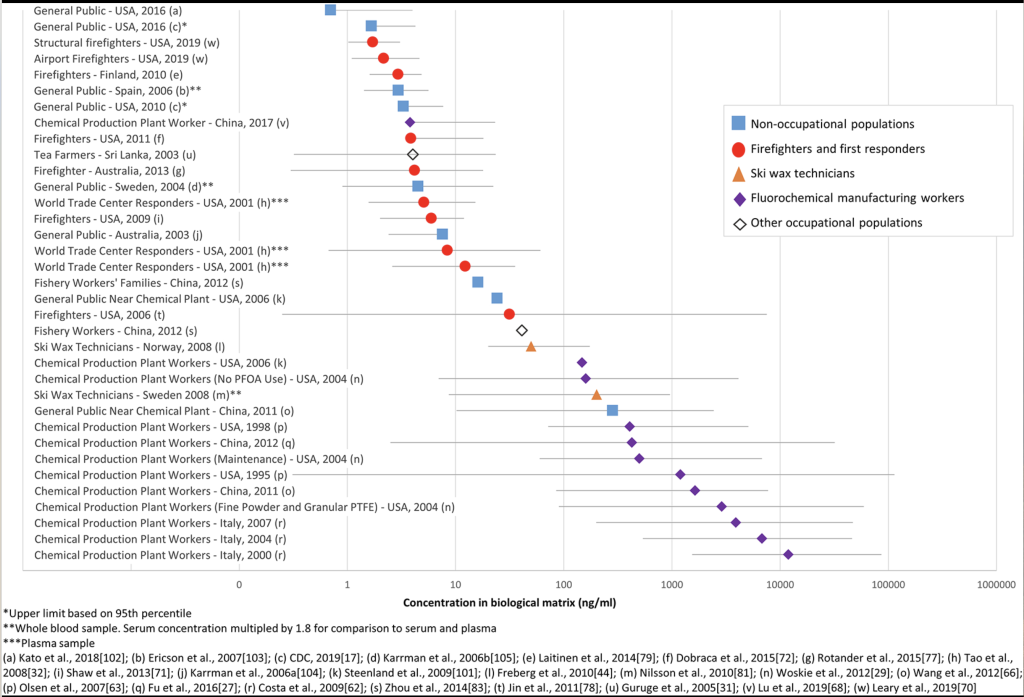
Figure 1-23. PFOA in serum, plasma, or whole blood by population, geographic region, and year of most recent sample collection.
Source: Christensen and Calkins (2023). U.S. Government work and not under copyright protection in the US. Author manuscript available from PubMed website, https://pubmed.ncbi.nlm.nih.gov/36977833/#full-view-affiliation-2.
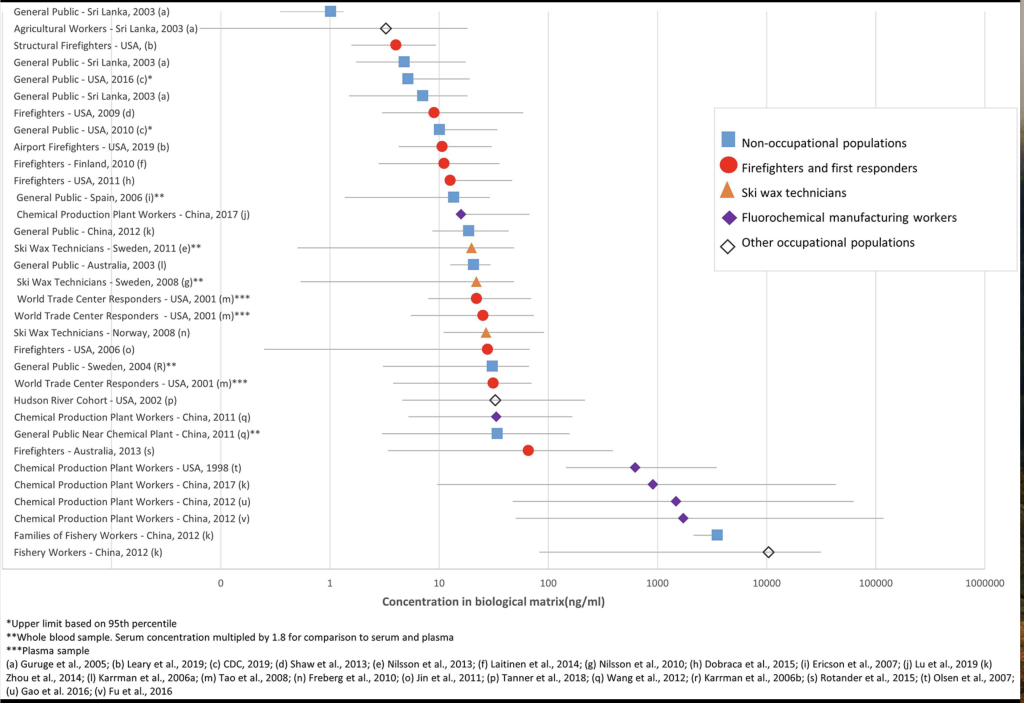
Figure 1-24. PFOS in serum, plasma, or whole blood by population, geographic region, and year of most recent sample collection.
Source: Christensen and Calkins (2023). U.S. Government work and not under copyright protection in the US. Author manuscript available from PubMed website, https://pubmed.ncbi.nlm.nih.gov/36977833/#full-view-affiliation-2.
This section discusses currently available information regarding potential occupational exposures to PFAS by workers in a few of these occupational settings. This section should not be viewed as a definitive and exhaustive discussion of all potential occupational exposures, given the ongoing studies in various occupational settings.
The Department of Defense developed an occupational medicine fact sheet that includes a brief discussion of the different exposure pathways for PFAS (USDOD 2024). These include occupational exposures through inhalation of aerosols and particulates containing PFAS. The fact sheet indicates that more research is needed to evaluate how inhalation exposures compare to other potential exposure routes. The Agency for Toxic Substances and Disease Registry does not consider skin absorption as a significant exposure route for PFAS (ATSDR 2021). A detailed discussion with additional information on dermal absorption of PFAS is provided in Section 17.2.3 and in Section 1.4.3.
1.4.6.1 Fluorochemical Workers
Fluorochemical workers may be exposed to PFAS by touching surface dust and breathing in PFAS-contaminated air. Among fluorochemical workers, the extent of exposure is dependent on specific job tasks (for example, cell and chemical operator, waste operator, maintenance worker), with cell and chemical operators having the highest reported serum levels of PFOA, PFOS and PFHxS. Table 5-27 of ATSDR (2021) presents the range of concentrations of PFOA, PFOS, and PFHxS measured in the serum of fluorochemical workers at several facilities in the United States, Belgium, and Italy and indicates that the levels in workers were frequently 100 to 1,000 times higher than in the general population. PFOA mean concentrations in serum ranged from 262 to 19,700 ng/mL, PFOS mean concentrations in serum ranged from 403 to 2,440 ng/mL, and PFHxS mean concentrations in serum ranged from 170 to 290 ng/mL. Based on their literature review, Christensen and Calkins (2023) reported that fluorochemical workers had the highest blood concentrations of PFOA and PFOS compared to other workers in other occupations. Table 1a of Christensen and Calkins (2023) presented the median serum PFAS levels in fluorochemical workers and indicated PFOA median serum levels ranging from 11 to >10,000 ng/mL, PFOS median serum levels ranging from 11 to 10,000 ng/mL, and PFHxS median serum levels ranging from <1 to 1,000 ng/mL. Figures 3 and 4 of Christensen and Calkins (2023) (reproduced as Figure 1-23 and Figure 1-24 here) provided a comparison of PFOA and PFOS levels in blood of workers by industry (and in the general population), indicating that fluorochemical workers had the highest PFOA and PFOS levels measured in blood.
1.4.6.2 Firefighters
Potential occupational exposures of firefighters to PFAS include inhalation of aerosolized aqueous film-forming foam (AFFF); skin contact with AFFF, contaminated fire equipment and personal protective equipment (“turnout gear”), and PFAS-contaminated dust; and inhalation of PFAS in smoke, air, and dust while firefighting and at fire stations (for example, Nilsson et al. 2022; Rosenfeld et al. 2023). Christensen and Calkins (2023) reported firefighter blood concentrations of PFOA and PFOS in comparison to the general population and other occupational workers. Table 1a of Christensen and Calkins (2023) presented the median serum PFAS levels in firefighters and indicated PFOA and PFOS median serum levels ranging from 1 to 100 ng/mL. Figures 3 and 4 of Christensen and Calkins (2023) (reproduced as Figure 1-23 and Figure 1-24 here) provided a comparison of PFOA and PFOS levels in blood by industry (and in the general population), indicating that both PFOA and PFOS levels in firefighters’ blood were lower than those reported in fluorochemical workers, and PFOA levels in firefighters’ blood were lower than those reported in ski wax technicians.
Nilsson et al. (2022) examined the serum concentrations of 40 different PFAS in 799 Australian firefighters. The results showed that the arithmetic mean serum concentrations of PFHxS, PFHpS, and PFOS in firefighters with historical exposure to AFFF were higher than the corresponding mean serum concentrations among the general Australian population of similar age (PFHxS: 14 versus 2.1 ng/mL; PFHpS: 1.7 vs. 0.24 ng/mL; PFOS: 27 versus 5.7 ng/mL). However, the mean PFOA levels in firefighters were similar to the general Australian population. Rosenfeld et al. (2023) reviewed 10 published studies and found that firefighters were reported to have elevated serum levels of various PFAS, including PFOA, PFOS, PFNA, PFHxS, PFHpS, PFDeA, PFDoA, PFDA, and PFUnDA. However, not all studies found elevated serum levels of PFAS; there were many instances among the studies reviewed in which the geometric mean serum levels for specific PFAS were not statistically significantly higher than control populations, and most studies analyzed only a few PFAS.
PFAS are used in firefighter turnout gear due to their water- and oil-repellent properties. Several studies (Peaslee et al. 2020; Maizel et al. 2023) have shown that the textiles used in turnout gear are a potential source of PFAS exposure to firefighters. Mazumder et al. (2023) provided a summary of the findings from available studies of the presence of PFAS in textiles used in various components (moisture barriers, outer shells, and thermal liners) of turnout gear. PFAS-treated textiles in turnout gear can degrade during washing and high temperature situations, resulting in release of volatile PFAS and fabric dust/lint, which may lead to exposure through inhalation, ingestion, or dermal contact.
Maizel et al. (2023) evaluated the presence of PFAS in the manufacturing of new firefighter turnout gear. PFAS were detected in all 20 textiles that were analyzed, with the number of detected PFAS ranging from 1 to 17 out of 53 PFAS analyzed. A higher number of PFAS detected and higher concentrations were found in textiles used for moisture barriers and outer shells. The total PFAS concentrations varied among textile types, with the largest differences observed among moisture barrier textiles, suggesting that the amount of PFAS depends on the specific textiles used in manufacturing the turnout gear. The highest concentrations detected were of three fluorotelomers: 2-(Perfluorohexyl)ethyl methacrylate( 6:2 FTMAC), 6:2 fluorotelomer alcohol (FTOH), and 6:2 fluorotelomer sulfonic acid (FTS).
The Department of Defense (2024) developed an occupational medicine fact sheet that includes a brief discussion of the various PFAS exposure pathways for firefighters. These include exposures through contact with AFFF, turnout gear, and inhalation of aerosols and particulates containing PFAS. The fact sheet notes that dermal absorption of PFAS is not thought to be a significant exposure route (ATSDR 2021). A detailed discussion with additional information on dermal absorption of PFAS is provided in Section 17.2.3 and in Section 1.4.3.
1.4.6.3 Professional Ski Waxers
Ski waxers apply glider waxes onto the bottom of skis and snowboards to enhance glide across the snow. The waxes are available in powder, solid block, or liquid form, and often contain PFAS. The powder and solid waxes are melted onto the ski by a heated iron, while the liquid waxes are dripped or sprayed onto the ski. In addition to applying glider waxes, ski waxers manually remove excess glide wax using plastic scrapers and rotating brushes (Freberg et al. 2013; Fang, Plassmann, and Cousins 2020). The waxing process can release PFAS into volatile, aerosol, or particulate fractions, which can be inhaled or settle in the vicinity of the worker (Nilsson et al. 2013; Freberg et al. 2010; 2013; 2014; Hämeri et al. 1996). Exacerbating the situation, ski waxers often work in poorly ventilated areas (Freberg et al. 2013; 2014; Hämeri et al. 1996).
Freberg et al. (2010) presented the results of PFAS analyses on 11 solid glide wax blocks and 11 glide wax powders from six different manufacturers. Twelve PFAS were detected in the samples, with higher maximum detected concentrations in glide wax powders than in solid blocks for all PFAS analyzed except perfluorotridecanoic acid (PFTrDA). The highest detected concentrations were of perfluorotetradecanoic acid (PFTeDA), followed by PFDoDA, PFOA, and PFHxA.
Christensen and Calkins (2023) reported ski wax technician blood concentrations of PFOA and PFOS in comparison to the general population and other occupational workers. Table 1a of Christensen and Calkins (2023) presented the median serum PFAS levels in ski wax technicians and indicated PFOA median serum levels ranging from 11 to 1,000 ng/mL and PFOS median serum levels ranging from 11 to 100 ng/mL. Figures 3 and 4 of Christensen and Calkins (2023) (reproduced as Figure 1-23 and Figure 1-24 here) provided a comparison of PFOA and PFOS levels in blood by industry (and in the general population), indicating that ski wax technicians had PFOA levels measured in blood that were lower than fluorochemical workers. Christensen and Calkins (2023) also found that ski wax technicians had PFOS levels measured in blood that were lower than fluorochemical workers and firefighters.
Paris-Davila et al. (2023) conducted a literature search for peer-reviewed articles published through December 2022 addressing occupational exposures to PFAS via inhalation. Results indicated that ski waxers were exposed to the highest total PFAS air concentrations compared to other reported occupations, including textile manufacturing, firefighting, and floor waxing. For ski waxing, the maximum reported total PFAS air concentration was 10 µg/m3. For ski waxers, PFOA, PFHxA, PFDoDA, and PFDA were detected at a maximum concentration of 1 µg/m3 (per PFAS) in personal sampling, a concentration approximately two to four orders of magnitude (depending on the specific PFAS) higher than those reported for other occupations. In ski waxing facilities, FTOH 8:2 air concentrations were reported as high as 1,000 µg/m3, approximately two orders of magnitude higher than in other occupations. Freberg et al. (2010) measured 14 PFAS in the serum of professional ski waxers and observed that the highest median serum levels were for PFOA, followed by PFOS, PFNA, and PFDA.
Nilsson et al. (2013) also reported that blood levels of PFOA are elevated among professional ski waxers due to high PFAS concentrations in workplace air during ski waxing. Nilsson et al. (2013) reported that ski waxers are exposed to high levels of volatile FTOHs in air, with 8:2 FTOH detected in 100% of personal measurements (cartridge samples – samplers worn during work) and 6:2 FTOH and 10:2 FTOH detected in 96% of the personal measurements (n=84). The highest PFAS concentration in the personal measurements was 8:2 FTOH at 997 µg/m3 (average = 113 µg/m3), while the average 6:2 FTOH and 10:2 FTOH concentrations were 2.22 µg/m3 and 0.32 µg/m3, respectively. The average PFHxA, PFOA, PFTrDA, and PFTDA levels in personal measurements were 3.89 µg/m3, 0.526 µg/m3, 0.043 µg/m3, and 1.27 µg/m3, respectively. As indicated in Nilsson et al. (2010), FTOHs can be metabolized to PFCAs (for example, 8:2 FTOH metabolized to PFOA) in the body.
1.4.6.4 Textile Manufacturing Workers
Textile manufacturing facilities can be a source of PFAS exposures for workers where water-, oil-, or stain-resistant textiles are produced. Exposure pathways can include both dust ingestion and air inhalation.
PFAS are used in manufacturing some high-performance fabrics to protect against water, stain, and oil penetration. Heydebreck et al. (2016) evaluated the presence of PFAS in air, airborne particles, and settled dust in a textile manufacturing plant in China. The plant produces both heavyweight and lightweight garments such as uniforms, fashion clothes, sportswear, and outdoor clothes. Thirty-two PFAS were analyzed in the samples; 27 PFAS (12 neutral PFAS and 15 ionic PFAS) were detected in air samples, 27 PFAS (12 neutral PFAS and 15 ionic PFAS) were detected in airborne particle samples, and 16 PFAS were detected in settled dust samples. Worker exposures in the textile manufacturing plant via inhalation were estimated using PFAS concentrations detected in air, airborne particles, and dust samples. PFOA (ionic), PFDA (ionic), 8:2 FTOH (neutral), and 10:2 FTOH (neutral) were the dominant PFAS detected in air and airborne particle samples, while PFOA, PFDA, and PFNA (ionic) were the dominant PFAS detected in settled dust. Results indicated that inhalation exposures to neutral PFAS were three orders of magnitude higher than to ionic PFAS. Worker exposures (in China) to FTOH in air were estimated to be up to five orders of magnitude higher than background exposure of the general population in Western countries.
Results from Heydebreck et al. (2016) also indicated that estimated exposures to PFAS via dust ingestion were much lower than estimated exposures via air inhalation, with air inhalation exposures estimated to be orders of magnitude higher primarily due to inhalation of neutral PFAS.
Christensen and Calkins (2023) reported textile worker blood concentrations of PFOA, PFOS, and PFNA in comparison to other occupational workers. Table 1a of Christensen and Calkins (2023) presented the median serum PFAS levels in textile workers and indicated median serum levels ranging from 1 to 10 ng/mL for PFOA, PFOS, and PFNA. Table 1a of Christensen and Calkins (2023) also provided a comparison of PFOA, PFOS, and PFNA levels in blood by industry, indicating that textile workers had PFOA and PFOS levels measured in blood that were lower than fluorochemical workers, ski wax technicians, and firefighters, and PFNA levels measured in blood that were lower than ski wax technicians.
1.4.6.5 Summary
Most early research (1980–2010) on PFAS exposure in occupational settings focused on fluorochemical workers. After 2010, additional occupations were studied, but most were related to firefighters and ski wax technicians. However, some post-2010 studies evaluated occupational settings, including textile mill workers, metal plating workers, clothing retail workers, office workers, and barbers (Christensen and Calkins 2023).
There are inherent uncertainties in making direct comparisons between occupational settings and drawing conclusions about potential exposure. Some sources of uncertainty may include the specific PFAS analyzed (which vary between studies), the lack of standardized analytical methods, and differences in QA/QC practices incorporated into the study. The types of environmental matrixes sampled (for example, surfaces, dusts, particulate fraction in air, aerosol fraction in air, volatile fraction in air) also vary between studies. In addition, the location where air samples were collected (personal monitoring versus area monitoring) varies. Other factors that contribute to uncertainties in comparisons include the sampling time/duration, the number of samples collected (number of observations), and the time of sampling in relation to the time of exposure. A significant source of uncertainty is introduced when attempting to correlate environmental matrix data (for example, air data) to blood serum data and make comparisons between exposure levels.
1.4.7 Evaluating Risk to Livestock from PFAS Exposure
1.4.7.1 Introduction
The subject of PFAS contamination in agricultural settings has received considerable attention over the past decade; for example, USEPA recently released its draft document “Sewage Sludge Risk Assessment for Perfluorooctanoic Acid (PFOA) and Perfluorooctane Sulfonic Acid (PFOS)” (USEPA 2025). The US Department of Agriculture’s Agricultural Research Service (USDA ARS) recently developed a research roadmap for PFAS in U.S. agriculture to address challenges and identify solutions for PFAS in the agricultural industry (USDA ARS 2024). AFFF releases, either directly or indirectly, have contaminated soil, groundwater, and surface water bodies, and atmospheric deposition from facility emissions can have long-range impacts to land and water across broad areas (see Section 5 and Section 6). Biosolids have been used for decades as a low-cost fertilizer for adding nutrients and organic matter to farmland, including use on food crops, pasturage, forested land, and reclamation sites (Marchuk et al. 2023), often resulting in PFAS contamination of farmland. For this section the term “biosolids” will be used to refer to treated sewage sludge (see Section 1.7). The biosolids may be generated from residential sources or from utilities that receive a mixture of residential and commercial and industrial wastewater inputs (see Section 1.7 for discussion of PFAS sources, migration pathways, and bioaccumulation for biosolids).
Certain PFAS have been shown to accumulate in pasturage and crops grown on contaminated farmland, resulting in accumulation of PFAS in livestock that graze or consume feedstock from that land. For example, biosolids from a wastewater treatment plant contaminated with PFOS had been historically applied to fields at a farm in Michigan, resulting in PFOS in beef samples taken from this farm at levels warranting a human consumption advisory (MI DHHS 2023, 1]). Similarly, the State of Maine discovered PFAS contamination in cows’ milk at a small dairy farm that had its well water, soil, and hay contaminated with PFAS, with PFOS being the primary PFAS detected in all media. The Maine Department of Environmental Protection has been investigating PFAS in other farmlands in the state where sludge and septage have been applied and have detected PFAS in water, soil, hay, and milk (ME DEP 2023). In 2022, Maine banned the land application and distribution of sludge and sludge-derived compost without first testing and screening for PFAS, and later amended legislation to encompass a larger ban of wastewater biosolids for use as soil amendments or fertilizers (Maine Legislature 2022).
An abundance of information indicates that certain PFAS readily bioaccumulate in animals, with most data limited to PFAAs (for example, Houde et al. 2011; Giesy and Kannan 2001). Many studies have focused on understanding the direct effects of PFAAs on plants, laboratory animals, some aquatic organisms, and wildlife, as well as on evaluating potential health risks associated with PFAS exposure to humans through diet (see Section 1.7.3). Studies have shown that some PFAS accumulate in chickens, eggs, and other protein sources at levels that, in some instances, could potentially be significant with respect to human exposure and health risk (for example, Arcadis 2024; USEPA, 2025; also see Section 9.1.2 and Section 1.7). To date, however, there has been little focus on the direct toxic effects of PFAS on livestock. Note that the term “livestock” is herein defined to include cattle, sheep, goats, and other ungulates, and, for convenience, poultry, rabbits, and other terrestrial animals typically farmed for human consumption.
This section presents an overview of the available scientific information on PFAS exposure and health effects in livestock. This topic discusses the exposure routes through which livestock may be exposed to PFAS in agricultural environments, summarizes available information on PFAS bioaccumulation in various livestock species, describes potential health effects to livestock associated with PFAS exposures, discusses methodologies of evaluating the risk of harm to livestock, and concludes with a discussion of data gaps and uncertainties associated with the current state of toxicology and risk characterization of these receptors.
1.4.7.2 Exposure Pathways
Relevant exposure pathways for livestock may include direct soil and water contamination from spills, atmospheric deposition, or land application of biosolids. PFAS may also be transported through the environment via runoff of PFAS in soils into nearby surface water bodies, leaching of PFAS into underlying groundwater (and subsequent migration in groundwater), generation of dust that can become airborne, and volatilization of certain volatile PFAS. PFAS can also accumulate in pasture vegetation and crops used for feedstock. See Section 1.7 for more information and Figure 1-28 for a conceptual site model of PFAS transport and migration pathways.
Based on these transport mechanisms, livestock could be exposed to PFAS through contact with contaminated soils, dust, surface water, or groundwater that is used for pasturing, grazing, and watering. Livestock may be exposed by consuming plants grown as forage and feedstock. Livestock exposure to PFAS is not only limited to exposures incurred on a farm. Off-farm sources, such as PFAS-contaminated commercial feed and bedding materials may also be important sources of PFAS exposure.
The primary exposure pathways for livestock to be exposed to PFAS include diet, drinking water ingestion, and incidental ingestion of soil. As discussed below, while absorption of PFAS through the skin and inhalation of PFAS (either through dust entrainment or volatilization) may also be viable pathways, it is expected that exposure via these routes is less significant than exposure via ingestion, based on currently available information. PFAS can also be transferred from mother to offspring during fetal development and nursing. These exposure pathways are discussed in more detail below, although the discussion does not include quantitative estimates of exposure, which can be found elsewhere in the scientific literature (for example, USEPA 2025). Figure 1-25 illustrates the main exposure pathways for livestock, as discussed in the following sections.
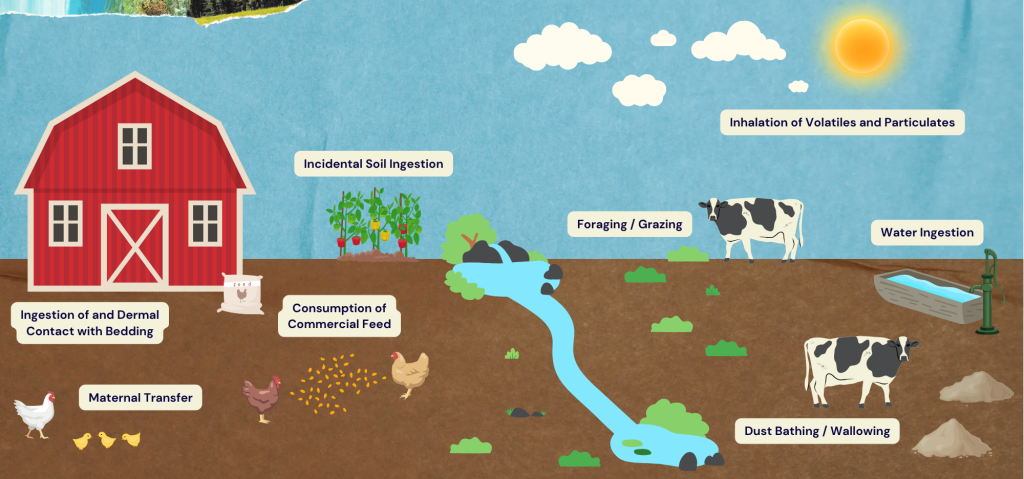
Figure 1-25. Conceptual site model for main exposure pathways for livestock.
1.4.7.2.1 Drinking Water Ingestion
All livestock consume water. Dairy cows can consume up to 50 gallons of water per day while lactating, and up to 80% of their daily water intake can come from their drinking water supplies, with the remainder from moisture in food items (Becker 2024). Groundwater or surface water contaminated by PFAS sources can thus be a major source of PFAS exposure to livestock.
Drew, Hagen, and Champness (2021) described a case study where beef cattle and sheep were exposed to PFAS in stock water over several years. The stock water was obtained from an impoundment at a farm that had been contaminated from a nearby AFFF release and had PFOS initially detected at concentrations up to 6,690 nanograms per liter (ng/L). The study authors collected stock water, soil, and blood serum samples over multiple sampling rounds spanning several years. PFOS and other PFAS (primarily 6:2 FTS, PFHxA, PFPeA, PFHxS, perfluoroheptanoic acid (PFHpA), PFBS, and PFBA) were consistently detected in stock water samples. In soil, PFOS, PFHxS, PFNA, PFPeA, PFHxA, and PFHpA were detected at “very low” concentrations; the authors estimated PFAS intake (for cattle) from soil to represent only 1% of the calculated PFAS intake from water. No PFAS were detected in pasture grass samples. However, PFOS and PFHxS were detected in serum from both sheep and cattle; PFOS concentrations ranged up to 1,944 nanograms per milliliter (ng/mL) and 248 ng/mL for cattle and sheep, respectively, whereas PFHxS was detected at levels up to 840 ng/mL and 170 ng/mL, respectively. PFAS serum levels decreased concomitantly with decreases in stock water PFAS levels over time.
Wilson et al. (2021) conducted a study where laying hens were exposed to drinking water containing PFOS, PFOA, PFHxS, and PFHxA over a 61-day period, at concentrations up to 300,000 ng/L. PFOS and PFHxS were detected in eggs at the overall highest (and similar) concentrations, followed by PFOA and PFHxA. The study determined that >99.7% of total PFAS accumulated in the yolk relative to the albumen. Egg residues remained relatively stable for 20–30 days postexposure. The authors found a strong, positive linear correlation between PFOS, PFHxS, and PFOA levels in drinking water and eggs; this association was observed for PFHxA only at the highest administered dose. From this study, the authors calculated average half-lives of 3.5 days, 7 days, and 5.4 days for PFOS, PFHxS, and PFOA in eggs, respectively, and 2 days for PFHxA (only at the highest administered dose).
1.4.7.2.2 Food Ingestion
Livestock may ingest PFAS through grazing on pasture or through silage and other feedstock. The uptake of PFAS into plants has been well documented (for example, Adu, Ma, and Sharma 2023; Wang et al. 2020) (see Section 1.7, Section 5.6 and Section 6.5.1 ). Hay, silage, and other feed crops grown on contaminated agricultural land can accumulate PFAS, potentially resulting in exposure for livestock that rely on those food items.
Omnivorous free-range poultry such as chickens and turkeys may also ingest PFAS by consuming insects, worms, and other small animals upon which they prey, where those prey items accumulate PFAS from their environment. PFAS (primarily PFOS followed by PFOA) levels in eggs from free-range chickens in a Dutch study were attributed to PFAS in earthworms, even though PFAS soil concentrations were relatively low and did not correlate with the concentrations found in chicken eggs; PFOS and other long-chain PFAS were present in soil at concentrations considered representative of background levels (Arcadis 2024).
Animal byproduct feeds (for example, animal fats, fish oils, fish meal, hydrolyzed proteins, collagens, milk, eggs) may also be a PFAS source because long-chain PFAS have been found to bioconcentrate in animal products and particularly in those that are fish-based. For example, Choi et al. (2023) detected PFAS in multiple types of animal feed used for laboratory animals, finding that plant-based feeds contained mainly short-chain PFCAs and feeds that contained animal ingredients (such as insects, fish, and shrimp) contained longer chain PFSAs, with total PFAS levels as high as 215.6 micrograms per kilogram (µg/kg) (dry weight). Fishmeal is often fed to swine, poultry, cattle, and sheep for its high protein content, and this product could be an important source of PFAS to livestock’s diet even in uncontaminated settings. In a study by Granby et al. (2024), nine PFAAs were detected in eggs from organic farms in Denmark (primarily PFOS), whereas eggs from larger commercial farms had either low or no PFAS detected. The elevated PFAS concentrations in the organic eggs were believed to be related to the fishmeal used in feedstock. PFAS levels in eggs decreased following elimination of fishmeal from the diet.
1.4.7.2.3 Soil Ingestion
Soil ingestion by livestock can constitute a considerable part of the livestock diet (Fries, Marrow, and Snow 1982; Healy, 1968; Beyer et al. 1994). Soil may be ingested either indirectly via foraging/grazing or preening, or intentionally via geophagy for minerals, and chickens and other poultry may ingest soil by obtaining grit to aid digestion. However, few experimental data are available to accurately quantify livestock soil ingestion rates, which are also dependent on the density of livestock and the amount of bare soil within a foraging area. For example, pastured dairy cows may consume soil at an average of 4%–8% of total dry matter (that is, food and soil) intake, although intake can vary considerably depending on plant availability and growing season, with soil representing up to 14% of the dry matter intake in seasons with poor plant growth; and similar soil ingestion patterns exist for beef cattle and sheep (Fries, Marrow, and Snow 1982; Healy 1968). Beyer et al. (1994) estimated that soil composed approximately 9% of a wild turkey’s diet, and similar amounts may occur for free-range domestic turkeys. Jurjanz et al. (2015) found that the soil percentage in the diet of free-range hens (allowed to forage but also provided with chicken feed) was approximately 4% or less of total dry matter, and the percentage varied with the age of the chicken and whether the yard was tree- or grass-covered. For free-range poultry that have regular access to soil in which they can scratch, forage, and bathe, soil intake may be a significant source of environmental contaminants. As discussed earlier, earthworms may contain contaminated soil and accumulate PFAS. Additionally, livestock may consume plants may have soil deposited on leaves and stems.
1.4.7.2.4 Dermal Contact
Dermal exposure is typically considered a less-significant exposure pathway for wildlife relative to soil and food/water ingestion (for example, Sample and Suter, 1994]). However, many livestock species frequently engage in dust bathing and wallowing behaviors, suggesting that PFAS in soil or water could be deposited on the skin and then potentially absorbed. Additionally, animal bedding generated from recycled paper, wood materials, and crop byproducts could potentially contain PFAS. Fernandes et al. (2023) detected PFAS in various bedding materials, with median total PFAS (sum of PFOS, PFOA, PFNA, and PFHxS) concentrations ranging from 6 µg/kg wet weight (ww) in unused wood shavings (control material) to 16 µg/kg ww in bedding made with dried paper sludge. The authors also found that these four PFAS accumulated in muscle, skin, and liver, as well as eggs from hens raised on bedding material that contained PFAS. Livestock, particularly poultry, may also inadvertently ingest bedding material and inhale dust while foraging.
Dermal absorption studies in laboratory rodents have shown that some PFAS can be absorbed through the skin, particularly for personal care products (see Section 1.4.3 and Section 17.2.3). However, livestock studies on the absorption of PFAS through the skin because of contact with soil or water are not yet available.
1.4.7.2.5 Inhalation
PFAS can be transported through the air in volatile form or entrained on soil or dust particles and subsequently inhaled by livestock. Poultry can generate a substantial amount of dust through litter, feces, dander, and feathers while foraging and preening. As with the dermal route, little information is available for livestock on inhalation exposure of PFAS. Conceptually, livestock at farms located closer to industrial emissions may have higher exposure potential via inhalation of aerosols and particulates, whereas livestock kept largely indoors (without the benefit of outdoor dilution) may potentially have higher exposure potential to dust inhalation from soil and bedding material. However, the implications of this potential exposure pathway with regard to livestock health are currently unclear.
1.4.7.2.6 Maternal Transfer
Studies show that, in mammals, PFAS can cross the placenta and be transferred to the developing fetus (for example, Guruge et al. 2008; Gronnestad et al. 2017; Houde et al. 2006; see Section 7.1.2). PFAS also can be transferred in milk, which has been shown to be a major excretion route, as it is rich in proteins (Kowalcyzk et al., 2013; Milolajczyk et al. 2023). This transfer has been demonstrated by studies in Michigan, Maine, New Mexico, and other states showing detectable concentrations of PFAS in dairy products (in addition to meat and eggs) resulting from exposure to PFAS in biosolids/residuals on agricultural lands (ME DEP 2023). Thus, both fetal and nursing mammalian livestock can be exposed to PFAS via both transplacental and lactational transfer pathways up through weaning. Conversely, increased milk yield can result in overall decreased PFAS levels for the lactating animal (van Asselt et al. 2013). Also, hens may transfer PFAS to their eggs following a hen’s exposure to PFAS-contaminated soil, food, or water (for example, Wilson et al. 2021).
1.4.7.3 Bioaccumulation in Livestock
Oral absorption has been studied for several PFAS, and it has been demonstrated that PFAS are readily absorbed through the gastrointestinal tract and that protein-rich tissues (for example, blood serum, liver, kidneys) are the primary PFAS accumulation sites (see Section 17.2.3). Although accumulation of PFAS can be highly variable depending on the organism, route of ingestion, and types and concentrations of PFAS to which the organism is exposed, in general, the long-chain PFAS (such as PFOS) tend to accumulate at a greater rate in animals relative to the short-chain PFAS (Houde et al. 2011). Functional group (for example, sulfonic vs. carboxylic acid) also appears to have a larger role in bioaccumulation potential relative to chain length, consistent with general findings from a wide range of tissue residue studies in wildlife (for example, Rupp et al. 2023; Draghi et al. 2024) and laboratory animals, as discussed in Section 17.2.3. Perfluoroalkyl sulfonic acids tend to accumulate at a higher rate relative to perfluoroalkyl carboxylic acids due to the higher binding capacity of sulfonates within the body (for example, Ng and Hungerbühler 2014).
With respect to livestock, much of the available information on PFAS accumulation is associated with food studies of animal products (milk and other dairy products, meat, eggs) intended for human consumption. Consequently, while there is ample information on PFAS residuals in various types of livestock tissues, there is not always corresponding information on the animal’s exposure to PFAS prior to processing. Given their utility for both meat and dairy products, there are currently more studies on bioaccumulation of PFAS in cattle relative to other livestock (Death et al. 2021).
Animal product studies that focused on human health risks from food exposure also highlight bioaccumulation potential in livestock. Guruge et al. (2008) analyzed PFOS and other PFAS in blood and liver samples from a variety of farm animals across multiple farms and regions of Japan and found that PFOS was detected at the highest concentrations and frequency relative to other PFAS. In general, chicken had the highest blood serum PFOS concentrations, followed in decreasing order by cattle, goat, horse, and pig. Liver PFOS concentrations were again highest in chicken, followed by pigs and cattle. However, no information on PFAS levels in farm soil, water, or fodder was provided in this study. Death et al. (2021) provided a review of bioaccumulation studies (both dosed and ambient studies) in cattle, sheep, poultry, and pigs (as well as wild game species). Collectively, the authors indicated similarities in PFAS tissue distribution among the different animals. PFOS was typically the most prevalent of the PFAS, and concentrations were generally highest in blood, liver, and kidney relative to muscle. Notable differences in PFAS concentrations were also observed among species, dose, and sex.
The disposition of PFAS in livestock mirrors the findings from studies of laboratory animals (see Section 17.2.3). For example, Kowalczyk et al. (2012) found that urinary excretion was the primary PFOA clearance route for dairy sheep exposed via corn silage with PFOA over a 21-day period, accounting for 51%–55% of clearance compared to 1%–2% for feces and less than 1% for milk. This same study found that PFOA levels in plasma, liver, kidney, and muscle tissue were reduced to nondetectable levels after a PFAA-free feeding period of 21 days. The excretion of PFOS was less clear; the authors estimated that approximately 5% and 2% of PFOS was excreted in feces and milk, respectively. This study did not report PFOS concentrations in urine.
Numata et al. (2014) found that of the PFAS they studied (seven PFCAs and five PFSAs), most accumulated in the blood plasma (up to 51%) and the muscle and fat tissues, collectively (up to 49%), with relatively low accumulation observed in the liver (<7%) and kidney (<2%). The exception to these general findings was PFOS, which preferentially accumulated in liver (35%) relative to other tissues. The authors also indicated that in pigs, PFAAs had a higher affinity for plasma (relative to other tissues) than that observed for sheep and cattle.
Studies also demonstrate interspecies variability. In a study by Numata et al. (2014), PFAAs (mainly PFOS, PFHxS, and PFBS) were found to have longer elimination half-life in pigs than has been observed in other types of livestock. For example, PFOS had a serum half-life of 634 days in pigs versus 74 days in cattle (Drew, Hagen, and Champness 2021).
1.4.7.4 Toxicology
Toxicological effects data for PFAS remain under development, and data suitable for determining risk to livestock are lacking for the majority of individual PFAS and receptor groups. Overall, there are relatively few toxicity studies specifically on livestock species. Toxicological data from avian and mammalian studies that potentially may be applied to livestock are available only for a few relatively well‐understood PFAS (for example, PFOS and PFOA). The following sections summarize toxicity data for birds and mammals that are representative of typical livestock species. A more comprehensive discussion of PFAS effects data is presented in Section 7.2 and in review documents such as Ankley et al. (2021) and Johnson et al. (2021).
Birds
PFAS uptake and effects have been studied in various avian species, and these results may potentially be applied to evaluating risk in poultry based on the relevance of the toxicological endpoints (survival, growth, reproduction). See Section 7.2.3.3 for a discussion of wild bird studies. However, many of these studies were egg injection studies, with fewer studies conducted on dietary intake, which is a more relevant route of exposure for livestock. Overall, toxicity studies in birds have demonstrated effects on developing bird embryos and hatchlings, endocrine pathways and neurodevelopment, with adult mortality typically occurring only at the highest dose levels (see Section 7.2.3.3).
Egg injection and embryonic studies on domestic chickens show that certain PFAS at high doses may result in effects on chick pipping success, embryo development and chick behavior, on the liver and heart, and on the endocrine system, especially thyroid hormone–responsive genes (Figure 1-26).
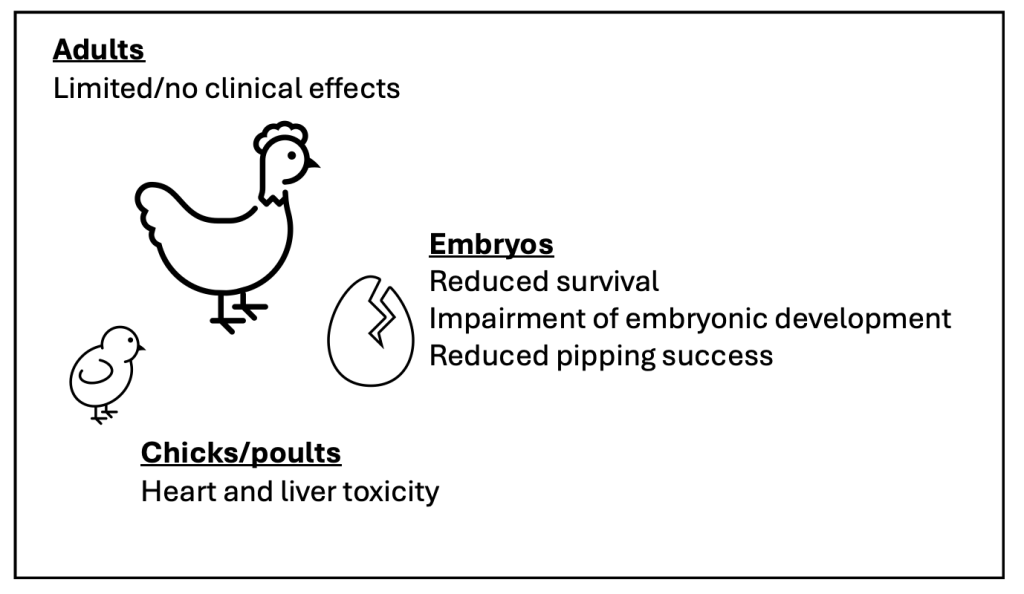
Figure 1-26. PFAS Effects noted in poultry studies.
For example, Cassone et al. (2012) conducted an egg injection study of PFHxS and PFHxA in chicken embryos and demonstrated that PFHxS exposure resulted in a reduction in pipping success and embryonic development. The study also found that PFHxS exposure caused upregulation of hepatic and neuronal mRNA expression of thyroid hormone–responsive genes, and a reduction of free T4 concentrations in plasma. These effects were not observed in PFHxA-exposed eggs. Vongphachan et al. (2011) conducted an in vitro study on domestic chickens and herring gulls, and found that several PFAS (PFHxA, PFHpA, and PFNA) altered changes in mRNA expression of thyroid hormone–responsive genes, noting that PFAS with fewer than eight carbons (PFBS, PFHxA, PFHxS, and PFHpA) altered mRNA expression to the greatest extent compared to longer chain PFAS. Pinkas et al. (2010) found that in ovo exposure to PFOA and PFOS was associated with reduced survival and hatching, and elicited behavioral changes (reduced imprinting ability) in chicks after hatching. Ni et al. (2023) reported that in ovo exposure to PFOA resulted in cardiotoxicity and hepatotoxicity in hatchlings, and that cardiotoxicity persisted for several months following exposure.
Limited studies exist related to toxicological effects from dietary exposure of PFAS on domestic poultry (for example, chickens, turkeys), and those studies suggest limited or even no clinical significance of PFAS exposure via ingestion on posthatch birds. The Wilson et al. (2021) study described in Section 1.7.3 (in which adult laying hens were administered PFAS in drinking water) noted no negative health outcomes (hen weight, egg production, or other observable adverse effects) at any of the administered PFAS doses. Yeung et al. (2009) exposed 1-day-old male chicks to PFOA by oral gavage at doses up to 1.0 mg/kg body weight with no dose-dependent statistically significant differences in body/organ weights. Yoo et al. (2009) similarly did not observe clinical effects (body weight, growth rate, histological changes, blood biochemistry) other than a reduction in cholesterol and phospholipids associated with PFOS in male leghorn chickens exposed to PFOS and PFOA via subcutaneous implants for 4 weeks.
Mammals
Although there are a growing number of studies on bioaccumulation of PFAS in ungulate livestock (for example, horses, cattle, pigs, sheep; see Section 1.4.3), of the few toxicological studies identified for this group of animals, most were biomarker studies, and none reported clinical effects. Death et al. (2021) described several short-term studies in cattle, sheep, and pigs. However, these studies did not evaluate direct adverse effects of PFAS exposure to livestock. Numata et al. (2014) conducted a study on a mixture of PFAAs in feed into edible tissues of 24 fattening pigs. The study focused on bioaccumulation and elimination, and although the study did not directly evaluate adverse effects on the pigs, the authors assessed the general health of the test subjects and did not report any observed adverse effects. Watanabe et al. (2010) investigated effects of PFAS and other contaminants in wild pigs. Although positive correlations were observed between other pollutants (PCBs, pesticides) and various blood, hepatic, and immunological endpoints, the investigators did not find any significant correlation between PFAS concentrations and these effects. Several in vitro studies on swine ovaries evaluated reproductive effects of PFOA or PFOS, showing inhibition of granulosa cell proliferation and steroidogenesis (Basini et al. 2023; Chaparro-Ortega et al. 2018). Rock et al. (2023) found significant associations between the levels of multiple PFAS in horse serum and biomarkers of liver and kidney function.
As mentioned, most laboratory toxicity studies for PFAS have been conducted in rodents. General effects from exposure to PFAS in laboratory animal studies have included reduced body weight gain, liver damage, developmental effects, immunotoxicity, and mortality (see Section 7.1). Although these studies have demonstrated the acute and chronic toxicological effects of PFAS in mammals (see Section 7.1), their utility in evaluating risks to mammalian livestock is unknown, given ungulates’ differences in size, dietary requirements, uptake and elimination kinetics, gestational period length, and unique digestive system.
1.4.7.5 Risk Characterization
Although little work has been done on PFAS risk assessment of livestock, work has been conducted to evaluate effects from other types of contaminants. For example, Stickney et al. (2001) and API (2004) derived health-based concentrations of petroleum compounds in cattle’s drinking water. The methods used to calculate health-based concentrations were similar to methods described by USEPA (1997) in the “Ecological Risk Assessment Guidance for Superfund” for evaluating risks to wildlife and included derivation of toxicological benchmarks and estimation of daily dose of chemicals from drinking water ingestion and soil ingestion.
The basic hazard quotient (HQ) equation is:
HQ=Exposure Dose/Toxicity Reference Value
Where the HQ is unitless, the exposure dose is in milligrams of constituent per kilogram body weight per day (mg/kg-d) and the toxicity reference value (TRV) is in units of mg/kg-d (USEPA, 1993).
The exposure dose represents the cumulative intake of a contaminant through multiple exposure pathways. For livestock, this equation might be represented as follows:
Exposure dose = Food intake + Water intake + Soil intake
The ecological risk assessment approach for wildlife (see Section 9.2) includes a standard hazard quotient (HQ), which can also be used to assess the risk from PFAS intake for various livestock species (see sidebar.) The USEPA (1993) Wildlife Exposure Factors Handbook provides equations to model intake of contaminants in wildlife (see sidebar). These same equations may be applied to livestock when used in conjunction with receptor-specific life history and physiological attributes such as grazing area, dietary composition, food and water ingestion rates, and body weights. The USEPA exposure model is based heavily on dietary concentrations, which for livestock could include measured PFAS concentrations in livestock food items or be based on bioaccumulation or transfer factors (for example, soil to forage plant; see Section 1.7). Transfer factors representing the ratio of the concentration of PFAS in livestock to the concentration of PFAS in abiotic media (for example, bioconcentration factors/bioaccumulation factors/soil-plant-livestock transfer factors) can be used to estimate animal-specific tissue concentrations. For example, Drew, Hagen, and Champness (2021) derived transfer factors from water to cattle serum, and Wilson et al. (2021) developed transfer factors from water to hens.
The modeled intake dose is compared to a toxicity reference value (TRV) to calculate an HQ. HQs equal to or greater than 1 may suggest a potential health risk to the livestock. Similar to the methodology used by USEPA (2005) in developing Ecological Soil Screening Levels, TRVs for evaluating risks to livestock could be developed based on the existing body of avian and mammalian toxicity data described previously, with the caveat that livestock-specific toxicological studies on PFAS are not available for most species. Adjustment factors (such as body scaling or use of uncertainty factors) could potentially be required. Dennis et al. (2021), Newsted et al. (2005), and others have already developed avian TRVs for use in risk assessment. Others have derived PFAS risk-based screening levels for avian and mammalian wildlife species (Divine et al. 2020; Grippo et al. 2024). To date, few studies (Newsted et al. 2005; Dennis et al. 2021]) have developed tissue-based (versus dose-based) TRVs that could be compared with estimated or measured livestock tissue concentrations.
1.4.7.6 Uncertainties and Data Gaps
Many of the uncertainties related to characterization of risk to livestock from PFAS exposure are the same as those identified for human health and ecological risk (see Section 7 and Section 9). These uncertainties center around the general lack of information on the numerous PFAS to which livestock may be exposed (and the mixtures of these PFAS), and variability among species in both PFAS accumulation and sensitivity. Existing livestock bioaccumulation studies have focused on a relatively limited number of PFAS analytes, whereas thousands of individual PFAS exist and most of these have not been routinely or ever analyzed in the environment.
In terms of dietary intake, uptake of PFAS in plants depends on several factors (type of plant, type of PFAS, soil characteristics). Likewise, uptake into animals can vary considerably depending on the species, age, sex, gestation/lactation status, feed supply, and other behavioral and physiological factors. The contribution of both direct and indirect PFAS exposure pathways can also vary according to environmental contamination and feed and bedding sources, as discussed previously. Another key uncertainty in the exposure assessment is the proportion of livestock diet that consists of grazed/foraged dietary items versus supplemental commercial feed and drinking water. For example, even if site-specific risk assessments incorporate measured concentrations of diet, feed, and water, the relative intake rates of each are expected to vary substantially, depending on livestock management practices.
Existing studies indicate that toxic effects to livestock from PFAS exposures have generally not been observed unless exposure occurs at levels higher than those generally expected from land application of biosolids (Death et al. 2021) or resulting from background sources such as precipitation. However, there is a paucity of toxicological studies focused on livestock species. Most studies have centered on poultry, and even within those studies, many focused on in ovo exposures. It is unclear how the results from egg or subcutaneous injection studies relate to real-life exposures from feed and the environment.
Some livestock species are also entirely unrepresented in the existing literature. For example, camels are replacing cattle in areas subject to extended drought in areas such as Kenya (Hochet-Bodin 2024), but there is no PFAS information on uptake or toxicity of PFAS in camelids.
Given these uncertainties, although there are standard risk assessment tools available to use for evaluating livestock risk, it is unclear if the risk to livestock from PFAS contamination in the agricultural setting can be meaningfully quantified at this time (Sharp et al. 2021). Studies show that livestock exposures to PFAS are routinely occurring, and additional toxicological studies specific to livestock species are needed to fill in data gaps and provide a more accurate representation of health risk to these species. Various agencies are recognizing the need to address these data gaps; for example, the University of Maine recently expanded their partnership with the USDA ARS to explore the effects of PFAS on US agriculture (USDA 2024).
1.4.8 Reptiles Toxicity Data
Section 7.2 includes information about available toxicity information for invertebrates, vertebrates, and mammals. Section 7.2.3.2 includes information primarily for amphibians, and as noted, previously no studies for reptiles were found in the literature. This section provides a brief review of the currently available research for reptiles.
Although PFAS exhibit high environmental persistence and growing ecological concern, relatively few toxicological studies have been conducted on reptiles exposed to PFAS, and toxicity to reptiles remains a significant data gap for ecological risk assessment. The following is a summary of currently available toxicological data for reptiles, noting that additional data regarding bioaccumulation of PFAS and effects on non-apical endpoints (for example, metabolic responses) are also available, but not covered herein.
Bangma et al. (2019) conducted a study in diamondback terrapins (Malaclemys terrapin). A total of 75 terrapin plasma samples were collected from five creeks in Charleston County, South Carolina, and investigated for 15 legacy PFAS. Three PFAS (PFOS, PFNA, and PFHxS) were observed to have negative correlations between plasma and body mass (Bangma et al. 2019).
Furst et al. (2019) presented results from a pseudo-gavage study of PFOS and PFHxS exposure on the brown anole (Anolis sagrei). The study indicated that 90-day PFOS exposure to adult males at doses up to 1.35 mg/kg/day (the highest exposure level) elicited no strong effects on either body or organ mass, although significant effects on growth of young lizards after 35 days was observed at a dose rate of 2 mg PFOS/kg/day. Exposure to PFHxS for 63 days was not found to have a significant effect on body or organ size of either males or females, but did result in decreased egg viability in females.
Salice et al. (2025) conducted two studies on brown anole to develop toxicity testing protocols for the species and to generate toxicity data to support ecological risk assessment. During the two studies, subadult males and then mature males were dosed with PFOS via pseudo-gavage with maximum doses in the range of 2 mg/kg/day. Subadults were exposed for 35 days and adult males were exposed for 90 days. Although no significant mortality was observed, PFOS significantly reduced subadult male size and growth rate at a dose rate of 2.98 mg/kg/day, with a corresponding no-effect level of 0.20 mg/kg/day. There were no significant effects on size metrics of mature male anoles from the 90-day study, although several metrics showed dose-dependent decreases (Salice et al. 2025).
Zhang et al. (2020) conducted a study on Mongolia racerunner lizards (Eremia argus). Organisms were exposed to PFOA in soil at 0.05 mg/kg, 0.5 mg/kg, and 5 mg/kg for 60 days, and were evaluated for various physiological and biological effects. By day 60, a significant reduction in growth was observed in males at all three test levels, and in percent survival in the highest test level; these reductions were not observed, however, in females (Zhang et al. 2020). Australia and New Zealand used the Zhang et al. (2020) study as the basis for deriving their interim Ecological Guideline Value for PFOA in soil of 0.005 mg/kg for reptiles (HEPA 2025).
Lettoof et al. (2023) conducted a study on wild-caught tiger snakes (Notechis scutatus occidentalis) in which liver tissues were analyzed for 28 PFAS. The investigators found that a higher liver concentration of PFAS (largely consisting of PFOS) was associated with a lower body condition, although noted that results could have been explained in part by other contaminants such as metals. The study also found that PFAS exposure resulted in the significant enrichment of 11 different groups of metabolites, suggesting perturbation of metabolic pathways. The authors postulated that the observed lower body condition may be a result of PFAS-induced perturbation of energy production pathways (Lettoof et al. 2023).
–
Updated January 2026.